
PM Rejects ‘Two-Tier Policing’ Accusation as Henry Nowak Murder Stirs Political Storm
Prime Minister Sir Keir Starmer has forcefully denied claims of “two-tier policing” in the United Kingdom, directly accusing Reform UK leader Nigel Farage of exploiting the murder of 18-year-old Henry Nowak for political gain. The exchange, which dominated Prime Minister’s Questions on June 3, 2026, came just days after bodycam footage revealed that Southampton police handcuffed the dying teenager while his killer went free.
Vickrum Digwa, 23, was sentenced to life in prison with a minimum term of 21 years on Monday for stabbing Nowak in December 2025. Digwa falsely told officers that Nowak had made racist remarks, prompting police to arrest the white student rather than his Sikh attacker. Nowak was heard saying “I can’t breathe” as he lay bleeding in handcuffs. An ambulance was not called until he had already died.
Farage used the case to allege the existence of “two-tier policing,” citing official police anti-racism guidance that he argued leads officers to treat ethnic groups differently. “Pure, cold rage,” he said, is the appropriate public response. The prime minister countered that Nowak’s family had explicitly asked that his death not be used to “stoke division,” and called for “serious work, not rage.”
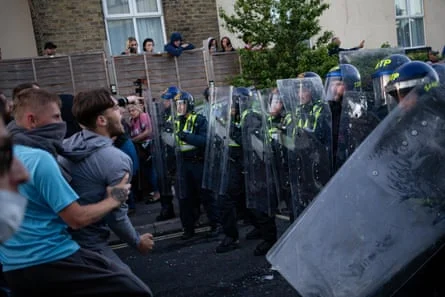
The clash marks a defining moment in a broader national debate over race, policing, and institutional bias. The incident has sparked protests in Southampton, including clashes with police on the night of June 2. Opposition leader Kemi Badenoch described Nowak’s death as “a wake-up call to the entire country,” while Liberal Democrat leader Ed Davey urged against treating the tragedy as a “political football.”
What Is ‘Two-Tier Policing’? The Controversial Claim Explained
The phrase “two-tier policing” has become a lightning rod in British political discourse. It asserts that law enforcement applies different standards depending on the race, ethnicity, or political affiliation of the individuals involved. Proponents, including Farage, argue that anti-racism policies have created a system in which ethnic minorities receive preferential treatment, while white individuals are subjected to harsher scrutiny or neglect.
In the Nowak case, the allegation centres on the Police Anti-Racism Commitment document, which aims to ensure “equality of policing outcomes” and states that not everyone should be treated “the same.” Farage quoted this language in the Commons, arguing that it effectively instructs officers to weigh the ethnicity of victims and suspects when making operational decisions.
Andy George, president of the National Black Police Association, cautioned that allegations of two-tier policing must be “evidenced-based.” Speaking to Channel 4 News on June 2, he warned against sweeping conclusions drawn from a single, tragic case. George emphasised that individual officer misconduct—if proven—should not be conflated with systemic racism or deliberate policy.
The Henry Nowak Case: What Actually Happened?
Henry Nowak, a college student, was fatally stabbed in Southampton on a residential street in December 2025. His attacker, Vickrum Digwa, carried a large blade that he later claimed was a ceremonial religious item associated with his Sikh faith. After the stabbing, Digwa called police and falsely reported that Nowak had used racist language against him.
When officers arrived, they handcuffed the bleeding teenager and did not immediately summon medical help. Bodycam footage released this week shows Nowak struggling to breathe while restrained. The Independent Office for Police Conduct (IOPC) is now investigating the police response. Reports indicate that one officer has already resigned.
Digwa was convicted of murder and sentenced to life with a minimum of 21 years. The judge noted that Digwa not only lied to police but also contacted his family and attempted to hide evidence. The case has drawn international attention, particularly in the United States, where commentators have drawn parallels with the killing of George Floyd in 2020.
Bodycam Footage Fuels Public Outrage
The release of the bodycam footage was a pivotal moment. It showed officers ignoring Nowak’s pleas for help and instead reading him his rights. Critics argue that the officers abdicated their duty of care because they believed Digwa’s allegation of racism against a white victim. The footage has been widely shared on social media, with the hashtag #JusticeForHenryNowak trending globally.
Political Fallout: Farage vs. Starmer at PMQs
At Prime Minister’s Questions on June 3, Nigel Farage pressed Starmer to acknowledge “two-tier policing” and take action. He warned that public trust in law enforcement was eroding and that further protests and violence could follow. Farage was repeatedly heckled by other MPs, with shouts of “shame” echoing across the chamber.
Starmer responded by accusing Farage of ignoring the grieving family’s wishes. “A grieving family have asked us not to respond in the way that the leader of Reform has responded,” Starmer said. He added that his own approach would focus on “lessons to be learned” so that justice can be delivered. The prime minister also called Tuesday night’s attacks on police in Southampton “disgraceful.”
Conservative leader Kemi Badenoch and Liberal Democrat leader Ed Davey both adopted more measured tones. Badenoch described the murder as “a wake-up call” but stopped short of endorsing the two-tier policing label. Davey urged politicians not to use Nowak’s death as a “political football,” a remark widely seen as a rebuke to Farage.
Broader Implications: Race, Policing, and Public Trust in the UK
The Nowak case has reignited a contentious debate about race and policing in Britain. Critics of the “two-tier policing” narrative argue that it is a politically motivated smear designed to discredit diversity initiatives. They point to data showing that ethnic minorities in the UK are far more likely to be stopped, searched, arrested, and subjected to force than white individuals.
Proponents of the claim, however, point to cases like Nowak’s as evidence that anti-racism policies have swung too far. They argue that guidance instructing officers to treat people “differently” based on race creates perverse incentives—such as immediately believing an accusation of racism made by a minority individual against a white person.
Comparisons to George Floyd and BLM
Commentators have noted the stark contrast between the UK’s response to Nowak’s death and its reaction to George Floyd’s murder in 2020. The British political establishment observed a minute of silence for Floyd; politicians kneeled in solidarity. No comparable official gesture has been made for Nowak. Writer Konstantin Kisin, whose comments were widely shared, stated: “Britain had a moment of silence for George Floyd. … Henry Nowak was British and his treatment by the police was shocking and negligent in the extreme. Yet there is no minute of silence.”
This perceived double standard has fueled resentment among those who feel that the left’s focus on racial justice overlooks white victims. It also plays into broader cultural battles over “woke” policies in public institutions.
What Happens Next? Police Guidance Under Review
Police chiefs have announced a review of the language used in the Police Anti-Racism Commitment document. Critics within and outside the force argue that phrases like “not everyone should be treated the same” are open to misinterpretation and can undermine public confidence. The IOPC investigation into officer conduct in the Nowak case is ongoing, and further disciplinary actions are expected.
The political fallout is unlikely to subside quickly. With local elections on the horizon and Reform UK surging in opinion polls, the two-tier policing debate provides a potent rallying cry for Farage’s base. Meanwhile, the government faces pressure to demonstrate that it takes all victims seriously, regardless of race.
In the midst of this turmoil, Nowak’s family has repeatedly asked that his death not be politicised. Whether that plea will be heeded remains uncertain. As the prime minister himself acknowledged, the case raises “serious questions” about how allegations of racism inform police decision-making—questions that will demand answers long after the headlines fade.
This article was updated on June 3, 2026. For more on rising global tensions, see our report on Iran Strikes Kuwait, Bahrain as Gulf Tensions Threaten Ceasefire with US. For analysis of shifting political allegiances in UK football, read Jason Ayto Exits Brighton After Just Nine Months as Sporting Director.
Comments