
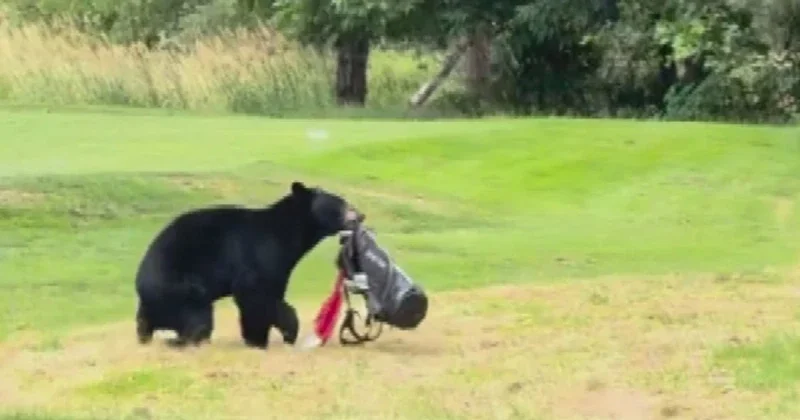
Bear Makes Off With Golfer's Clubs at B.C. Course
A black bear has become an unlikely internet star after swiping a full set of golf clubs from a cart at Golden Eagle Golf Club in Pitt Meadows, British Columbia. The incident, captured on video and posted to Reddit by user MedicalFun7 on July 13, 2026, shows the bear calmly approaching a parked golf cart, gripping the bag with its jaws, and dragging it across the fairway as golfers shout in disbelief.
"Those are my clubs, man," one golfer can be heard saying in the 30-second clip. "Put them back," another voice demands, as the bear lumbers off toward a treeline where a second bear is waiting. The video quickly spread across social media platforms, amassing millions of views within days.
What Happened at Golden Eagle Golf Club?
The theft occurred in the middle of a round at Golden Eagle Golf Club, a 36-hole facility known for its scenic views of the Fraser River and Mount Baker. According to witnesses cited by local media, the bear showed no aggression toward the golfers, instead focusing entirely on the golf bag. It grabbed the bag from the cart, dragged it about 50 yards, and eventually dropped it near a cluster of trees.
It remains unclear whether the golfer recovered his clubs. The course has not released an official statement, but staff confirmed that bears have been frequenting the grounds in recent weeks. In June, the course itself shared a video of three bears playing on the fairway, suggesting the animals have grown comfortable in the area.
Why This Story Resonates: Wildlife Encounters on the Rise
The bear golf club theft is the latest in a series of high-profile wildlife encounters across North America this summer. Just days earlier, a bison attacked a tourist at Yellowstone National Park, sending the man to the hospital. In Colorado, a black bear was filmed cooling off in a backyard kiddie pool. And in Florida, a massive alligator blocked play on a golf course, forcing the course to temporarily close hole 7.
These incidents underscore a growing trend: as human development encroaches on natural habitats, encounters between people and wildlife are becoming more frequent—and more visible thanks to smartphones and social media.
The Bear's Behavior
Wildlife experts say the bear's behavior in the video is unusual but not unheard of. Black bears are opportunistic omnivores, and they are known to investigate objects that carry food smells or seem interesting. In this case, the golf bag may have contained snacks, water bottles, or simply smelled like sweat and leather—a novel scent worth exploring.
"Bears are curious animals," said Dr. Rachel Linden, a wildlife biologist at the University of British Columbia. "If a bear sees something new and potentially rewarding, it will investigate. A golf bag isn't typical prey, but it's not entirely surprising that a bear would grab it and drag it off."
The fact that a second bear was waiting nearby suggests this might have been a mother teaching a cub, or two bears cooperating in a resource-sharing dynamic—something rarely captured on video.
Broader Implications: Human-Wildlife Conflict in an Urbanizing World
The incident at Golden Eagle Golf Club is more than a funny video. It highlights the delicate balance between recreational spaces and wildlife corridors. Pitt Meadows is located in the Lower Mainland of British Columbia, an area that has seen rapid suburban expansion. Golf courses, parks, and greenbelts often serve as de facto wildlife passages, bringing bears, coyotes, and deer into close proximity with humans.
How Golf Courses Are Adapting
Golf courses across North America have implemented measures to reduce human-wildlife conflict, including electric fencing, bear-proof trash bins, and designated wildlife corridors. Golden Eagle Golf Club has not yet announced changes in response to this incident, but bear sightings on the course have increased in recent weeks. The course's June video of three bears playing on the fairway suggested a certain tolerance for the animals, but the theft of property—even a set of clubs—may push management to reconsider.
"Once a bear learns that human objects can be rewarding, it may become bolder," said wildlife conflict specialist Mark Tremblay. "That's dangerous for both the bear and the public. The best outcome is that the bear is hazed or relocated before it becomes habituated."
The Role of Social Media
The video's virality has turned a local oddity into a global conversation. Comments on Reddit and Instagram range from amusement to concern about the bear's safety. Some users joked that the bear was preparing for a round of its own, while others worried that the animal might be euthanized if it continued to approach humans.
This pattern is familiar: a cute or shocking wildlife video goes viral, and soon afterward, authorities are forced to act. In 2023, a bear that stole a cooler from a campsite in Alaska was euthanized after it returned multiple times. The same could happen here if the bear becomes a repeat offender.
What This Changes: A New Normal for Golf and Wildlife
The bear golf club theft may seem like a one-off, but it reflects a broader shift in how we interact with nature. As climate change alters migration patterns and food availability, more animals are venturing into suburban and urban areas. Golf courses, with their manicured lawns, water features, and occasional food waste, are attractive habitats.
Could This Happen Elsewhere?
Absolutely. In the United States, bears have been spotted on courses in Montana, Colorado, and North Carolina. In Florida, alligators are a common hazard. In Australia, kangaroos often interrupt play. The Golden Eagle incident is a reminder that wildlife can appear anywhere, at any time.
Golfers may need to adjust their expectations. Some courses now include wildlife warnings in their pre-round briefings. Others recommend that players keep food and scented items secured in locked cars. At Golden Eagle, staff are reportedly reviewing safety protocols.
What Experts Recommend
For golfers who encounter a bear, experts advise staying calm, backing away slowly, and never turning your back. If a bear approaches, making noise and appearing larger can deter it. Never run, as that can trigger a chase response.
For the golfer who lost his clubs, the advice is simpler: hope the bear drops them in a retrievable spot—or consider investing in a tracking device. As one commentator noted, "At least he got a great story and a viral video out of it."
The incident also ties into broader conversations about wildlife management. In some regions, a related news story about a bear responsible for two deaths in northern Saskatchewan has dominated headlines, reminding the public that bears, while often majestic, must be treated with respect.
The stolen clubs may never be returned, but the video has already earned its place in the pantheon of great animal antics. Whether it leads to real change in how golf courses manage wildlife remains to be seen.
For now, the bear has become an unwitting celebrity—and a cautionary tale for anyone who leaves their bag unattended.
Comments