
Trump Acknowledges He Called Netanyahu 'Effing Crazy' in Heated Phone Call Over Lebanon
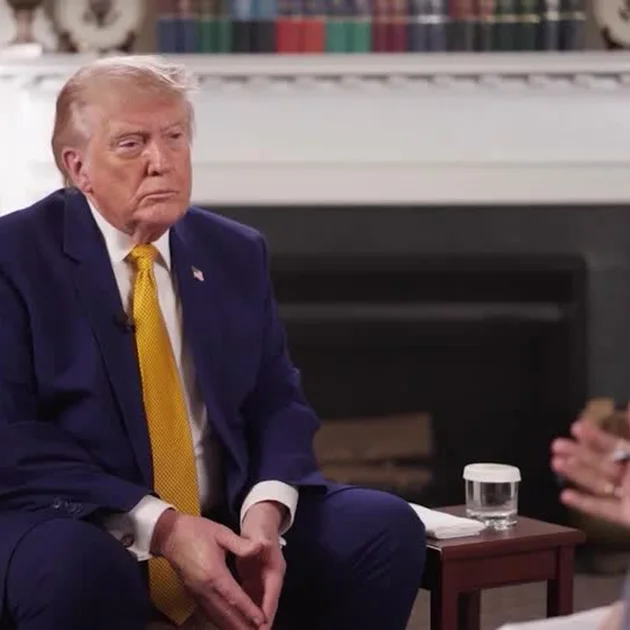
In a stunning confirmation that has sent shockwaves through Washington and the Middle East, President Donald Trump acknowledged on Wednesday that he called Israeli Prime Minister Benjamin Netanyahu an expletive in a phone call on Monday, upending the carefully managed public narrative of an unshakeable US-Israel alliance. The admission came during an interview on the Pod Force One podcast, where Trump was asked about an explosive Axios report that quoted him as telling Netanyahu: "You're fucking crazy. You'd be in prison if it weren't for me."
"I did," Trump said bluntly when asked whether the report was accurate. "I wouldn't say angry. I was a little bit perturbed at his constantly fighting with Lebanon, you know." The president sought to downplay the rift, adding: "I like Bibi a lot. And I work very well with him." But the leaked call, which Axios attributed to an unidentified US official, revealed extraordinary tension at a critical juncture. According to the report, Trump also told the Israeli leader: "Everybody hates you now. Everybody hates Israel because of this." The outburst underscores a deepening fracture between the two leaders as the US struggles to contain a widening war in the Middle East.
Netanyahu Plays Down the Clash
Netanyahu, asked about the Axios report during a CNBC interview on Wednesday, laughed off any suggestion of a serious rift. "We have common goals. Sometimes we have, as in the best of families, you have these tactical disagreements," he said, exuding the unflappable confidence that has defined his long political career. The prime minister added: "He's been the greatest friend that Israel has ever had in the White House, and he respects me; I respect him. We always find a way to work out our differences." But behind the diplomatic gloss, the exchange represents a major test for a relationship that has been central to Trump's foreign policy since he took office in January 2025. For Netanyahu, the stakes could not be higher: his political survival at home depends in part on maintaining Washington's unwavering support, even as Israel's military operations in Lebanon risk alienating its most important ally.
Why It Matters: Iran Talks and the Lebanon Front
The phone call did not happen in a vacuum. It erupted over Israel's ongoing military campaign in Lebanon, which began in March 2025 with an invasion aimed at rooting out Hezbollah fighters who had been firing rockets into northern Israel. The operation has exacted a heavy toll on Lebanese civilians and infrastructure, drawing international condemnation and straining US efforts to broker a broader peace. Trump, who has made ending America's involvement in the Middle East a centerpiece of his political brand, is currently locked in delicate negotiations with Iran to extend a ceasefire and open talks on Tehran's nuclear program. Those talks now hang by a thread.
Iran Threatens to Walk Away
Tehran has made its position unmistakably clear: it will not agree to a deal with the United States unless a ceasefire also covers Lebanon. Iran views Hezbollah as a critical strategic ally and has demanded that Israel halt its operations against the group as part of any broader settlement. The US-mediated agreement announced on Monday, which saw Israel step back from attacking Hezbollah-controlled southern suburbs of Beirut and the militia halt cross-border strikes, was supposed to be a first step. But Israeli drone strikes killed at least six people in southern Lebanon and targeted a car south of Beirut on Wednesday, according to Lebanese security sources, violating the fragile calm just hours after it was announced.
Trump bristled when asked if Netanyahu had deliberately sabotaged the Iran talks. In a separate exchange, he suggested that the Israeli prime minister's actions were undermining US national security interests. The situation is reminiscent of past tensions between US presidents and Netanyahu, who has a long history of testing the White House's patience. But the context this time is uniquely dangerous: the US is already embroiled in a costly war with Iran that Trump launched in February 2025, a conflict that has claimed thousands of lives and destabilized the entire region. Any collapse of the peace process could trigger a broader conflagration involving Gulf states, with devastating consequences for global energy markets.
The Human Cost Continues
On the ground, the war shows no signs of abating. Israeli forces continue to conduct operations against Hezbollah positions in southern Lebanon, while the Iran-backed militia has launched intermittent rocket attacks into Israel. The civilian toll is mounting: Lebanese officials report that over 10,000 people have been killed or injured since the invasion began, and more than 200,000 have been displaced. In Israel, Hezbollah's rocket fire has killed dozens of civilians and caused widespread damage to infrastructure. The conflict has also drawn in other regional actors: earlier this week, Iran struck targets in Kuwait and Bahrain, raising fears of a full-scale Gulf war. The US has responded by deploying additional naval assets to the region and warning Iran against further escalation.
Perspective: A Fractured Alliance at a Critical Moment
The Trump-Netanyahu clash is more than a personal spat between two strong-willed leaders. It reflects a fundamental strategic divergence that has been brewing for months. Trump, who campaigned on a promise to end "forever wars," is desperate to extricate the US from the Iran conflict and refocus on domestic priorities, including immigration reform and economic growth. Netanyahu, by contrast, views the war against Hezbollah and Iran as existential, believing that only decisive military action can secure Israel's northern border and prevent Tehran from acquiring nuclear weapons. These competing visions have collided in spectacular fashion, with Trump reportedly frustrated that Netanyahu is dragging the US deeper into a quagmire.
The 'Best of Families' Illusion
Netanyahu's characterization of the disagreement as "tactical" may be wishful thinking. The language attributed to Trump — "You'd be in prison if it weren't for me" — suggests a level of personal animosity that goes beyond policy differences. It echoes Trump's earlier frustration with Netanyahu during his first term, when the Israeli leader congratulated Joe Biden on his 2020 election victory despite Trump's baseless claims of fraud. That incident poisoned their relationship for years, and it appears that old wounds have reopened. For Netanyahu, the calculation is coldly strategic: he needs Trump's support to continue the military campaign in Lebanon and to deter Iran, but he also knows that Trump's patience is finite. If Trump concludes that Netanyahu is a liability, he could withdraw US backing for Israeli operations, effectively forcing a ceasefire on terms favorable to Hezbollah.
Broader Implications for US Foreign Policy
The crisis has wider ramifications for America's role in the Middle East. Trump's decision to withdraw from the 2015 Iran nuclear deal during his first term and then launch a war against Tehran in 2025 have left the US isolated and overstretched. European allies, who were sidelined in the decision-making process, have refused to provide troops or logistical support. Meanwhile, Gulf states like Saudi Arabia and the United Arab Emirates are hedging their bets, maintaining backchannel communications with Iran even as they host US military bases. The Trump administration's reliance on personal diplomacy — epitomized by the president's relationship with Netanyahu — has proven brittle. When the chemistry fails, as it appears to have done this week, there is no institutional framework to fall back on.
Domestically, the scandal is a gift to Trump's political opponents. House Democrats have already called for hearings into the administration's conduct of the Iran war and its management of the alliance with Israel. The leaked phone call provides ammunition for critics who argue that Trump's foreign policy is chaotic and driven by personal grudges. But it also energizes his base, which has grown increasingly skeptical of foreign entanglements and views Netanyahu as a warmonger. The political calculus is complicated, and the outcome will depend on whether the crisis can be contained before it spirals into a full-blown rupture.
What Comes Next
For now, both sides are engaged in damage control. The White House has declined to comment on the specifics of the call beyond Trump's confirmation, while Netanyahu's office has issued a statement reaffirming the "unshakeable bond" between Israel and the US. Behind the scenes, diplomats are scrambling to salvage the Iran talks, with European mediators shuttling between Tehran, Washington, and Jerusalem. The stakes could not be higher: a failure to extend the ceasefire would likely trigger a resumption of full-scale hostilities, with Iran and its proxies striking US forces and Israeli cities. The reopening of the Strait of Hormuz, a vital shipping lane for global oil supplies, also hangs in the balance.
In an ironic twist, the crisis may ultimately force Trump and Netanyahu to patch things up. Both men are political survivors who understand that their fates are intertwined: Trump needs a foreign policy success to counter domestic headaches, while Netanyahu cannot afford to lose the support of the US president. As one senior Israeli official put it, speaking on condition of anonymity: "They fight like brothers. And like brothers, they will eventually make up. The question is how much damage is done in the meantime."
Related Coverage
For more on the political dynamics shaping US policy, see our report on Trump-Backed Steve Hilton Tied for Lead in Early California Primary Returns. Meanwhile, the broader regional situation remains volatile: Iran Strikes Kuwait, Bahrain as Gulf Tensions Threaten Ceasefire with US offers a comprehensive look at the unfolding crisis. As Washington weighs its next move, the outcome of this high-stakes diplomatic drama will shape the Middle East for years to come.
Comments