
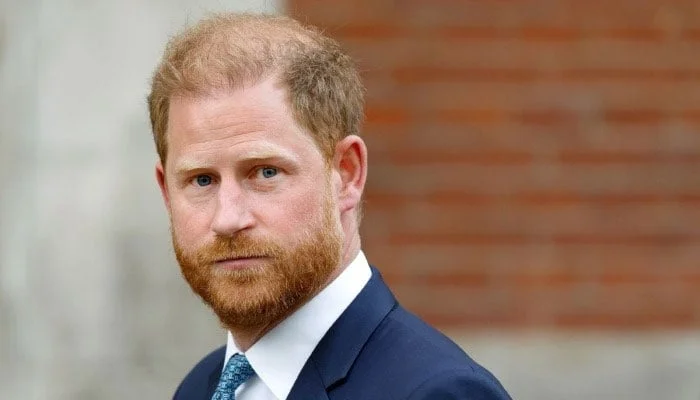
Verdict Day Arrives for Prince Harry’s Landmark Privacy Case Against Daily Mail Publisher
Prince Harry’s long-running legal battle against the British tabloid press reached its climax on Tuesday, July 7, 2026, as a High Court judge in London prepared to deliver the verdict in his privacy invasion lawsuit against Associated Newspapers Limited (ANL), the publisher of the Daily Mail and The Mail on Sunday. The ruling comes as the Duke of Sussex begins a rare solo visit to the United Kingdom, his wife Meghan and their two children remaining in the United States over security concerns.
The lawsuit, filed in 2022 and heard over an 11-week trial earlier this year, is the final unresolved media-related claim brought by Harry and Meghan. It accuses ANL of using unlawful methods — including phone hacking, voicemail interception, and “blagging” private information — to obtain stories about Harry’s personal life during the 2000s and early 2010s. The prince is one of seven high-profile claimants, alongside singer Sir Elton John, actors Elizabeth Hurley and Sadie Frost, and Baroness Doreen Lawrence, among others.
ANL has strenuously denied the allegations, calling them “preposterous” and insisting that the roughly 50 articles at issue were based on lawful sources such as friends, royal aides, and publicists. Legal costs for the trial have been estimated at around £40 million ($53.5 million), underscoring the high stakes of the celebrity-studded litigation.
Harry’s Solo Return to the UK Amid Strained Royal Relations
Prince Harry landed in London on Monday evening, his first stop a premiere for the film Shoot The People at Picturehouse Central. Tuesday marks the beginning of a five-day itinerary of engagements focused on his charitable work, including an appearance at an Invictus Games event in London later in the day. On Wednesday, he is scheduled to visit Birmingham, where the next Invictus Games will be held in 2027.
The visit has been overshadowed by a palace dispute over accommodation. Harry’s team initially announced that he had accepted an invitation to stay at Buckingham Palace, but the Palace quickly contradicted this, stating that the prince had been told on Saturday that he would not be able to stay because he had not responded to the invitation in time. The episode has highlighted the continued tension between Harry and the royal family, which has been strained since his and Meghan’s decision to step back from royal duties in 2020.
There is no expectation that Harry will meet with his father, King Charles III, during this trip. The omission reflects the deep rift that has persisted despite occasional public signals of reconciliation. The king’s schedule remains busy, and palace aides have not indicated any planned family meeting.
The Claims: Allegations of Systematic Unlawful Information Gathering
At the heart of Harry’s lawsuit is a series of articles published between the late 1990s and early 2010s, many detailing his relationships with Chelsy Davy and Cressida Bonas. Harry’s legal team, led by barrister David Sherborne, argued that the private details in those stories could only have been obtained through illegal means. They alleged that journalists and private investigators working for ANL intercepted voicemail messages, hacked mobile phones, and used deception to obtain confidential information such as flight records and medical details.
“These were clear, systematic, and sustained acts of unlawful information gathering,” Sherborne told the court during the trial. He cited examples of reporters allegedly using “blagging” techniques — pretending to be someone else to trick companies into releasing data — to secure private information about Harry and his former girlfriends.
ANL’s defense rested on the argument that the stories were the result of legitimate journalism. The publisher’s lawyers pointed to Harry’s own public statements and the fact that many details had been provided by people close to him, including friends who spoke to journalists on the record. They also argued that some claims were time-barred by the statute of limitations.
The case is the latest chapter in Harry’s broader campaign against the tabloid press. In 2023, he won a landmark judgment against Mirror Group Newspapers (MGN), the publisher of the Daily Mirror, which was found to have engaged in “widespread and habitual” phone hacking. Last year, Rupert Murdoch’s News Group Newspapers (NGN), publisher of The Sun, issued an unprecedented apology and paid substantial damages to settle a similar lawsuit brought by Harry.
Why It Matters: The End of a Trailblazing Legal Campaign
For Harry, this verdict represents the final piece of a litigation campaign that has reshaped the relationship between the royal family and the British press. In 2023, he described reforming the media landscape as his “life’s work.” The outcome of this case will determine whether that mission ends with a victory or a setback.
Should Harry win, it would mark the third major court ruling against a British tabloid publisher in as many years, sending a clear signal that unlawful newsgathering will not be tolerated. It could also open the door to further claims from other individuals who believe they were targeted by the same practices.
If ANL prevails, it would be a significant blow to Harry’s campaign and could embolden publishers who argue that the prince’s lawsuits are frivolous and driven by a desire for revenge rather than legitimate legal grievances. The judge’s decision will be closely watched by media law experts and human rights advocates alike.
The case has also highlighted the deep emotional toll the press has taken on Harry. During his testimony in February, he choked back tears as he described the impact of media intrusion on his life and his family. “They continue to come after me, they have made my wife’s life an absolute misery,” he said. He has repeatedly blamed the press for the death of his mother, Princess Diana, who was killed in a car crash in 1997 while being pursued by paparazzi in Paris.
Broader Implications: The Changing Landscape of Press Regulation
The verdict in the Daily Mail case arrives at a time of broader reckoning for British tabloid journalism. The phone hacking scandal, which erupted in 2011, led to the closure of the News of the World, multiple police investigations, and the Leveson Inquiry into press ethics. Yet many critics argue that little has changed in the industry’s practices.
Harry’s legal campaign has been credited with keeping the issue in the public eye. His willingness to break with royal family tradition and testify in court — the first senior royal to do so in over a century — has given the proceedings a level of visibility that ordinary claimants could not achieve.
At the same time, his lawsuits have drawn criticism from some quarters, who see them as an attempt to silence legitimate reporting. British newspapers have fiercely defended their right to investigate the lives of public figures, and the Daily Mail’s editorial line has been particularly hostile to Harry and Meghan since their departure from royal life.
The case also raises questions about the limits of privacy for public figures. Harry argues that his status as a member of the royal family does not entitle the press to intrude into every aspect of his private life. His lawyers have pointed out that some of the articles in question focused on his romantic relationships and medical history, which they say have no legitimate public interest.
Perspective: What Comes Next for Prince Harry and the Royal Family
Regardless of the outcome, Harry’s relationship with the British press — and by extension, the royal family — is unlikely to heal overnight. His legal victories have been accompanied by a steady stream of negative headlines, and his decision to pursue litigation has strained ties with his father and brother, Prince William, who have traditionally maintained a policy of not suing the press.
The palace dispute over the Buckingham Palace invitation is the latest example of the frayed communication between Harry and his family. It suggests that trust remains low, and personal interactions are fraught with logistical and emotional complications.
For the British public, the verdict may offer few surprises. Harry’s popularity has declined significantly since he left royal duties, and the ongoing legal saga has been met with a mix of sympathy and fatigue. However, for those who have followed the phone hacking scandal from its beginnings, the case represents a crucial moment of accountability.
In a broader sense, the ruling will test the power of individual litigation to drive systemic change. Harry has said he wants to reform the media landscape, but whether a single court victory — or even a string of them — is enough to alter deeply entrenched practices remains an open question.
Related Coverage
- Prince Edward's Secret Romance Exposed: West End Star Ruthie Henshall Reveals All
- UK F-35s Intercept Russian Plane Shadowing HMS Prince of Wales in Arctic
This article will be updated as the ruling is announced.
Comments