
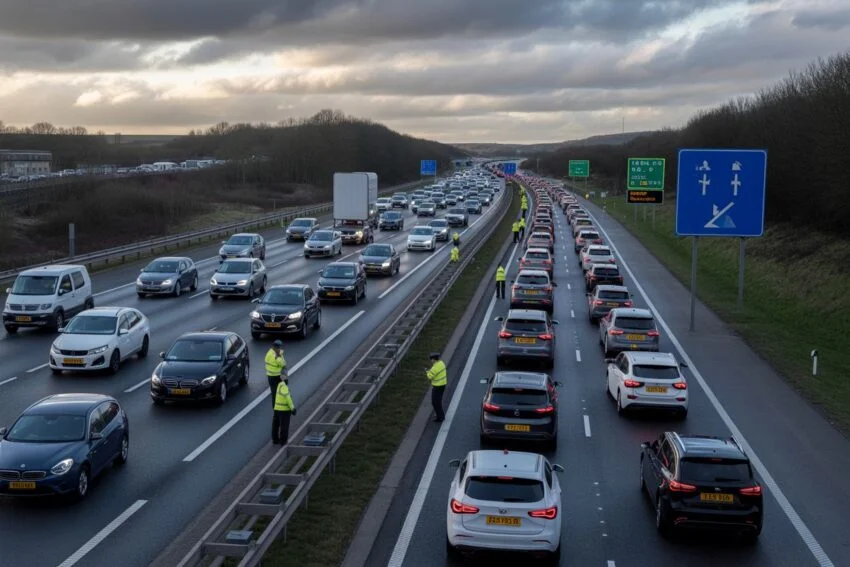
M62 hit by crashes and fire, causing widespread delays
Motorists on the M62 faced significant disruption on Tuesday, August 18, 2026, as a multi-vehicle crash closed two lanes near the Eccles Interchange, leading to delays of up to 60 minutes and queues stretching for five miles. The incident occurred on the eastbound carriageway between Junction 11 (Birchwood) and Junction 12 (M60 Eccles Interchange), with emergency services and National Highways traffic officers attending the scene.
According to National Highways, lanes 1 and 2 of 4 were closed shortly before 6pm, with delays of 60 minutes and 5 miles of congestion reported at the peak of the incident. The closure caused significant tailbacks for evening commuters, with the Inrix traffic data service reporting "slow traffic" and "queues" on the approach. All lanes were reopened by 7pm, but residual delays of 20 minutes and three miles of congestion continued as traffic gradually cleared.
This incident was the second major disruption on the M62 within a week. On August 14, a vehicle fire near Saddleworth forced the closure of two lanes on the eastbound carriageway between Junction 22 and Junction 23, near Huddersfield, causing queues of five miles and delays of 45 minutes. National Highways Yorkshire tweeted that "lanes 2 and 3 (of 3) are closed due to a vehicle fire," and advised drivers to allow extra time. All lanes reopened later that morning, but congestion persisted for hours as traffic slowly dissipated.
Why these incidents matter
The M62 is one of the UK's busiest trans-Pennine motorways, connecting Liverpool and Manchester with Leeds and Hull. It is a vital artery for commuters, freight, and tourism, carrying tens of thousands of vehicles daily. Any incident that closes lanes or holds traffic can have a ripple effect across the region, causing delays for miles and affecting businesses and individuals alike.
Tuesday's crash highlights the vulnerability of this key route to rush-hour disruption. With the evening peak in full swing, the closure of two lanes forced many drivers to seek alternative routes, placing additional strain on local roads and A-roads. The fact that delays reached 60 minutes underscores the severity of the incident, even though it was cleared relatively quickly.
The fire on August 14 similarly demonstrated how quickly a single vehicle problem can escalate into a major incident. The closure of two of three lanes on a steep, winding section of the motorway near Saddleworth caused significant queues, with some drivers reporting 40-minute delays. Such incidents not only inconvenience motorists but also have economic implications, as goods and services are delayed and productivity suffers.
For the wider region, these disruptions add to a growing list of challenges for road users, including roadworks, congestion, and adverse weather conditions. Earlier in August, the Liverpool Weather: Thunderstorm Warning Extended as Heavy Rain and Hail Loom highlighted how severe weather can further hamper travel, and motorists are encouraged to stay updated on traffic conditions before setting out.
What this means for drivers and future travel
The recurring incidents on the M62 serve as a reminder of the importance of checking travel updates before heading out, especially during peak hours. National Highways and local authorities use social media and traffic apps to provide real-time information, and drivers are encouraged to use these resources to plan alternative routes when accidents occur.
For the long term, these incidents fuel the ongoing debate about the resilience of the UK's motorway network. While investment in smart motorways and other upgrades aims to improve traffic flow and safety, incidents like Tuesday's crash still cause significant disruption, particularly on sections with limited alternative routes. The M62's hilly terrain and high traffic volumes make it particularly susceptible to congestion and accidents.
Local authorities and transport bodies are likely to continue reviewing safety measures, such as speed limits, signage, and emergency refuge areas, to mitigate the impact of incidents. However, as recent events show, no amount of infrastructure can fully prevent accidents or vehicle fires. Drivers can do their part by maintaining their vehicles, observing speed limits, and staying alert.
In the meantime, the message is clear: if you're planning to travel on the M62, especially during peak times, allow extra time and stay informed. As National Highways advises, "Please allow extra time if you're travelling in the area" — a tip that remains as relevant as ever.
Recent incidents in context
The August 18 crash and the August 14 fire are not isolated events. Over the past month, the M62 has seen several other incidents, including a separate crash in West Yorkshire on August 18 that blocked the westbound carriageway near Junction 26 (M606), causing 50-minute delays. That incident, involving a van and a car, led to a significant emergency response, with police and multiple ambulance crews at the scene.
These repeated disruptions have made M62 traffic a persistent topic in local news, with local outlets providing live updates and advice to drivers. For commuters, this means planning for uncertainty is part of daily life on the motorway. For businesses, it highlights the need for contingency plans when deliveries or employee commutes are affected.
As the summer holiday period draws to a close, traffic volumes are expected to remain high, with many families returning from trips and students heading back to universities. The M62 is likely to see continued heavy use, and the risk of incidents remains. Drivers are advised to ensure their vehicles are in good condition, particularly tyres and cooling systems, to reduce the risk of breakdowns and fires.
In conclusion, while the M62 remains a vital link for the North of England, its susceptibility to disruption is a constant source of frustration. Staying informed and prepared is the best way for drivers to navigate these challenges, whether it's a crash, a fire, or simply heavy traffic. With no signs of easing congestion, the advice from National Highways is simple: check before you travel, allow extra time, and stay safe.
Comments