
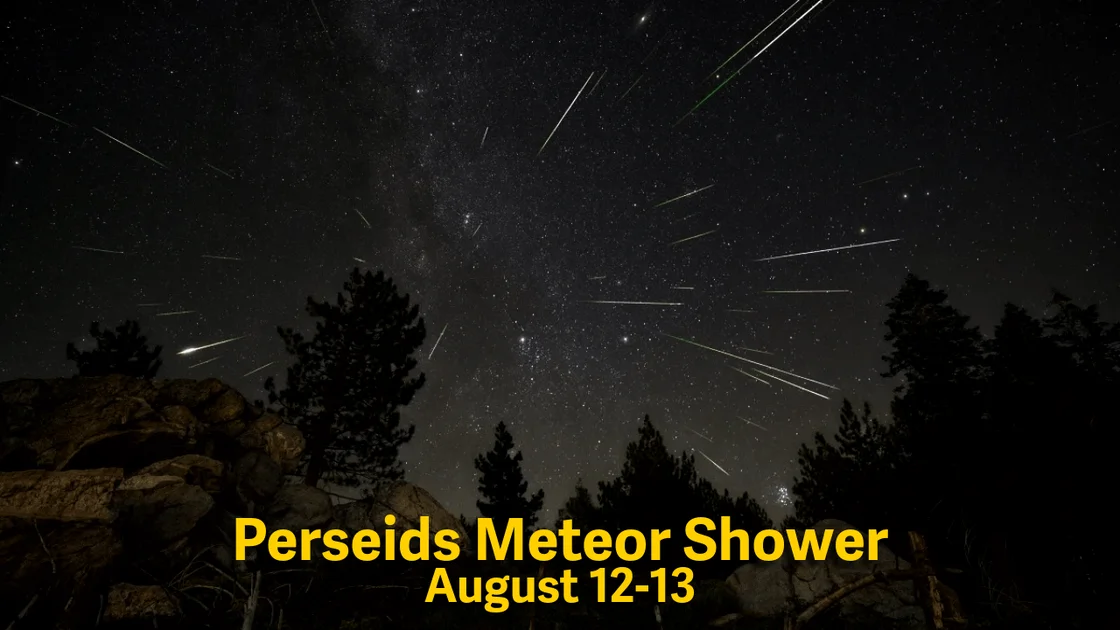
Perseid Meteor Shower 2026: New Moon Creates Perfect Dark Sky for Peak Viewing
Skywatchers across the Northern Hemisphere are gearing up for what astronomers are calling one of the most favorable Perseid meteor showers in recent memory. The annual celestial display, which began on July 17 and runs through August 24, will reach its peak on the night of August 12-13, coinciding with a new moon that ensures pitch-black skies for optimal meteor spotting.
According to NASA, under these ideal conditions observers can expect to see up to 100 meteors per hour during the peak window. The shower's radiant—the point in the sky from which meteors appear to emanate—lies in the constellation Perseus, easily located by facing northeast after 10 p.m. local time and looking just below the distinctive "W" of Cassiopeia.
The best viewing hours are between 2 a.m. and 6 a.m. local time, when the radiant is highest and the sky darkest. With no moonlight to wash out the fainter streaks, even casual stargazers have a strong chance of catching multiple meteors per minute.
Why This Year Is Different
The 2026 Perseid shower benefits from a rare astronomical alignment: peak activity coincides exactly with the new moon phase. This eliminates all lunar interference, a luxury not always available for meteor watchers. In recent years, full or gibbous moons have significantly reduced visibility, sometimes cutting observable meteor counts by half or more.
The Perseids are already among the most reliable and prolific meteor showers of the year, known for their bright, fast-moving trails. The debris responsible comes from Comet Swift-Tuttle, which leaves a trail of tiny particles—some no larger than a grain of sand—that Earth plows through annually at 37 miles per second. When these meteoroids hit the atmosphere, friction heats them to over 3,000 degrees Fahrenheit, creating the brilliant streaks visible from the ground.
The Science Behind the Spectacle
How Perseid Meteors Form
Each Perseid meteor is the death of a cosmic traveler. Comet Swift-Tuttle, which last passed through the inner solar system in 1992, sheds debris along its orbit that Earth encounters every August. These particles typically burn up completely about 60 miles above the surface, in the thermosphere, leaving no physical trace on the ground.
Larger fragments occasionally survive longer, producing dramatic fireballs that can cast shadows and persist for several seconds. According to NASA astronaut Ron Garan, who photographed the 2011 Perseid shower from the International Space Station, the view from orbit is equally stunning—layers of atmosphere lit by meteors below the station's altitude.
Weather and Viewing Conditions
Clear skies are essential, and meteor watchers should check local forecasts before heading out. The Weather Channel notes that atmospheric conditions can make or break the experience, as clouds, haze, or light pollution will obscure fainter meteors. Even with perfect weather, city dwellers may want to drive to a dark-sky site to maximize visible rates.
For those unable to travel, online livestreams from observatories and NASA will offer real-time views of the shower. However, nothing beats the experience of lying on a blanket under an open sky, watching the show unfold overhead.
Where and How to Watch the Perseids
Finding the Radiant and Maximizing Your View
Step outside after 10 p.m. local time and look toward the northeast. First, find the constellation Cassiopeia, shaped like a giant "W" or "M" in the sky. Just below it lies Perseus, the shower's namesake and the radiant point from which all Perseid meteors appear to originate.
A crucial tip: do not stare directly at Perseus. Meteors near the radiant have short tails and are harder to spot. Instead, lie flat on your back and let your eyes wander to the side of the constellation. The longest, most dramatic streaks will slice across the sky away from the radiant.
Allow at least 20 minutes for your eyes to adjust to darkness. Avoid looking at your phone or any bright screens during that time. Bring a reclining chair or blanket, and dress warmly even in summer—nighttime temperatures can drop significantly, especially in the pre-dawn hours.
Peak Night Details
The peak occurs on the night of August 12-13, with rates building after midnight and reaching maximum between 2 a.m. and 6 a.m. local time. Early risers on August 13 will have the best chance at catching the highest hourly counts, though the shower is active throughout the night once the radiant rises above the horizon.
Broader Implications: Why Meteor Showers Still Matter
Connecting People to the Cosmos
Meteor showers like the Perseids serve as a public gateway to astronomy and space science. In an era of rapid technological change and increasing light pollution, these predictable natural events remind millions of people of the vast universe beyond our planet. They inspire curiosity, encourage outdoor activity, and occasionally spark lifelong interests in science.
For many, the Perseids are a summer tradition passed down through generations—a chance to pause and look up. This year's perfect new moon conditions could draw record numbers of viewers, particularly if weather cooperates across large swaths of North America, Europe, and Asia.
Scientific Value
Beyond their beauty, meteor showers provide scientists with opportunities to study cometary debris and atmospheric physics. Organizations like NASA and the International Meteor Organization coordinate global observation campaigns, collecting data on meteor brightness, speed, and trajectory. Amateur observers equipped with cameras and reporting apps contribute valuable information that helps refine models of comet orbits and particle distribution.
The Perseids specifically help researchers understand Comet Swift-Tuttle's debris stream, which evolves over time due to gravitational perturbations from planets. Changes in meteor rates or brightness can indicate shifts in the stream's structure, offering clues about the comet's history and future behavior.
Looking Ahead: What This Means for Future Viewing
The combination of a new moon with the Perseid peak is relatively rare, occurring roughly every three to four years. The next such alignment will take place in 2029, though annual variations in weather and comet debris density will affect actual viewing conditions each year.
For now, August 12-13 represents a prime opportunity that skywatchers should not miss. Even if you cannot stay up for the peak, the shower will produce visible meteors for several nights before and after, with diminishing counts as the moon phase changes.
As with all celestial events, patience and preparation are key. Find a dark location away from city lights, bring friends and family, and allow yourself at least an hour of uninterrupted sky gazing. For many, the reward is not just the thrill of spotting a shooting star but the quiet wonder of feeling connected to something far larger than everyday life.
Quick Tips for Perseid 2026 Viewing
- Peak night: August 12-13, 2026
- Best time: 2 a.m. to 6 a.m. local time
- Where to look: Northeast, below Cassiopeia
- Equipment: None needed—just your eyes and a dark sky
- Gear: Blanket, reclining chair, warm clothes, snacks, red flashlight
- Avoid: Phone screens, bright lights, direct staring at the radiant
- Bonus: Listen for the occasional hissing or popping sound—some observers report hearing meteors during extreme activity
For those tracking other major events this month, keep an eye on developments like Prince Harry’s Invictus Games Leadership Praised Amid UK Visit Challenges and the evolving iPhone 18 Pro leaks reveal $200 price hike, brighter display, and A20 Pro chip. But for one night, the night sky will claim the spotlight—offering a free, spectacular show for anyone willing to look up.
Comments