
Record-Breaking Heat Wave Engulfs Portland and Pacific Northwest
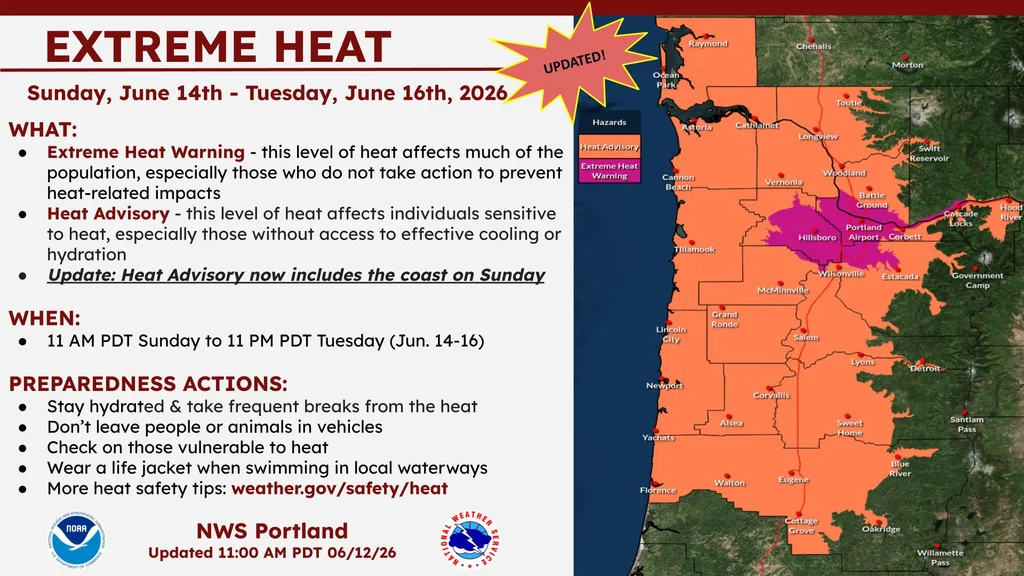
An extreme heat warning remains in effect across the Portland-Vancouver metro area and the Columbia River Gorge through Tuesday night, as the Pacific Northwest experiences its first major heat wave of 2026. The National Weather Service (NWS) warns of dangerously hot conditions, with temperatures expected to reach 97°F on Sunday and 99°F on Monday, shattering long-standing records.
Portland is poised to break its June 14 record of 89°F set in 1988, while Monday's forecast of 99°F would eclipse the 1966 record of 95°F. Astoria already set a new daily high of 81°F on Saturday, surpassing a record from 1917. The extreme heat warning, which took effect Sunday morning, is the highest alert level issued by the NWS, signaling conditions that affect the majority of the population.
What the Warning Means
According to the NWS, an extreme heat warning indicates that dangerous heat is occurring or imminent, and anyone without adequate cooling or hydration is at risk. This contrasts with a heat advisory, which applies to less severe conditions affecting mainly heat-sensitive individuals. Residents are urged to avoid heavy activity, stay hydrated, and check on vulnerable neighbors.
Cooling Centers Open as Authorities Urge Caution
Multnomah County activated additional emergency cooling centers on Monday after forecasted conditions met extreme heat thresholds. Two primary shelters are now operational: one at the county’s East Building in Gresham and another at the Bud Clark Commons in downtown Portland. These centers provide air conditioning, snacks, drinks, and clothing items such as flip-flops and shirts.
County emergency management director Chris Voss emphasized that numerous other cooling options are available, including senior centers, libraries with extended hours, recreation centers, splash pads, and misting stations. Outside Multnomah County, residents can call 211 or visit 211info.org to locate cooling resources.
Stories from the Ground
Retired homecare worker April Burris, who visited a Portland Meals on Wheels location to escape the heat, shared her struggles: “I’ve got asthma. It makes that a lot worse. I have autoimmune things going on and the weather can cause muscle spasms and migraines.” Meals on Wheels spokesperson Kelsey Allen noted that many older adults lack air conditioning, making these centers vital. Meanwhile, Portlander Mike Horner filled his truck with bottled water to distribute to homeless individuals, highlighting the community’s response to the crisis.
Prolonged Heat with Little Overnight Relief
The NWS warns that overnight temperatures will remain elevated, ranging from 63°F to 67°F, offering little respite. This lack of nighttime cooling increases health risks, as the body cannot recover from daytime heat exposure. The prolonged nature of this heat wave—spanning from Sunday to Tuesday—amplifies the danger, particularly for vulnerable populations such as the elderly, young children, and those with pre-existing health conditions.
The heat wave extends beyond Oregon and Washington. Millions in Northern California, including the Sacramento Valley and Shasta County, are under similar warnings, with temperatures potentially reaching 110°F. The NWS describes this as a “Major Heat Risk,” meaning anyone without adequate cooling or hydration is likely to be affected.
Safety Recommendations
The NWS advises residents to drink plenty of fluids, stay in air-conditioned spaces, and avoid direct sunlight. Fans can help circulate air, but windows should be kept closed during the day and opened at night. Never leave children or pets in parked vehicles, as interiors can reach lethal temperatures in minutes. Strenuous outdoor activities should be limited to early morning or evening hours.
Broader Implications of Intensifying Heat Waves
This extreme heat event is part of a larger pattern of intensifying heat waves across the United States. As a record-breaking heat wave sweeps the US, amplified by El Niño, such early-summer scorchers are becoming more frequent and severe. The Pacific Northwest, historically known for its mild summers, is increasingly vulnerable to extreme heat, straining infrastructure and public health systems.
Climate experts note that the combination of high daytime temperatures and warm nights is particularly dangerous. The California Office of Environmental Health Hazard Assessment warns that long periods of high heat with minimal overnight recovery can overwhelm the body, leading to heat exhaustion or heat stroke. This trend raises urgent questions about urban planning, building codes, and the need for widespread access to cooling solutions.
Community and Policy Responses
In response to recurring heat emergencies, cities like Portland are expanding cooling center networks and public awareness campaigns. However, the demand often exceeds capacity, and many residents—especially those without reliable air conditioning—remain at risk. The crisis underscores the importance of equitable access to cooling resources and proactive measures to mitigate heat impacts.
As this heat wave gradually subsides Tuesday with highs dropping to around 86°F, officials stress that the danger is not over. Residents should continue monitoring local forecasts and heeding safety advice. The event serves as a stark reminder of the growing threat posed by extreme heat and the need for resilience in an era of climate change.
Comments