
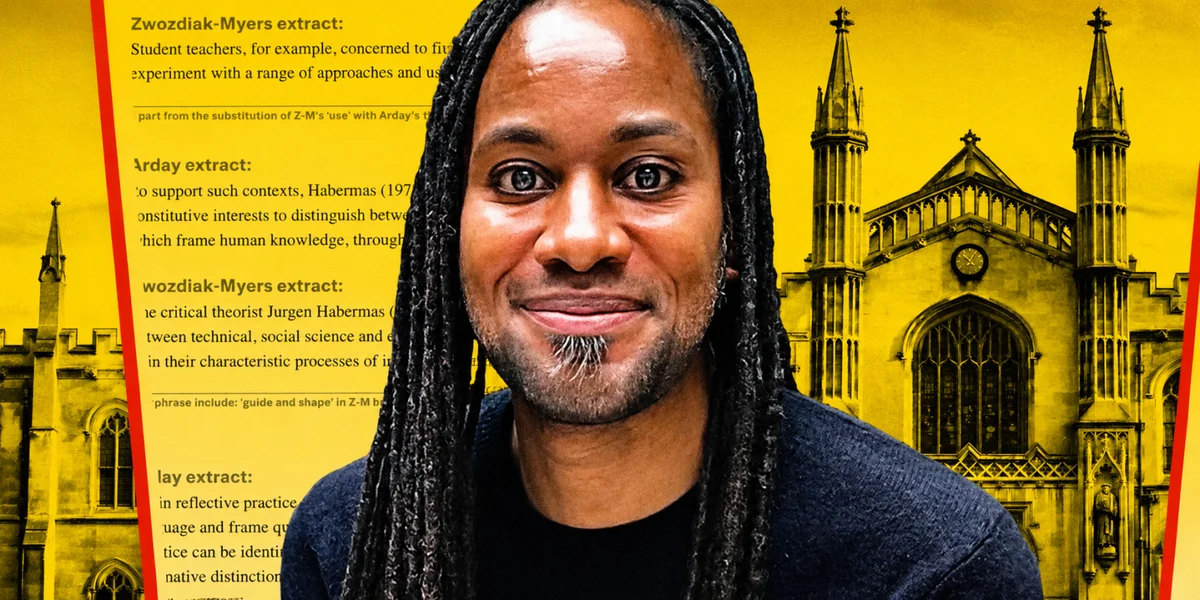
Cambridge Professor Jason Arday in Spotlight Over Plagiarism Allegations and Doubts on Life Story
Jason Arday, the Cambridge sociology professor celebrated as a trailblazer for diversity in academia, is now at the centre of a controversy that has called into question both his academic integrity and the extraordinary personal narrative that propelled him to prominence. The 37-year-old, who became the youngest Black person ever appointed to a Cambridge chair in 2023, has been accused of plagiarism in his scholarly work. The allegations, first raised by philosopher Nathan Cofnas on his Substack, have triggered a heated public debate about how institutions like Cambridge respond to criticism of high-profile diversity appointments. The university has defended Arday, stating that he has been cleared of "allegations of plagiarism regarding his thesis and journal publications" and calling him a "victim of a vile campaign to undermine his credibility." Critics, however, say that concerns about Arday's work have been circulating for years and that the university's response may be too quick to dismiss legitimate scrutiny.
The Accusations and the University's Response
Nathan Cofnas, a philosopher at the University of Ghent known for his controversial views on race and IQ, published what he described as "several instances of plagiarism" in Arday's writing. Cofnas has previously taken a Cambridge college to court, claiming discrimination against him for his "anti-woke" beliefs, which has led some to question his motives. In a statement, Cambridge asserted that it had investigated the claims and found no wrongdoing, framing the accusations as part of a broader campaign to discredit Arday. Yet the university's position has not silenced skeptics. Scholars who do not share Cofnas's political leanings have reportedly voiced concerns about the originality of Arday's work for years, long before the recent public flare-up. The case has become a flashpoint in debates about academic standards, diversity initiatives, and the pressure institutions face to justify their appointments.
Arday's Remarkable Rise and the Backstory Under Scrutiny
Arday's public profile rests on a life story that has been widely reported and praised. He says he was totally mute until age 11, diagnosed with autism, and unable to read or write until he was 18. Despite these challenges, he earned a PhD by 30, reportedly while suffering from a brain tumor. He went on to a lectureship in physical education in 2016, a sociology professorship at Glasgow in 2021, and then the Cambridge chair in 2023. He has advised the government on antiracism strategies, guest-edited the BBC's Today programme, and has been the subject of glowing profiles in international media. His achievements were presented as a triumph of perseverance over adversity, earning him honorary degrees from four universities. But the plausibility of some of these claims has now become a matter of dispute, with Toby Young of The Spectator openly suggesting that Arday might be a satirical creation in the mould of Sacha Baron Cohen's Ali G, designed to expose the blind spots of liberal institutions. While that theory is clearly extreme, the fact that it is being voiced underpins how much of Arday's public narrative relies on extraordinary, difficult-to-verify anecdotes.
Athletic Feats Under Question
Among the most questioned claims are Arday's reported athletic achievements. He has said he completed 600 miles from Edinburgh to London in just six days, just 50 miles short of the world record for ultra-distance running over six days, and ran 30 marathons in 35 days—during which he suffered a hairline fracture and an allegedly severely swollen leg, yet still finished the final nine marathons. He also claims to have raised £5.5 million for charity through these efforts. No independent evidence has been presented to verify these feats, yet they were repeated in BBC profiles and elsewhere without challenge. If such claims are inaccurate, it would raise serious questions about the vetting process for high-profile appointments and the public's willingness to accept remarkable stories when they come from individuals who fit a certain identity narrative.
Broader Implications for Academia and Media
The Arday case touches on deeper issues facing academic institutions and the media. Universities are under increasing pressure to diversify their faculties and to celebrate minority scholars who break barriers. But when such scholars are elevated quickly, they may face heightened scrutiny, and institutions may feel compelled to defend them against any criticism, regardless of validity. This dynamic can undermine public trust in academia and in the very diversity initiatives these appointments are meant to represent. For the media, the case highlights the dangers of publishing laudatory profiles without fact-checking extraordinary claims. The BBC and other outlets have faced criticism for treating Arday's story as inspirational without questioning its veracity. The upcoming release of Arday's memoir, expected within a month, will likely renew attention on these issues. The broader question now is not just what happened in Arday's past, but whether academic integrity can survive when it collides with the demands of symbolism and representation. As the controversy continues to unfold, it may force universities and journalists alike to re-examine how they balance diversity goals with rigorous standards of evidence and accountability. In an era of heightened sensitivity around issues of race and inclusion, the Arday case serves as a warning that well-intentioned affirmations can sometimes blind institutions to the need for ethical scrutiny.
Comments