
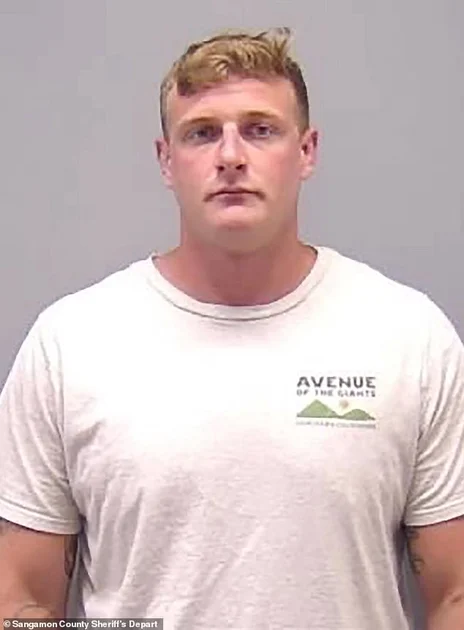
Sean Grayson Denied Medical Release in Sonya Massey Killing
The Illinois Prisoner Review Board on Friday unanimously denied former Sangamon County Sheriff's Deputy Sean Grayson's request for early medical release, keeping him behind bars for the 2024 fatal shooting of Sonya Massey. The 3-0 decision, announced by board spokesperson Liz Mitchell, means Grayson, who is serving a 20-year sentence for second-degree murder, will remain in custody despite a terminal cancer diagnosis.
Grayson, who filed for release in May under Illinois' Joe Coleman Act, had argued that his Stage 4 colon cancer, which has spread to his liver, lungs, and rectum, qualifies him for compassionate release. The board's rejection follows a heated hearing in Springfield, where Sangamon County State's Attorney John Milhiser urged officials to keep Grayson imprisoned, calling any early release "a miscarriage of justice and an insult to Sonya Massey's memory and family."
Attorneys Ben Crump and Antonio Romanucci, representing Massey's family, praised the decision. "The Prisoner Review Board made the right decision and reaffirmed the jury's verdict and the sentence the court imposed," they said in a joint statement. "A badge does not provide an early way out."
The Board's Rationale
According to documents obtained by NBC News, Grayson's application included an evaluation from a medical professional who checked a box indicating Grayson is likely to die within 18 months due to his condition. However, the same professional did not deem Grayson medically incapacitated, noting that his cancer does not interfere with his ability to perform daily tasks unassisted.
The three-member panel weighed this evidence against the severity of the crime and Grayson's lack of remorse in his application. In his handwritten request, Grayson maintained that Massey attacked him with a pot of boiling water, contradicting body-camera footage and his own apology at sentencing. He also did not check a box stating his condition was likely fatal, despite the doctor's assessment.
Grayson's attorney, Daniel Fultz, declined to comment on the ruling. The former deputy has served only about six months of his sentence, which he could have reduced by half with good behavior.
A Nationally Watched Case
Sonya Massey, a 36-year-old Black woman, was killed on July 6, 2024, after she called 911 to report a suspected prowler outside her Springfield home. Body-camera footage showed Grayson and another deputy entering her residence. Inside, Massey moved a pot of hot water from the stove, prompting Grayson to back away. When Massey said, "I rebuke you in the name of Jesus," Grayson responded by pointing his gun and threatening to shoot. Massey apologized and dropped to the floor, but Grayson fired three times, striking her in the face.
The shooting sparked national outrage, protests against police violence, and a review by the U.S. Department of Justice. Grayson, who is white, was convicted in October 2024 of second-degree murder, a charge that requires proof of an unreasonable belief in self-defense. In January, a judge imposed the maximum 20-year sentence, citing Grayson's actions and lack of credibility.
At sentencing, Grayson apologized: "I made a lot of mistakes that night. There were points when I should've acted, and I didn't. I froze. I made terrible decisions that night. I'm sorry." But his medical release application contradicted that remorse, reasserting that Massey had attacked him.
Massey's family has been vocal in opposing any leniency. Her mother, Donna Massey, told the court, "Today, I'm afraid to call the police in fear that I might end up like Sonya." Her daughter, Summer, said after sentencing, "Twenty years is not enough."
Medical Release Under the Joe Coleman Act
Illinois' Joe Coleman Act allows incarcerated individuals with terminal illnesses or severe medical incapacitation to petition for early release. To qualify, a prisoner must have a condition that is irreversible and incurable, and likely to cause death within 18 months, or be unable to perform daily living activities without assistance. The law requires a medical professional's assessment, but the final decision rests with the Prisoner Review Board.
In Grayson's case, the medical evaluator confirmed his cancer is terminal, but the board's denial suggests they prioritized public safety and the gravity of the offense. Governor JB Pritzker, in a statement, noted that Illinois law mandates the board consider such requests, but he called Massey's killing "a profound loss." He added, "Sonya was innocent, unarmed, and called for help. She deserved better."
Sangamon County State's Attorney Milhiser, in his letter opposing release, highlighted that Grayson already had cancer when he committed the murder and that the illness was explicitly weighed at sentencing. He argued that releasing Grayson early would undermine the judicial process and show disrespect to the victim's family.
Massey's cousin, Sontae Massey, told Capitol News Illinois last month that Grayson "has to pay for what he did."
What This Means for Accountability and the System
Friday's decision marks a significant moment in a case that has become a flashpoint for debates about police accountability, racial justice, and the limits of compassionate release. By denying Grayson's request, the board sent a clear signal that terminal illness does not automatically override the severity of a conviction, especially in cases involving law enforcement misconduct.
Legal experts note that the rejection could set a precedent for how similar applications are handled, particularly for defendants with medical conditions that existed before their crimes. "The board took a strict view, emphasizing that a diagnosis is not a get-out-of-jail-free card," said a criminal justice analyst familiar with the case. "They looked at the totality of circumstances, including Grayson's conduct and lack of remorse."
For Massey's family, the decision provides a measure of closure, but the pain remains. They have called for broader reforms, including better training for officers responding to mental health crises and stricter oversight of deputies with disciplinary histories. Grayson had previously been disciplined for misconduct, and his record raised questions about why he was still on the force.
The case also continues to influence national conversations about police violence against Black women, a topic often overshadowed by cases involving Black men. The Justice Department's review, initiated after Massey's death, is expected to examine patterns of excessive force and accountability in Illinois.
While Grayson's prison sentence stands, his medical condition may still lead to future petitions. But for now, he remains incarcerated, with the board's decision reaffirming that his fate is tied to the justice system's expectations, not just his health.
The ruling was met with relief by activists who had rallied outside the Springfield hearing on Friday. "This is a victory for Sonya and for all those who demand that police be held to the same standard as everyone else," said one organizer. "The board listened to the family, not just the illness."
As the case recedes from the headlines, its principles endure: that accountability cannot be negotiated, and that even in the face of death, justice for victims like Sonya Massey remains paramount.
If you or someone you know is affected by police violence, resources are available through organizations like the NAACP Legal Defense Fund.
Comments