
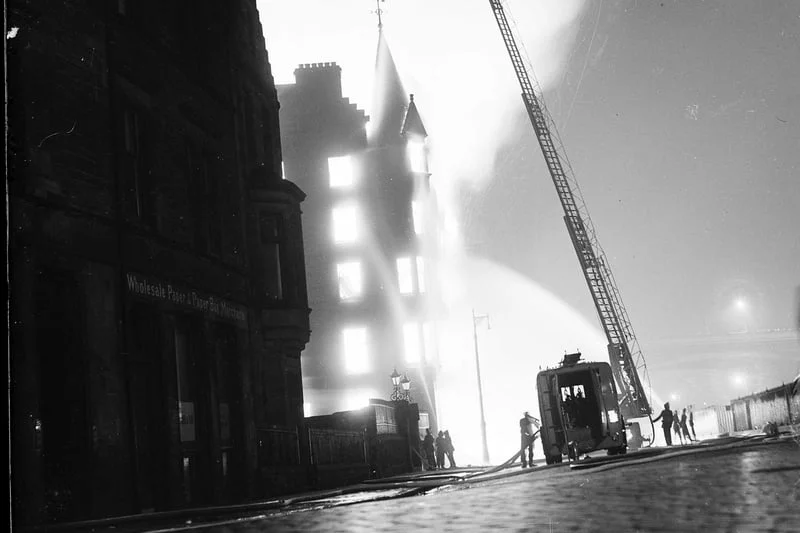
Historic Edinburgh Building Gutted by Overnight Blaze on Princes Street
A massive fire has ripped through a historic building on Edinburgh's Princes Street, sending towering flames and thick black smoke into the early morning sky. Fire crews rushed to the scene just before 4:00 AM on Thursday, July 9, 2026, after receiving reports of the blaze. The Scottish Fire and Rescue Service remains on site, battling the fire that is believed to have started around 3:30 AM.
The building, located on the city's premier shopping thoroughfare, has been extensively damaged. Local residents reported waking up to the strong smell of smoke, with some posting on social media about the acrid scent reaching as far as Craigentinny. Princes Street has been cordoned off, and a large emergency services presence remains in the area as crews work to bring the flames under control.
Cause Remains Unknown as Crews Battle Flames
At this stage, the cause of the fire is unknown. Investigators are expected to begin their work once the blaze is fully extinguished and the site is deemed safe. The focus for now remains on containing the fire and preventing it from spreading to neighboring properties, which include a mix of retail outlets, hotels, and commercial spaces.
The building is reportedly just a few doors down from the historic Jenners department store, which suffered a devastating fire in 2023 and has since been undergoing extensive restoration. That earlier blaze also drew a major emergency response and raised concerns about fire safety in the city’s historic architecture.
Transport Chaos as Princes Street Closed
The fire has caused significant disruption to Edinburgh's transport network. Princes Street, a key artery for buses and taxis, remains closed in both directions. Lothian Buses has confirmed that dozens of services are being diverted via South Charlotte Street, George Street, and South St David Street.
A full list of affected bus routes includes the 1, 3, 4, 10, 11, 15, 16, 19, 24, 25, 26, 29, 30, 31, 33, 34, 37, 43, 44, 47, 100, 106, 113, 124, and numerous night and express services (N3, N11, N16, N25, N26, N30, N37, X5, X6, X7, X19, X4, X18, X27, X28, and 47B). Passengers are advised to check for live updates and allow extra time for their journeys.
Scottish Citylink has also cancelled services serving Princes Street. The operator has advised customers to use the Bus Station or Shandwick Place as alternative stops. The disruption is expected to continue for much of the day, as road closures remain in place while emergency services continue their work.
Impact on Commuters and Tourists
Edinburgh is currently in the height of its summer tourist season, and Princes Street is one of the most visited locations in the city, offering views of Edinburgh Castle and access to key shopping destinations. The closure is likely to cause congestion on alternative routes and impact businesses in the area. Commuters heading into the city center are being urged to consider using the tram or rail services where possible, or to work from home if their employers permit.
A City Haunted by Historic Fires
This latest fire brings back painful memories of the 2023 Jenners department store fire, which devastated one of Edinburgh's most iconic retail landmarks. That fire took hold in a Category A listed building, requiring dozens of firefighters and specialist equipment to bring under control. The building that burned this morning, while not as well-known as Jenners, is part of the historic fabric of Princes Street, a street that has evolved over centuries but retains many of its Victorian and Georgian structures.
Fire safety in historic buildings has been a recurring concern for conservationists and the fire service alike. Many older structures lack modern fire suppression systems, and their construction materials — often timber frames beneath plaster — can allow flames to spread rapidly. The fire service has repeatedly urged building owners to ensure fire risk assessments are up to date, particularly in buildings that house multiple tenants or businesses.
Edinburgh's Old and New Towns are a UNESCO World Heritage Site, and any fire in the city center raises questions about the balance between preserving historic character and ensuring modern safety standards. The blaze also recalls larger wildfires that have ravaged parts of the UK and Europe in recent summers, including the recent Bourne Valley Park Blaze: 50 Firefighters Tackle 'Football Pitch-Sized' Heath Fire, which highlighted the strain on emergency resources during dry periods.
The Human and Economic Cost
While no casualties have been reported in connection with the Princes Street fire, the incident is likely to have a significant financial impact. The affected building houses commercial units, and the closure of Princes Street will hurt retail and hospitality businesses that rely on foot traffic. Insurance claims are expected to be substantial, and the cost of restoring or rebuilding a historic property in a conservation area is typically high.
Beyond the immediate economic consequences, there is a cultural loss. Each historic building lost to fire diminishes the unique character of Edinburgh's cityscape. The street, which separates the medieval Old Town from the Georgian New Town, is a symbol of the city's architectural heritage. Locals and tourists alike have expressed shock and sadness on social media, sharing photos and videos of the fire as it unfolded through the night.
Fire Service Response Under Scrutiny
The Scottish Fire and Rescue Service has been praised for its rapid response, with crews arriving within minutes of the first reports. However, the incident comes at a time when fire services across the UK are facing budget pressures and debates over resource allocation. The ability to tackle large urban fires in densely built historic areas requires specialized equipment and training, and any shortfalls could have serious consequences.
Broader Implications: Fire Risk in Urban Heritage Zones
The Edinburgh blaze is part of a worrying pattern of fires affecting historic urban centers across the United Kingdom. From the York Minster fire in 1984 to the Glasgow School of Art fires in 2014 and 2018, the loss of heritage assets to fire has prompted calls for stricter regulations and better fire prevention measures.
One of the challenges is that retrofitting fire safety systems into historic buildings is often expensive and can conflict with conservation requirements. Sprinklers, for example, may be seen as intrusive, and running new electrical wiring can damage original features. Yet, as this fire demonstrates, the cost of inaction can be far greater.
Another issue is the changing use of such buildings. Many historic properties on Princes Street have been converted from residential use to commercial, retail, and hospitality spaces, which can introduce new fire risks — such as crowded public areas, commercial kitchens, and complex electrical systems. Regular inspections and enforcement of fire codes are essential, but resources for such work have been stretched.
The fire also highlights the interconnected nature of urban emergencies. The transport disruption caused by the road closure will have knock-on effects on air quality, traffic congestion, and even emergency service response times for other incidents in the city. Coordination between the fire service, police, transport authorities, and city planners is critical in minimizing the wider impact.
Looking Ahead: Investigation and Recovery
In the coming days, fire investigators will work to determine the cause of the blaze. Their findings will be crucial not only for insurance and legal purposes but also for informing future fire prevention policies. If the fire is found to have been caused by an electrical fault, arson, or negligence, it could lead to changes in building regulations or enforcement practices.
For the businesses and building owners affected, the focus will be on recovery. Temporary arrangements will need to be made for displaced tenants, and structural engineers will need to assess whether the building can be salvaged or must be demolished. In a conservation area, any rebuilding will need to respect the historic character of the street, which could delay the process and increase costs.
Edinburgh residents and visitors alike will be watching closely. The city has shown resilience in the face of previous disasters, but each loss of heritage is a blow to its identity. As the smoke clears and the full extent of the damage becomes apparent, the debate over how best to protect historic buildings from fire will inevitably intensify.
This event also serves as a reminder of the importance of public vigilance and rapid reporting. The early call to the fire service likely prevented an even greater catastrophe. In an era of increasing extreme weather and urban density, fire safety remains a shared responsibility — one that Edinburgh, like all historic cities, cannot afford to ignore.
Comments