
Ryanair Flight FR1386 Diverts to Paris Beauvais After Mid-Air Emergency Declaration
A Ryanair flight operating from Brussels Airport (BRU) to Porto (OPO) was forced to declare an inflight emergency on July 7, 2026, and divert to Paris Beauvais-Tillé Airport (BVA) in northern France. The aircraft, a Boeing 737-800 registered as EI-DPP, was approximately 45 minutes into its scheduled journey when the flight crew made the decision to reverse course and squawk 7700 — the international transponder code that signals a general emergency.
Tracking data from aviation monitoring services shows the aircraft was cruising at an altitude of 33,000 feet before initiating a rapid descent and turning toward Paris Beauvais, which is a major operational base for Ryanair in the region. Emergency ground crews at BVA were placed on standby and met the aircraft upon landing as a standard precaution. As of press time, the exact nature of the emergency has not been confirmed by Ryanair or air traffic control authorities. Speculation ranges from a possible mechanical malfunction to a medical emergency onboard, but no official statement has been released.
Passengers were safely disembarked at the diversion airport, where they await further instructions from the airline. Ryanair has not yet announced whether the flight to Porto will be resumed or if alternate travel arrangements will be made. This incident marks the second high-profile Ryanair diversion in Europe within a 48-hour period, raising questions about operational pressures on the low-cost carrier's network.
The Sequence of Events: What We Know So Far
A Routine Flight Turns Urgent
Flight FR1386 departed Brussels Airport at an unspecified time on July 7, with 189 passengers and crew onboard, bound for Porto in northern Portugal. For the first 45 minutes, the flight proceeded normally. According to air traffic control logs and flight tracking data, the crew abruptly reversed the aircraft's heading while over French airspace, turning eastward toward Paris.
Shortly after the course change, the pilots activated the transponder code 7700 — a signal that does not indicate a specific type of emergency but alerts controllers to give the flight priority handling and support. The aircraft then began a controlled but rapid descent from its cruising altitude, consistent with a need to reduce flight time to the diversion airport.
Paris Beauvais: A Strategic Diversion Point
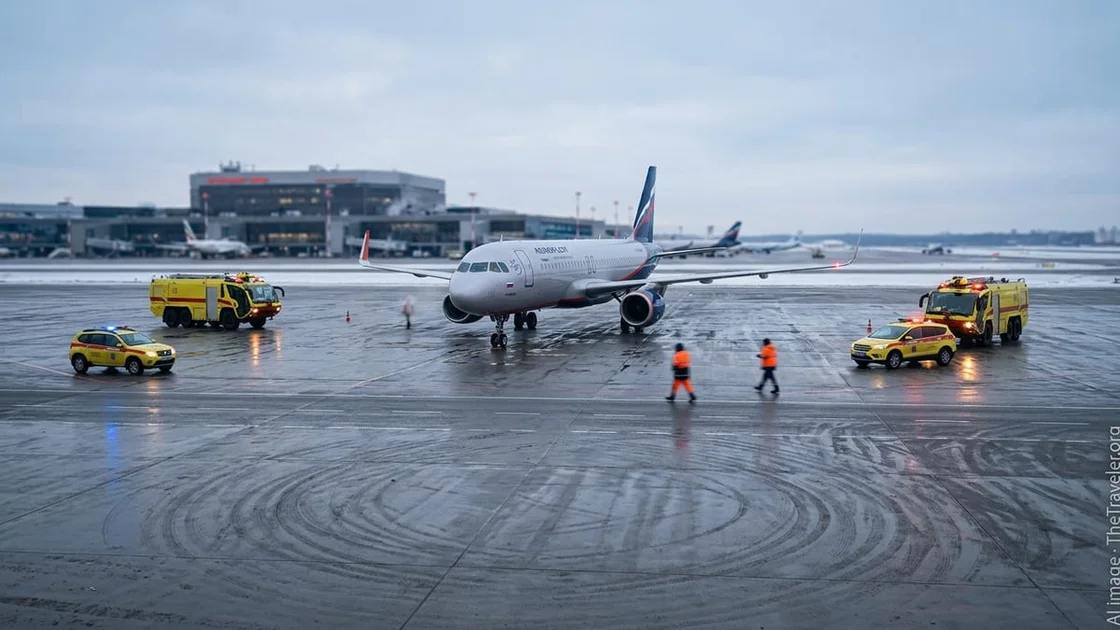
Paris Beauvais-Tillé Airport, located about 85 kilometers north of Paris, is a secondary hub for Ryanair and other low-cost carriers. The airport is well equipped to handle emergency diversions, with fire and rescue services available 24/7. Emergency vehicles were seen positioning near the runway as FR1386 approached, a standard procedure for any aircraft declaring an emergency.
The aircraft landed safely on Runway 25, and passengers were bussed to the terminal. No injuries have been reported. Ryanair has not provided a timeline for when the aircraft will be inspected or when passengers might continue their journey.
Possible Causes Remain Unconfirmed
The lack of an official statement has left room for speculation. Aviation experts note that squawk 7700 is used for a wide range of incidents, from minor technical glitches to serious system failures. "It is a catch-all code," explains a former airline captain consulted by this publication. "It could be anything from a faulty indicator light to a pressurization issue or a medical emergency. The rapid descent suggests the crew wanted to get to a lower altitude quickly, which often points to a pressurization or smoke event."
Ryanair has a fleet of over 500 Boeing 737-800s, and the airline’s maintenance record has come under scrutiny in recent years. However, without confirmation from the airline or aviation authorities, any discussion of cause remains premature.
A Troubled Week for Ryanair in European Skies
Previous Fuel Emergency and Nantes Runway Closure
Just one day before the FR1386 incident, another Ryanair Boeing 737-800 (registration EI-EBK) operating flight FR5448 from Seville (SVQ) to Nantes (NTE) declared a fuel emergency after its approach was blocked by an emergency landing of an Iberia regional jet. On July 6, the Iberia Bombardier CRJ1000 had suffered an engine failure during takeoff from Nantes, likely due to debris from a burst tire. The runway was closed for nearly four hours while emergency crews cleared the debris.
Ryanair flight FR5448 was forced to abort its landing and hold at 4,000 feet before the captain declared a fuel emergency. The aircraft then diverted to Brest Bretagne Airport (BES), approximately 150 miles northwest of Nantes. The plane landed safely with fuel levels still above the legal final reserve, according to a Ryanair spokesperson. Passengers were eventually transported to Nantes later that evening.
The Nantes incident underscored the fragility of single-runway airports and the cascading effects of a single emergency on airline operations. Ryanair’s operational response was praised for its focus on safety, but the fuel emergency has reignited debates about fuel reserve policies and margin management in the aviation industry.
Operational Pressures Mount
The back-to-back emergencies highlight the intense operational pressures faced by Ryanair, which operates a high-frequency, low-margin model. The airline’s schedule leaves little room for delays, and diversions can cause significant disruptions to aircraft and crew rotations. In both cases, the crew’s primary focus was passenger safety, but the incidents raise questions about whether recent cost-cutting measures have impacted safety margins.
Ryanair CEO Michael O’Leary has consistently defended the airline’s safety record, pointing to its membership in the IATA Operational Safety Audit (IOSA) registry. However, aviation unions and pilot associations have occasionally raised concerns about fatigue management and turnaround times. The airline has not commented on whether either incident is linked to broader operational issues.
Broader Implications: What These Incidents Mean for Air Travel
The Growing Frequency of Diversions
While inflight emergencies and diversions remain rare relative to the total number of flights, the past week has seen an unusual concentration of high-profile events. Beyond the two Ryanair flights, other carriers have also faced emergencies: an easyJet Airbus A319 declared an emergency over France on July 8, and a Southwest Airlines Boeing 737 MAX 8 returned to Honolulu mid-flight on the same day. Separately, a K2 Airways cargo Boeing 737 vanished from radar in the Middle East, prompting a major search operation.
This cluster of incidents is not necessarily indicative of a systemic failure, experts say. Dr. Elena Marchetti, an aviation safety researcher at the University of Bologna, notes: "Aviation is statistically the safest mode of transport, but when multiple events occur in a short time window, it can feel alarming. The reality is that we have more flight tracking tools and public awareness than ever before, so these events get more attention."
Still, the concentration of events involving Boeing 737 variants will likely draw scrutiny from regulators. Boeing has been under pressure following the 737 MAX crisis and subsequent production issues. The 737-800 is an older generation aircraft with an excellent safety record, but any incident involving the type can renew public skepticism.
The Human Factor in Emergency Handling
Both Ryanair incidents highlighted the professionalism of flight crews in managing stressful situations. In the Nantes fuel emergency, the crew communicated clearly with air traffic control, declared the emergency at the appropriate time, and executed a safe diversion. Similarly, the crew of FR1386 acted decisively in turning the aircraft toward the nearest suitable airport.
"In both cases, the pilots followed standard operating procedures to the letter," says retired pilot and aviation consultant Mark Stevens. "Declaring an emergency is not a failure — it’s a tool to get priority handling and ensure safety. The fact that they landed safely is a testament to their training."
Passenger experiences, however, vary. Those on the diverted Nantes flight remained onboard for an extended period while the aircraft refueled in Brest, leading to frustration. In the FR1386 case, passengers were quickly processed at the terminal, but many faced long waits for alternative transport amid limited airline communication.
A Call for Greater Transparency
Aviation safety advocates are urging Ryanair to release more information about both incidents promptly. While the airline has provided brief statements, the lack of detail — especially regarding the nature of the emergency on FR1386 — fuels speculation and undermines public confidence.
"Airlines have a responsibility to be transparent, especially when an emergency declaration makes global news," says James Harrington, editor of an aviation safety blog. "Even a simple update saying 'the issue was resolved and the aircraft is safe' can reduce anxiety for passengers and the general public."
Ryanair has indicated that it will release a statement once the aircraft has been fully inspected. Given the heightened scrutiny, the airline is likely to conduct a thorough investigation, even if regulators do not require one.
What’s Next for the Passengers and the Aircraft
Passengers from flight FR1386 were accommodated overnight in Paris or provided with onward travel options, according to unconfirmed reports. Ryanair typically arranges buses or alternative flights for stranded passengers, though compensation rules vary depending on whether the diversion is deemed caused by extraordinary circumstances.
Under EU Regulation 261/2004, passengers are entitled to care (meals, accommodation, and communication) during delays, but compensation is not due if the cause is outside the airline’s control — such as a technical fault or weather. The classification of this incident will determine whether passengers can claim.
The Boeing 737-800 (EI-DPP) remains grounded at Beauvais pending inspection. Ryanair’s engineering team is expected to examine the aircraft before it is cleared to return to service. If a mechanical fault is found, the airline will need to file a report with the European Union Aviation Safety Agency (EASA).
Navigating Uncertainty: Advice for Travelers
For passengers booked on Ryanair flights, especially those traveling to or from Brussels, Porto, or Paris Beauvais in the coming days, experts recommend checking flight status regularly and signing up for airline alerts. Travel insurance policies often cover disruption caused by diversions, but basic coverage varies.
Aviation lawyer Sophie Lefèvre advises: "Keep all receipts for expenses incurred during a diversion, such as meals or hotel stays. If the airline does not provide assistance, you may be entitled to reimbursement. Document everything, including emails and boarding passes."
While the aviation industry works to ensure the safety of every flight, passengers are reminded that emergencies, though dramatic, are handled with rigorous protocols. The success of these procedures were evident in both Ryanair incidents, where no one was hurt and the aircraft landed safely.
Conclusion: Safety Remains Paramount
The diversion of Ryanair flight FR1386 from Brussels to Porto is a developing story, and more details are expected in the coming days. While the cause of the emergency remains unknown, the incident serves as a reminder of the complexity of modern air travel and the importance of rigorous safety checks.
In related news, a separate incident saw a Boeing 737 MAX 8 from Southwest Airlines declare an emergency over the Pacific, underscoring that challenges can arise at any moment — even in the world’s most advanced aircraft. For travelers, the message is clear: the system is designed to bring every plane home safely, even when things go wrong.
Comments