
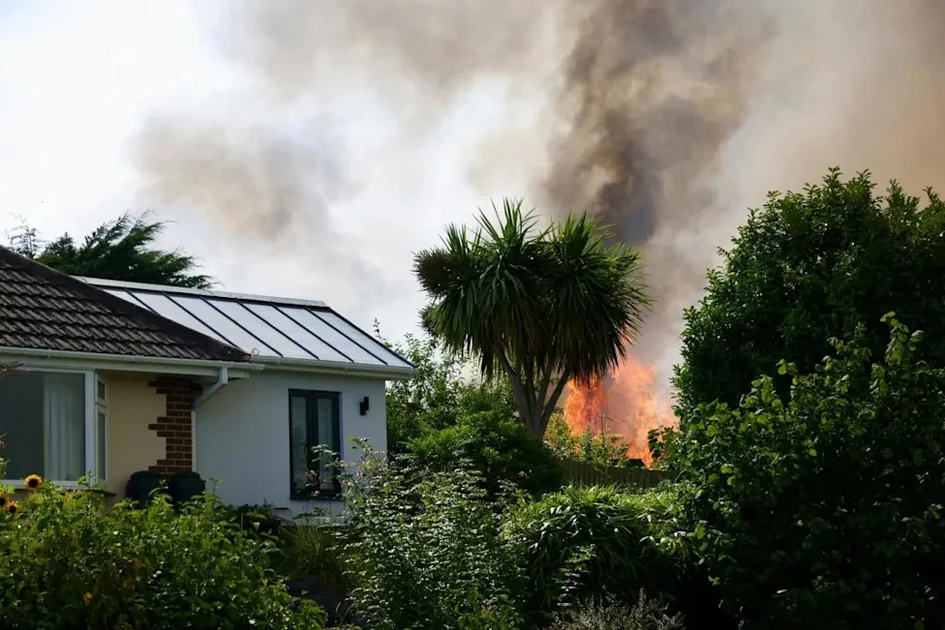
Fire Crews Battle Blaze at Bourne Valley Nature Reserve
Firefighters from Dorset and Hampshire have been battling a major heathland fire at Bourne Valley Park in Poole since Monday afternoon, July 6, 2026. Dorset and Wiltshire Fire and Rescue Service received more than 60 emergency calls starting at 15:07 BST, reporting flames that rapidly spread across approximately 200 metres by 100 metres of heathland—an area roughly the size of a football pitch.
Around 50 firefighters remain at the scene, supported by water carriers and small 4x4 appliances designed to traverse the park's difficult terrain. Crews from Redhill Park, Westbourne, Poole, Wimborne, Ringwood, Wareham, and Ferndown have all been deployed. The fire sent thick smoke over residential streets, covering nearby roads in ash and forcing residents to fear for their homes.
South Western Ambulance Service, BCP Council, and SGN have also attended the scene to provide support. Dorset Police confirmed it received reports but did not send officers. The exact cause of the fire remains unknown at this time.
Residents Describe Terrifying Moments
Local residents described the fire as "really scary." Rachel Luffman told reporters: "The flames got pretty close and we thought we would have to get out of the house. It started just after 2.30 and because of the wind it spread so quickly." Dennis Gosling, who lives in a bungalow off Bridport Road, said he called the fire service after seeing smoke. "Because of the wind the fire is knocking the firefighters back and it was jumping six feet," he said. "We had five fires in recent years, and the trouble is it stinks everything out. My missus has asthma and she has had to lock herself inside."
Teigan Anderson, 19, helped emergency services by managing a road closure on Monkton Crescent and offering firefighters refreshments. "It is really sad because this always happens. I don't even think it has recovered from last time. I can't take my dog to walk there now, it's all dead," she said.
Why the Bourne Valley Park Blaze Matters
This latest fire at Bourne Valley Park raises serious concerns about the vulnerability of heathland ecosystems and nearby communities during dry, windy conditions. The site is part of the Bourne Valley nature reserve, a designated area of lowland heath that supports rare species such as the sand lizard, Dartford warbler, and smooth snake. Each fire event sets back conservation efforts by years, destroying nesting sites and killing slow-moving wildlife.
For residents, the threat is immediate. Houses along Bridport Road and Monkton Crescent are separated from the heathland by only a thin buffer of gardens and roads. A shift in the wind could have brought flames directly to properties. The fire service has not ordered formal evacuations, but many residents prepared to leave.
A Pattern of Repeated Fires
This is not an isolated incident. Dennis Gosling noted there have been five fires in the area in recent years. Each time, the heathland struggles to recover, and residents endure weeks of smoke and ash. The accumulation of dry deadwood, which the council has been urged to cut back, creates a perfect tinderbox. Mr Gosling added: "The council need to cut back some of the plants as there is dead wood which is a fire waiting to happen."
Climate change is lengthening the fire season across the UK. While summer wildfires were once rare in the south of England, they have become more frequent. In 2022, record heatwaves sparked dozens of blazes across Dorset and Hampshire. Fire services are now training more crews in heathland firefighting techniques and investing in all-terrain vehicles, but resources remain stretched.
Broader Implications for Fire Safety and Land Management
The Bourne Valley Park blaze highlights several systemic challenges facing the UK's fire and rescue services, land managers, and policymakers.
Pressure on Emergency Services
Responding to a heathland fire requires specialist equipment—4x4 appliances, Unimogs, water carriers—that is not available at every station. The scale of the incident drew crews from multiple counties, reducing cover elsewhere. With fire seasons starting earlier and lasting longer, services are calling for greater investment in resilience. Incidents like this also show the public's vital role: fast reporting through 999 calls enables a quicker response.
The Call for Proactive Land Management
Residents are increasingly asking why preventative measures are not taken. Cutting back dead vegetation, creating firebreaks, and restricting public access during high-risk periods are all recommended by the National Fire Chiefs Council but are not consistently implemented. BCP Council now faces renewed pressure to review its heathland management strategy.
What This Changes for Local Communities
For many in Poole, this fire is a personal tragedy. Families cannot walk their dogs on the heath, children lose their green space, and the landscape will be scarred for years. As Teigan Anderson said: "I can't take my dog to walk there now, it's all dead."
The blaze also echoes a pattern seen in other recent UK wildfires, such as the 2022 blazes on Wareham Forest and Studland Heath, which took years to regenerate. With temperatures climbing and droughts becoming more common, experts warn that lowland heath—a habitat of international importance—is at increasing risk.
In a separate incident further south, a whale struck and sank a New Jersey fireboat, but here in Dorset, the fight is against wind, heat, and vegetation. Firefighters continue to dampen hotspots on Tuesday morning, July 7, as the public is urged to stay away from the reserve and report any further signs of smoke.
Looking Ahead: What Needs to Happen
The fire service has said it will investigate the cause. If human activity is to blame—discarded cigarettes, barbecues, or deliberate fire-setting—that could lead to stricter access rules or fines. But the broader lesson is clear: climate change and land use practices are converging to make heathland fires more frequent and more dangerous.
For now, the priority is extinguishing the Bourne Valley blaze and preventing reignition. But the conversation is already turning to prevention, resilience, and community safety. As one resident put it: "There is no deterrent these days."
The Bourne Valley Park fire is not just a local story. It is a warning signal for every community living near dry heath or woodland. Preparation, funding, and public awareness will determine how well we face the next one.
Comments