
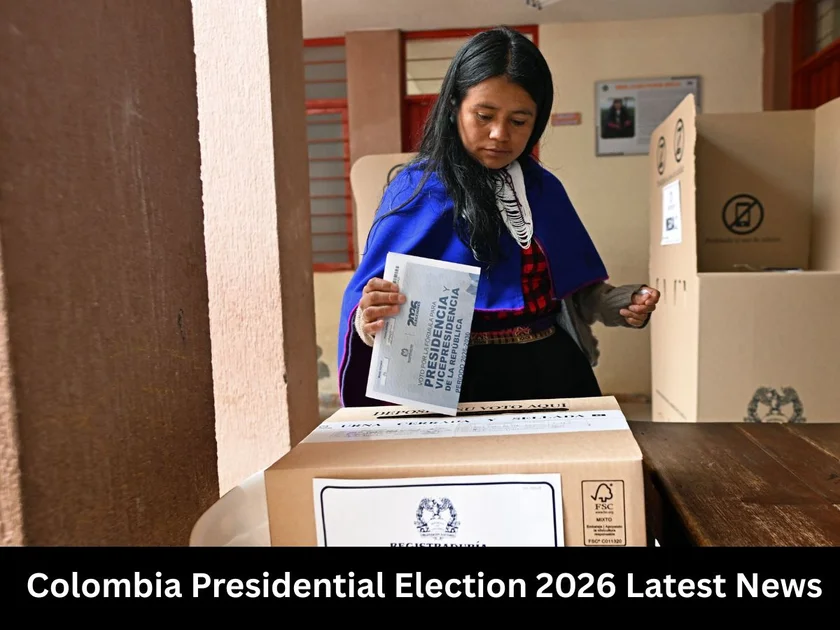
Colombia Elects Abelardo de la Espriella in Tight Runoff as President Petro Questions Preliminary Count
Colombia chose its next president on Sunday, June 21, 2026, in a second-round runoff that delivered a razor-thin victory to right-wing candidate Abelardo de la Espriella over leftist Iván Cepeda. With 99.90% of polling stations reporting, De la Espriella, leader of the Defensores de la Patria movement, secured 12,949,162 votes (49.65%) against Cepeda’s 12,701,546 votes (48.70%), a difference of just 247,616 ballots. The preliminary count, released by Colombia’s National Registry, showed neither candidate surpassing 50%, triggering a mandatory wait for the official scrutiny. President Gustavo Petro, whose term ends on August 7, immediately cast doubt on the integrity of the count, urging that no winner be proclaimed until the full verification process is complete.
The election caps a tense campaign season marked by deep ideological divisions, allegations of electoral irregularities, and record turnout. De la Espriella, a conservative lawyer and former senator, will succeed Petro and take office on August 7, 2026, for the 2026–2030 term. The outcome represents a stark shift from the left-wing policies advanced under Petro, who backed Cepeda, his fellow Pacto Histórico coalition member.
Key Developments on Election Day
Voting took place from 8:00 a.m. to 4:00 p.m. local time across Colombia, with expatriate voting open from June 15 to June 21. The government imposed a dry law from 6:00 p.m. on Saturday, June 20, through noon on Monday, June 22, and closed land borders from June 20 to June 22. Authorities reported no major disruptions, though the Mission of Electoral Observation (MOE) noted a strong presence of electoral witnesses monitoring the process.
As results began streaming in, Cepeda addressed supporters, thanking the more than 12 million Colombians who backed him and asserting that the agenda of social transformation remains alive. “We are a decisive force, and with us we dialogue,” he stated, while acknowledging the results were not yet official. He praised Petro for driving social reforms and promised to resist any rollback of workers’ rights, pensions, and education. De la Espriella’s campaign, meanwhile, celebrated the narrow lead, with incoming Vice President José Manuel Restrepo also issuing a statement on the preliminary count.
The Tight Contest and Its Stakes
This second-round runoff was necessary after the first round on May 31, 2026, failed to produce a majority winner. In that contest, De la Espriella led with 10,361,499 votes (43.74%), followed by Cepeda with 9,688,361 votes (40.90%), a gap of about 673,000 votes. Four other candidates split the remaining votes, including centrist and Green Party contenders. The runoff narrowed the field to the two most polarizing figures, mirroring the broader global trend of political fragmentation.
Colombia’s election took place against a backdrop of pressing national challenges. Inflation, which peaked at 9.8% in early 2025, had eased but remained above the central bank’s target, squeezing household budgets. Security concerns persisted, with peace talks between the government and the National Liberation Army (ELN) stalling and violence surging in regions like Catatumbo and the Pacific coast. Social issues—including pension reform, healthcare access, and environmental protections—dominated campaign rhetoric. De la Espriella campaigned on a platform of law and order, lower taxes, and private-sector-led growth, while Cepeda defended the outgoing administration’s social spending and climate policies.
The stakes extended beyond domestic policy. A De la Espriella presidency promises a sharp pivot away from Petro’s international alignment, which had strengthened ties with leftist governments in Latin America and distanced Bogotá from Washington. De la Espriella, by contrast, has signaled closer relations with the United States and a tougher stance on Venezuela’s Nicolás Maduro regime. His victory could reshape regional dynamics, particularly as Colombia chairs the Community of Latin American and Caribbean States (CELAC) in 2027.
What the Tight Margin Means
A margin of 0.95 percentage points makes this one of the closest presidential elections in Colombian history, surpassing the 2018 contest between Iván Duque and Gustavo Petro, which Duque won by 2.5 points. The narrow result leaves the country deeply divided. Voter turnout in the second round reached roughly 58% of the 39 million eligible voters, down slightly from the first round’s 62%, but still robust by regional standards. The vote in blank—a protest option—tallied 426,605 ballots, just 1.6% of the total, suggesting most Colombians were willing to choose between the two main candidates.
This fragmentation echoes tensions seen in other nations, such as the polarizing atmosphere surrounding major sporting events like the 2026 NHL Draft: Scouts See Depth, Not Star Power, where even a wide-open field creates uncertainty. Similarly, Colombia’s election outcome will need to navigate a landscape without a clear consensus mandate.
Petro’s Challenge to the Preliminary Count
President Gustavo Petro, a former guerrilla and Colombia’s first leftist leader, threw the election into uncertainty on Sunday evening by questioning the preliminary count. In a post on X (formerly Twitter), he alleged that the Registry was uploading E-14 forms—the official tally sheets—without the required signatures of polling station judges. “These tables must be immediately challenged,” Petro wrote. “It is strict that the forms go signed by the judges.” He later added, “No president can be proclaimed. It is the scrutiny that determines who is the president. I obey the judges.”
Petro’s skepticism mirrors his stance after the first round on May 31, when he similarly refused to recognize the initial count. Critics, including De la Espriella’s campaign, accused the president of attempting to undermine confidence in the democratic process. The National Registry, which manages the election, defended its procedures, stating that the pre-count is a rapid tally and the official scrutiny—conducted by electoral courts—will verify each form. The scrutiny process is expected to take several days to weeks, depending on challenges filed.
Legal experts note that Petro’s challenge is not without precedent. In 2022, when Petro himself won the presidency, his opponent Rodolfo Hernández also alleged irregularities, though courts ultimately upheld the result. The key difference is the source: a sitting president questioning his own succession, which analysts say could stoke unrest among his supporters. Cepeda, who remains loyal to Petro, urged calm but also called for adherence to legal procedures. “I do not consider the results known today to be official or binding,” Cepeda said in his speech, echoing his running mate’s caution.
The uncertainty has implications beyond Colombia’s borders. International observers, including the Organization of American States and the European Union, deployed monitoring teams. The MOE praised the transparency of the process but flagged isolated incidents, such as reports of missing E-14 forms at a few voting stations in rural areas. The United States, which has maintained close ties with Colombia as a key regional ally, issued a statement urging all parties to respect the outcome of the scrutiny.
The Road to Official Results
Under Colombian electoral law, the pre-count is a preliminary tally designed to provide fast—but unofficial—results. The official scrutiny begins at the municipal level, where local electoral commissions cross-check each ballot against the E-14 forms. Candidates can request recounts or challenge specific tables. If the margin remains within a certain threshold—typically 0.5%—an automatic recount is triggered. While De la Espriella’s lead exceeds that threshold at 0.95%, Petro’s allegations could still lead to a manual review of contested tables.
This prolonged process echoes the chaotic aftermath of recent elections in other parts of the world, such as the disputes over travel restrictions at global events like Iran Face Belgium Under Strict US Travel Curbs at World Cup 2026. Both cases underscore how institutional processes can become platforms for broader political conflict.
The Historic Transition Ahead
Assuming De la Espriella’s victory is confirmed, he will become the 65th president of Colombia and the first to lead the Defensores de la Patria party. At 52, the Bogotá-born lawyer brings a reputation as a firebrand conservative, having served in the Senate from 2018 to 2026. His vice president-elect, José Manuel Restrepo, is a former finance minister under Iván Duque (2018–2022), signaling a return to orthodox economic policies. De la Espriella has promised to dismantle Petro’s signature health and pension reforms, slash corporate taxes, and accelerate oil and gas exploration in the Llanos Orientales.
On security, he vows to revive the “democratic security” doctrine of Álvaro Uribe (2002–2010), including military strikes against “narco-terrorist” groups. This stance has raised concerns among human rights groups, who fear a return to extrajudicial killings. He also plans to renegotiate the 2016 peace accord with the FARC, arguing it gives too much leniency to former combatants.
Foreign policy will pivot sharply. De la Espriella has called Petro’s relationship with Maduro an “embarrassment for Colombia,” and has vowed to expel Venezuelan diplomats if Maduro does not allow free elections. He has also promised to re-energize the U.S.-Colombia trade deal and seek NATO partnership status. These shifts come at a time when South America is experiencing Summer Solstice 2026 Arrives Sunday: Longest Day, Cosmic Shift and Rituals, a moment marked by astrological transitions and cultural traditions—a fitting metaphor for the political transition in the region.
Broader Implications for Latin America
De la Espriella’s election completes a remarkable cycle in Latin American politics. Over the past five years, the so-called “pink tide” of leftist governments—Luiz Inácio Lula da Silva in Brazil, Gabriel Boric in Chile, and Petro in Colombia—has faced setbacks as conservative movements regained ground. Argentina’s Javier Milei, elected in 2023, and Ecuador’s Daniel Noboa in 2024, represent a growing shift toward free-market and law-and-order agendas. Colombia’s tilt further consolidates that trend, though the tight margin suggests the left remains a potent force.
Economically, De la Espriella inherits a country with an annual GDP growth of 2.1%, a fiscal deficit of 4.7% of GDP, and public debt at 62% of GDP. His proposed tax cuts could worsen the deficit unless offset by spending reductions. The International Monetary Fund has warned against abrupt fiscal adjustments, but De la Espriella’s allies argue that deregulation and foreign investment will spur growth. The incoming administration also faces pressure from environmentalists, who point to Colombia’s role as a Amazon rainforest guardian; De la Espriella has said he will open the Amazon for “responsible development.”
Social stability is another cloud. The election itself saw scattered protests in Bogotá and Medellín, with pro-Cepeda demonstrators clashing with police in a few neighborhoods. The MOE recorded 14 incidents of election-related violence, down from 22 in the first round, but still a concern. Cepeda, in his concession remarks, did not explicitly concede, instead calling for the defense of social rights. “We will not permit the use of force against political manifestations nor setbacks in social, labor, pension, and educational rights,” he warned. A protracted legal battle over the count could inflame tensions, particularly if the final margin shrinks further.
Lessons from Global Polarized Elections
The Colombian experience mirrors other deeply contested votes worldwide. In the United States, the 2020 presidential election was shadowed by unsubstantiated claims of fraud, leading to the January 6 Capitol riot. In Brazil, Lula’s narrow victory in 2022 over Jair Bolsonaro was followed by a similar attack on government buildings. Colombia’s institutional resilience will be tested. The scrutiny courts, whose judges are appointed for life, have a reputation for independence, but Petro’s vocal criticism of the Registry could undermine public trust, especially among his base.
The 2026 election also highlights the role of social media in spreading or disputing information. Petro’s rapid posting of allegations contrasted with De la Espriella’s more cautious approach, which relied on television appearances. The campaign period saw a spike in misinformation, particularly around voter ID requirements and voting hours, prompting fact-checking organizations to ramp up monitoring.
What Comes Next for Colombia
While the world awaits final results, the next weeks will be critical. The Registry plans to deliver certified results to electoral courts within 10 days, but challenges could extend the timeline to early July. De la Espriella has already begun transition planning, while Petro has called for a “national dialogue” to ensure a peaceful transfer—a move some see as an attempt to salvage his legacy. Cepeda will likely retain his Senate seat and lead the opposition, keeping the Pacto Histórico intact.
For ordinary Colombians, the result will shape daily life. Business leaders hope De la Espriella’s pro-market policies will boost investment and job creation. Low-income voters who benefited from Petro’s subsidies fear losing support. In rural areas, where the ELN and FARC dissidents operate, security remains a top concern.
Beyond politics, the nation can look to other events bringing Colombians together, such as Grandma's Marathon 2026: Elite Runners Gear Up for 50th Anniversary Race, which celebrates endurance and community spirit—values the country will need as it navigates this transition.
One thing is certain: Colombia’s democratic system, though bruised, held its election without widespread violence, and the legal framework provides a path to resolution. Whether that path leads to calm or conflict depends on how the candidates, their supporters, and the institutions handle the coming days.
Comments