
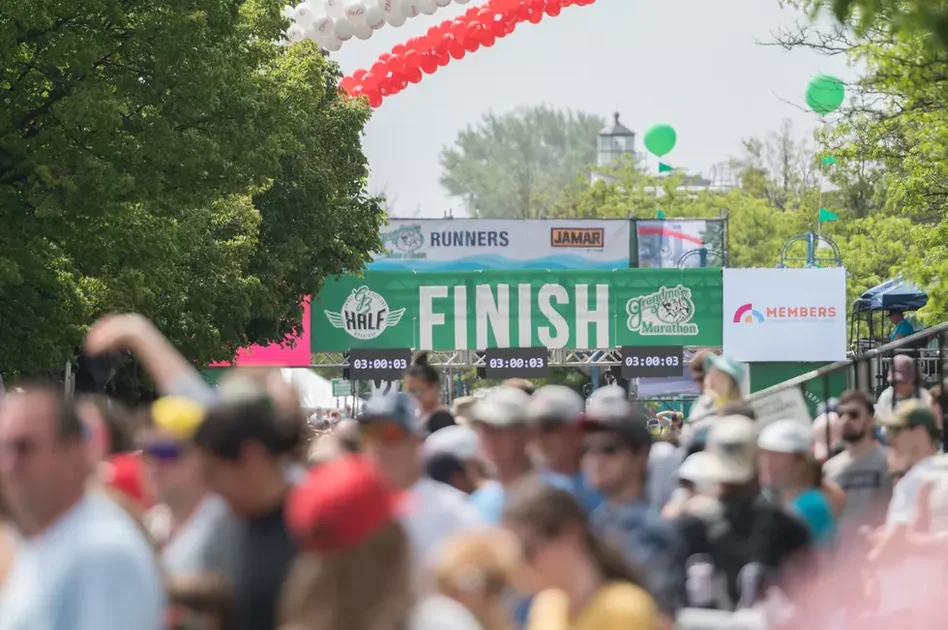
Grandma's Marathon 2026: Elite Runners and Road Closures Set for 50th Anniversary Race
Thousands of runners and spectators are converging on Duluth this weekend for the 50th running of Grandma's Marathon, one of the nation's most iconic long-distance events. The race, which begins in Two Harbors and follows the scenic North Shore of Lake Superior to Canal Park, is set for Saturday, June 20, 2026, with elite athletes already gathering for pre-race festivities.
On Friday afternoon, eight elite runners from both the Grandma's Marathon and the Garry Bjorklund Half Marathon participated in a public Q&A session at the DECC, emceed by former Olympian Carrie Tollefson. Among them were familiar champions including Joel Reichow, the 2025 Grandma's Marathon winner and the first person to win both the full marathon and the half marathon, and Dakotah Popehn, a 2024 Olympian and two-time Grandma's Marathon champion.
Race Start Times and Expected Winners
The Garry Bjorklund Half Marathon kicks off first, with adaptive athletes starting at 5:50 a.m. and elite waves at 6 a.m. The first half-marathon runners are expected to arrive in Canal Park about an hour later. For the full marathon, wheelchair and elite athlete waves begin at 7:35 a.m., with all other runners starting in waves between 7:45 a.m. and 8:10 a.m. Winners are projected to cross the finish line around 9:40 a.m.
Road Closures and Traffic Advisories
To accommodate the tens of thousands of participants and spectators, multiple roads will be closed from Two Harbors to Duluth starting at 4 a.m. Saturday. The Minnesota Department of Transportation (MnDOT) is urging drivers to expect significant delays and to pay close attention to closure signs. A detailed traffic guide and detour map are available from local news outlets.
Why the 50th Anniversary Matters
Grandma's Marathon has grown from a modest race with just 150 runners to one of the top 10 largest marathons in the United States, drawing roughly 20,000 participants annually. Its 50th anniversary marks a milestone for Duluth, which has embraced the event as a premier summer attraction. The race's appeal lies in its fast, point-to-point course along Lake Superior, consistently attracting elite athletes seeking personal bests and a calm, scenic environment.
Champions Reflect on the Course
At the pre-race Q&A, athletes emphasized the unique character of the Grandma's course. Dakotah Popehn noted, "Grandma's keeps me very calm. Nothing about it stresses me out the same way Boston, New York or Chicago do." Annie Frisbie, the two-time defending Garry Bjorklund Half Marathon champion, described the race as a personal benchmark: "It's almost addicting when you find success in something. I want to one up my own results, not even necessarily racing other people." Joel Reichow, aiming to defend his title, said he has recovered well and hopes to "put together a good day and still give it a shot."
Community Celebrations
Beyond the race itself, the anniversary weekend includes a shakeout run and a museum exhibit detailing the history of Grandma's Marathon. The event has become a cultural mainstay for the Twin Ports, drawing families, local businesses, and visitors from across the country. The Summer Solstice 2026 Arrives Sunday: Longest Day, Cosmic Shift and Rituals adds a celestial backdrop to the weekend, with the longest day of the year falling just one day after the race.
Broader Implications and Trends in Road Racing
The 50th anniversary of Grandma's Marathon highlights the enduring popularity of road racing in an era of evolving fitness trends. While virtual races and shorter obstacle events have gained traction, traditional marathons continue to thrive by offering community, elite competition, and scenic courses. Grandma's Marathon exemplifies this with its intimate feel despite its size, a quality that champions like Popehn credit for its success.
Elite Competition and Parity
The presence of Olympians and defending champions reflects a broader trend toward parity in U.S. distance running. Women's and men's fields are increasingly competitive, and the half-marathon distance has gained prominence as a standalone event. The Garry Bjorklund Half Marathon, held concurrently, allows top-tier athletes to test their speed without the full 26.2-mile toll.
Economic and Environmental Impact
Large races like Grandma's Marathon inject significant revenue into host cities through tourism, hotel stays, and local spending. In Duluth, road closures and safety measures coordinate with MnDOT and local law enforcement to minimize disruption. Recent efforts include enhanced safety enforcement from the ground and air on Minnesota roads, as cities balance event enthusiasm with logistical challenges.
As the race enters its next half-century, organizers are focusing on sustainability and inclusivity. Adaptive athlete categories have been expanded, and course improvements aim to accommodate both elite speedsters and charity runners. The 2026 edition, with its golden anniversary fanfare, sets a high bar for future years.
Looking Ahead
For those unable to attend in person, local media outlets like WDIO and Northern News Now will provide complete coverage, including live updates and highlights. The race's legacy continues to inspire new generations of runners, from first-timers to seasoned veterans chasing records. As Frisbie put it, the sport is about "comparing my current times to what I want to do and where I still want to go." Five decades in, Grandma's Marathon shows no signs of slowing down.
Comments