
Longest Day of the Year Arrives Sunday June 21
The 2026 summer solstice is set to occur on Sunday, June 21, marking the official start of astronomical summer in the Northern Hemisphere. At precisely 8:25 UTC — or 4:25 a.m. EDT — the Earth’s axis will reach its maximum tilt toward the sun, delivering the longest period of daylight of the entire year.
For regions across Canada, the exact timing varies: Newfoundland observes the solstice at 5:55 a.m. NDT, while Pacific Daylight Time registers it at 1:25 a.m. In the United States, the event happens in the early morning hours, meaning Saturday night into Sunday will technically hold the year’s briefest night.
This astronomical moment occurs when the sun appears to stand still at its northernmost point in the sky — a phenomenon reflected in the word “solstice,” derived from the Latin solstitium, meaning “sun stoppage.” After this peak, the sun’s daily arc will begin a slow retreat southward, and daylight hours will steadily shorten until the winter solstice in December.
What Makes This Solstice Different
While the solstice itself is an annual constant, 2026 brings an astrological overlap that adds a layer of significance. The sun enters the zodiac sign of Cancer at the same moment as the solstice, intensifying themes of home, emotion, and inner reflection. Astrologers note that the sun’s gentle alignment with the centaur Chiron in Taurus further emphasizes healing through simple pleasures — walking in nature, listening to music, or sharing time with loved ones.
“The summer solstice is a time where we are reminded of the beauty of timing,” says Nancy Hayes, an intuitive spiritual practitioner. “The longest day allows us to reflect on all the things we usually put off until summer.”
Why the Solstice Matters Beyond the Calendar
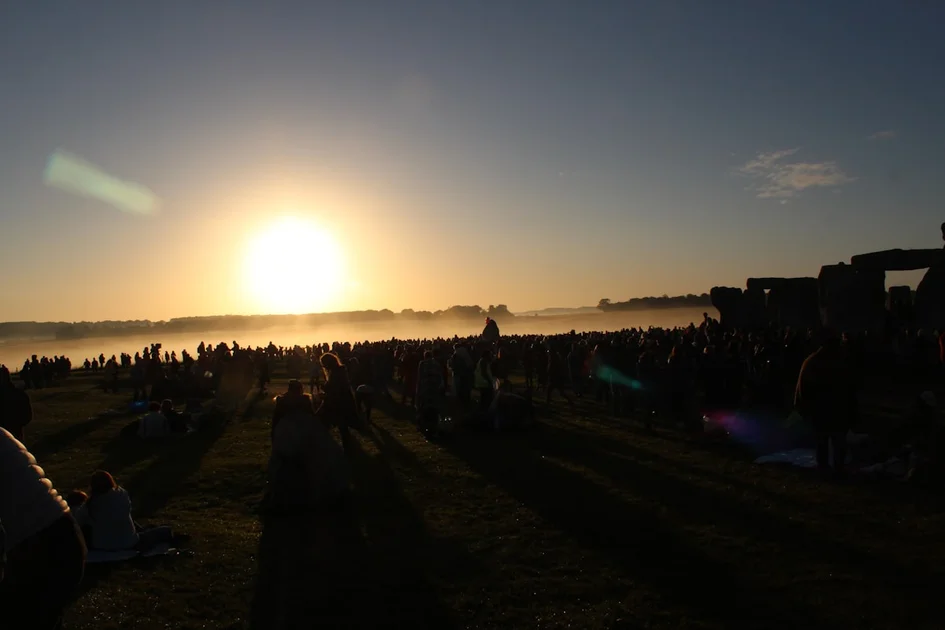
The solstice is more than a date on the astronomical calendar. For millennia, cultures around the world have marked this turning point with festivals, monuments, and rituals. Ancient structures like Stonehenge were aligned to capture the solstice sunrise, and contemporary celebrations such as Sweden’s Midsummer continue the tradition.
The Earth’s Tilt and Seasonal Extremes
The solstice occurs because Earth rotates on a tilted axis — about 23.5 degrees relative to its orbital plane. As the planet orbits the sun, different hemispheres lean toward or away from the sun’s rays. During the June solstice, the Northern Hemisphere is tilted most directly toward the sun, producing the longest day and shortest night.
At the same time, the Southern Hemisphere experiences the opposite: the shortest day and the beginning of astronomical winter. This axial tilt is responsible for the seasons we experience, and the solstices represent the extremes of that cycle.
The word “equinox” refers to the two points in the year when the tilt is neither toward nor away from the sun, giving both hemispheres roughly equal daylight. The solstices, by contrast, are moments of maximum imbalance — the tipping point after which the light begins to fade or grow.
Cultural and Historical Significance
Solstices have been observed for thousands of years, often linked to agricultural cycles, religious ceremonies, and community gatherings. In many traditions, the summer solstice is a celebration of light, life, and the sun’s power. The festival of Litha in pagan practice, the Chinese Dōngzhì, and the Persian Yalda are all rooted in solar events.
The 2026 solstice comes just days after Juneteenth, a federal holiday that this year saw expanded recognition across states. Celebrations in Milwaukee, tied to the opening of Summerfest, highlighted local vendors and community unity. As the longest day arrives, it offers a natural moment to reflect on themes of renewal and gratitude.
For those interested in sports, the solstice weekend also brings the Berlin Open tennis tournament, where players like Elina Svitolina and Linda Noskova advanced as Coco Gauff faced early struggles on grass. Meanwhile, the Goodwood Festival of Speed 2026 has announced Lando Norris and Valentino Rossi as headliners, drawing crowds to the British summer motorsport event.
Solstice Rituals and Astrological Guidance for Each Sign
Astrologers and spiritual practitioners see the sun’s entry into Cancer as a powerful moment for setting intentions. Corbin Chamberlin, a crystal expert and founder of Sage & Salt, recommends using citrine and carnelian to “amplify and vitalize” solstice energy.
“Citrine brings clarity and direction, and carnelian supports action and follow-through,” Chamberlin explains. “A simple ritual is to leave the stones in sunlight for a few minutes, then hold them while setting a clear intention. After that, keep them nearby or carry them with you.”
Historically, such rituals were about “anchoring intention into something tangible so it stays active beyond the moment,” Chamberlin adds. The solstice invites us to recognize what is already working and choose to step more fully into it.
Summer Solstice Horoscopes by Sign
Astrologers have released personalized guidance for how the 2026 solstice will influence each zodiac sign. Here is a summary of the key messages:
Aries: Focus on home and family. Spending time with loved ones in a cozy, intimate setting — perhaps a garden party — will be nourishing. For some, redecorating may feel urgent.
Taurus: Energy levels are high, but burnout is a risk. The advice is to slow down, take breaks, and avoid pushing through tasks at maximum speed. Balance is crucial.
Gemini: Financial comparisons may arise, but astrologers urge detachment from materialism. Creativity and self-worth should not be tied to wealth. The best things remain free.
Cancer: This is your solar return — the sun is in your sign, making it a personal new beginning. Set intentions, manifest dreams, and step into the spotlight. You deserve the goodness coming your way.
Leo: A moment to step back from the limelight. Rest and solitude will recharge your spirit. Disconnect from performance mode and prioritize your own needs.
Virgo: Support from others may surprise you. Accept help and lean on your community. Collaboration will bring unexpected joy.
Earth’s Motion Captured in Solargraphy
A remarkable photographic technique called solargraphy illustrates the sun’s changing path. By placing a pinhole camera lined with photographic paper in a fixed location for six months, practitioners capture the arcs of the sun as it moves from solstice to solstice.
One such image, taken from June 20 to December 20, shows the sun’s track descending across the sky. The highest curve corresponds to the summer solstice, while the lowest marks the winter solstice. The colors — ranging from deep blues to warm golds — result from chemical reactions in the paper, not from the visible spectrum.
“The breaks in any specific curve are caused by cloudy periods during that particular day,” explains photographer Bret Culp, who placed cameras on the roof of The Weather Network headquarters. The result is a visual diary of seasonal change.
Broader Implications: Solstice in a Changing World
The 2026 solstice arrives amid a global landscape shaped by climate shifts, cultural debates, and technological change. While the astronomical event remains constant, how we celebrate and understand it evolves.
Solstice and the Climate Conversation
As record heat waves and wildfires become more frequent, the solstice serves as a reminder of the sun’s power and our dependence on a stable climate. In 2026, several regions are already experiencing above-average temperatures, sparking discussions about heat preparedness and energy demand.
The solstice also highlights the importance of daylight — a resource that influences everything from agriculture to mental health. Urban planners and architects increasingly design buildings and public spaces to optimize natural light, a trend that aligns with the solstice’s symbolic emphasis on radiance.
A Moment for Reflection and Renewal
Beyond its scientific and cultural dimensions, the solstice offers a universal invitation to pause. The longest day of the year can be a metaphor for abundance — a chance to appreciate what is plentiful before the gradual descent into darker months.
In an era of constant news cycles and digital overload, the solstice provides a rare moment of alignment with natural rhythms. Whether through a crystal ritual, a family gathering, or simply stepping outside to feel the sun, the event calls us to reconnect with the Earth’s cycles.
Looking Ahead to Winter
The summer solstice also marks the beginning of the sun’s decline. For those who relish long evenings, the next six months will bring slowly diminishing daylight. But for now, the northern half of the planet enjoys its brightest, warmest hours.
As the Earth continues its orbit, the solstice reminds us that change is the only constant. Winter will come, then spring, and then the solstice will return. This year, on June 21, we pause to mark the turning point.
For more on seasonal events and cultural moments, explore our coverage of the 2026 FIFA World Cup updates or the Juneteenth holiday developments.
Comments