
Iran Face Belgium Under Strict US Travel Curbs at World Cup 2026
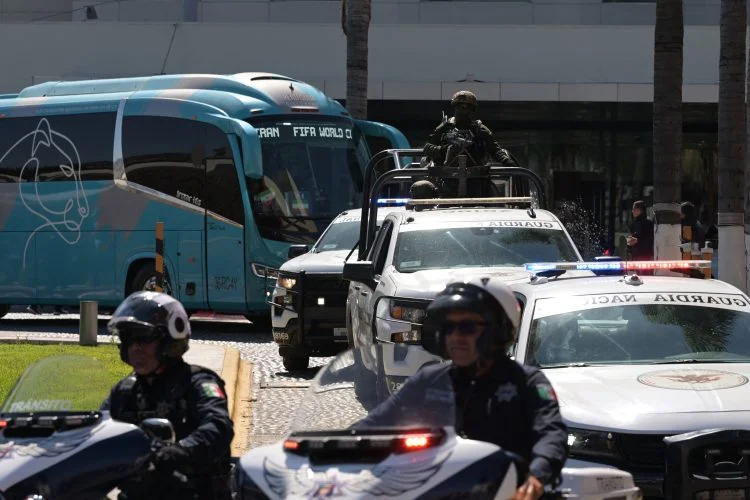
Iran will take on Belgium in a pivotal Group G match at SoFi Stadium in Los Angeles on Sunday, June 21, as the United States maintains tightly controlled travel restrictions that have forced the Iranian squad to operate from a base camp in Tijuana, Mexico. The restrictions, which allow Iran to enter the US only within 24 hours of matches and require them to depart immediately after games, have drawn sharp criticism from Iran’s coaching staff and players, who argue the measures undermine fair competition.
Andrew Giuliani, executive director of the White House Task Force for the World Cup, confirmed to Reuters on Saturday that the US will not ease the protocols for the Belgium match. The Iranian delegation left US soil just hours after their opening 2-2 draw with New Zealand, returning to Mexico rather than staying overnight for recovery. Additionally, Iran winger Mehdi Torabi’s visa expired after the first game, though the US State Department later secured him a new multiple-entry visa.
Match Stakes High for Both Sides
Belgium, still searching for their first win after a disappointing 1-1 draw with Egypt, are heavy favorites. The Red Devils boast a roster featuring Kevin De Bruyne, Thibaut Courtois, and Romelu Lukaku, who rescued a point as a substitute against Egypt. However, Belgium will be without Manchester City winger Jérémy Doku due to a respiratory illness. Head coach Rudi Garcia is expected to start Lukaku alongside Leandro Trossard in attack.
Iran, buoyed by their resilient draw with New Zealand, see this match as a chance to take a major step toward the round of 32. Coach Amir Ghalenoei has stressed that the team represents all Iranians, regardless of politics. “Khamenei Backs US-Iran Deal Despite Admitting 'Different View' on Agreement” provides broader context on the political backdrop that continues to shadow the team’s participation.
Why the Travel Restrictions Matter
The US-imposed travel limits have become a flashpoint in an already tense atmosphere. Iran’s squad must fly to Los Angeles on Saturday evening, just 24 hours before kickoff, and will be required to return to Mexico immediately after the final whistle. Ghalenoei described his side as “the most oppressed team in the whole World Cup,” citing the lack of recovery time compared to other teams.
The situation has prompted Iran to consider lodging a formal complaint with FIFA. The restrictions stem from broader US-Iran tensions, which have also affected other areas of international relations, as noted in “Israel-Hezbollah Ceasefire Holds as US-Iran Deal Faces New Strain.” While the US insists the rules are standard for security protocols, critics argue they place Iran at a competitive disadvantage in a tournament where rest and recovery are critical.
On-Field Dynamics
Despite the off-field distractions, Iran showed grit in their opener, twice coming from behind to equalize against New Zealand. Striker Mehdi Taremi, one of the team’s key threats, emphasized the squad’s unity: “We are here to play football and represent the respectful people of Iran. Football can unite people from all backgrounds.” Belgium, ranked significantly higher than Iran, will rely on their experienced core to break down an Iranian defense that has been vulnerable, as seen in the New Zealand match where they conceded twice.
Belgium’s predicted lineup includes Courtois in goal, a defensive partnership of Brandon Mechele and Nathan Ngoy, and a midfield anchored by Amadou Onana and Youri Tielemans. Kevin De Bruyne will operate as playmaker, with Lukaku leading the line. Garcia’s side is on a 14-match unbeaten run and has scored heavily in pre-tournament friendlies, but their inability to convert chances against Egypt remains a concern.
Broader Implications: Football and Politics Collide
The Iran-Belgium match is more than a group-stage fixture; it is a symbol of how geopolitics intersect with global sport. The US travel restrictions have raised questions about fair treatment of teams under political sanctions, especially as the World Cup is co-hosted by the US, Canada, and Mexico. The US has not imposed similar restrictions on other teams, fueling accusations of discrimination.
For Iran, a win or draw against Belgium would not only boost their knockout-stage hopes but also serve as a statement of resilience. The team’s ability to focus on football amid administrative hurdles has drawn admiration, but it also highlights a trend where political conflicts spill onto the sporting field. Meanwhile, Belgium remains under pressure to justify its status as a tournament favorite, with their golden generation’s final opportunity at World Cup glory hanging in the balance.
What This Changes
Sunday’s result could reshape Group G. A Belgian victory would put them on four points, likely securing a spot in the round of 32, while a win for Iran would throw the group wide open. Off the pitch, the travel dispute may force FIFA and the US to re-evaluate protocols for Iran’s final group match against Egypt in Seattle on Friday. For now, the players must focus on what they can control: 90 minutes of football under the bright lights of SoFi Stadium.
The match kicks off at 3 p.m. ET (8 p.m. BST) and will be broadcast live on FOX and ITV1. Both teams know that in a tournament where margins are razor-thin, every minute of preparation—and recovery—counts.
Comments