
Thick Smoke from Canadian Wildfires Descends on Great Lakes and Northeast
Wildfires raging across Canada and northern Minnesota are once again sending plumes of thick, hazardous smoke southward, prompting air quality alerts from the Upper Midwest to New England. As of Tuesday, July 14, 2026, over 800 active wildfires are burning across Canada, with a major flare-up in western Ontario and northeastern Minnesota driving dangerous air quality conditions for millions of Americans.
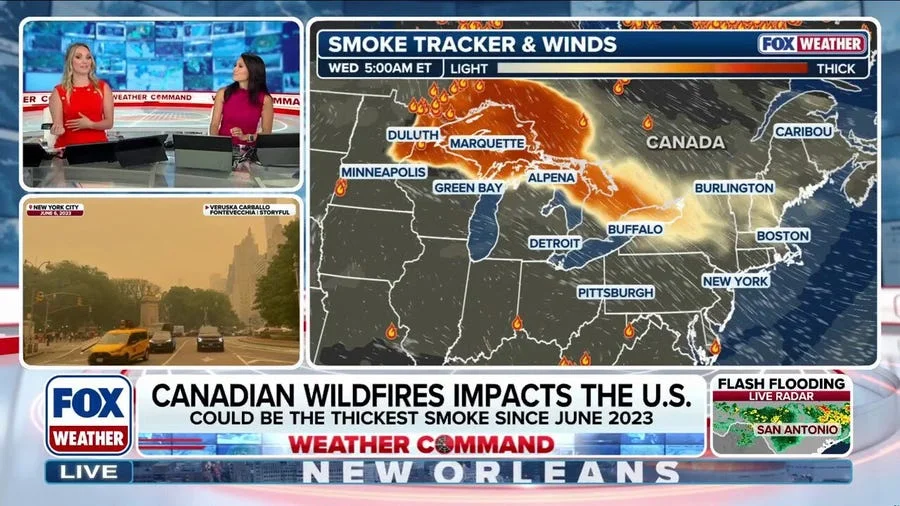
The smoke is expected to create milky, hazy skies and potentially unhealthy air quality across the Great Lakes region starting Wednesday, with forecasts showing the dense plume reaching as far south as northern Illinois, Indiana, Ohio, and even the New York City tri-state area by late Wednesday and Thursday. Authorities are urging residents to limit outdoor activities and take precautions.
Key Facts on the Current Situation
- Active Fires: Over 800 wildfires are burning in Canada, with the most numerous from the Northwest Territories to northern Saskatchewan, Manitoba, western Ontario, northern Quebec, and Labrador.
- Minnesota Fires: Triple-digit heat, winds, and low humidity triggered a major flare-up on Monday, July 13, prompting a peacetime emergency declaration from Governor Tim Walz and the temporary closure of the Boundary Waters Canoe Area.
- Air Quality Alerts: Statewide alerts have been issued in Michigan and Wisconsin. Minnesota’s Pollution Control Agency has an alert for the northeastern part of the state through Thursday. Northern Michigan is under an alert for Wednesday, July 15.
- Timeline: The densest smoke will arrive in northern Minnesota, Wisconsin, and Michigan’s Upper Peninsula on Wednesday. By Thursday, smoke is expected to spread across the Great Lakes and into the Northeast.
Where the Smoke Is Headed Next
According to the FOX Forecast Center, a major shift in wind direction over the next 24–36 hours will allow heavy smoke concentrations to pour into the Lower 48. The HRRR model shows surface smoke potentially reaching unhealthy levels for all groups in northern Minnesota, northern Wisconsin, and Michigan’s Upper Peninsula by Wednesday. For sensitive groups, the risk extends to New England, New York, and northern Pennsylvania.
By sunset Wednesday, very heavy smoke could reach New York City and Providence, Rhode Island, streaming through Green Bay, Milwaukee, Grand Rapids, Detroit, and Buffalo before then.
Why This Matters: Health Risks and Economic Stakes
The return of Canadian wildfire smoke to the densely populated Great Lakes and Northeast represents a significant public health challenge. Unlike the dramatic orange skies of June 2023 that enveloped New York City, this event may produce hazier conditions rather than Mars-like hues, but the health risks remain severe.
Health Impacts for Vulnerable Populations
Air quality alerts warn that pollutants are expected to be in the 'unhealthy for sensitive groups' range, and in some areas, ‘unhealthy for all.’ People with heart disease, respiratory diseases like asthma, children, and the elderly are particularly at risk. Symptoms to watch for include wheezing, coughing, chest tightness, dizziness, or burning in the nose, throat, and eyes. Health officials recommend avoiding strenuous outdoor activities and keeping windows closed.
Strain on Emergency Services and Infrastructure
The compounding effects of extreme heat and smoke are straining resources. A heat dome is driving record temperatures across the Northern Plains, exacerbating fire conditions and increasing the risk of heat-related illnesses. The Minnesota Pollution Control Agency has already issued an air quality alert for northeast Minnesota through Thursday, urging people to avoid prolonged outdoor activity. The Camp Fire in Lake County jumped its containment lines Monday, triggering local evacuations.
Economic Disruptions
Businesses in northern Michigan are already shortening shifts to protect workers from extreme heat. The health crisis from the smoke could further disrupt labor, particularly in outdoor industries like construction and agriculture. The closure of the Boundary Waters Canoe Area also affects tourism revenue. As seen in previous summers, prolonged poor air quality can reduce consumer activity and increase healthcare costs.
The 2026 Wildfire Season: A Growing Crisis
The scale of the 2026 Canadian wildfire season is alarming. With 800 active fires, this season is already among the most severe on record. The fires are burning through thick forests in Ontario, releasing significant amounts of smoke. Ontario has been experiencing a heat wave, with record-breaking temperatures soaring over 100 degrees Fahrenheit.
Comparison to Previous Seasons
The smoke event unfolding this week draws immediate comparisons to June 2023, when Canadian wildfires sent an unprecedented plume over New York City, turning skies orange and giving the city the worst air quality in the world for a brief period. While current conditions are not expected to be as intense as that landmark event, the frequency and scale of such occurrences are increasing. According to the Canadian Interagency Forest Fire Centre, 32 wildfires sparked across mostly western Ontario on Monday alone, with 46 burning out of control across the province.
Climate Change and Fire Risk
Scientists have long linked more intense and frequent wildfires to climate change. Warmer temperatures, prolonged droughts, and earlier snowmelt create drier conditions that fuel larger fires. The current heat dome over the Northern Plains is a clear example of these compounding factors. For a deeper understanding of how extreme heat interacts with air quality, see our explainer: Heat Index Explained: Why 104°F Feels Like More Than Just the Temperature.
Broader Implications: What This Changes
The repeated inundation of the Great Lakes and Northeast with wildfire smoke signals a fundamental shift in how regions far from the actual fires must prepare for environmental hazards. It blurs the line between local and global pollution issues.
Policy and Preparedness
State and local governments may need to invest more heavily in air filtration systems for public buildings, emergency response plans for smoke events, and public health campaigns. The fact that states like Michigan and Wisconsin have issued statewide alerts—not just localized ones—indicates that these events are becoming regular seasonal hazards rather than rare anomalies.
Public Health Infrastructure
Hospitals and clinics in areas not traditionally affected by wildfires—such as the Northeast—must now stockpile information and resources for treating smoke-related illnesses. The psychological toll of recurring hazy skies and health warnings cannot be ignored. The event also highlights the interconnected nature of North American ecosystems: fires in western Ontario can directly impact the health of someone in New York City three days later.
The Future of Fire Management
Canada and the United States may need to reconsider cross-border fire management protocols. With over 800 fires burning simultaneously, resources are being stretched thin. The fact that a heat wave in Ontario combined with winds allowed a smoke plume to travel hundreds of miles underscores that fire management is no longer just about containing flames—it’s about managing massive smoke clouds that cross international boundaries.
Looking Ahead: What Residents Should Do
For the immediate future, residents across the affected regions should monitor local air quality indexes (AQI) and take precautions. The smoke may linger through Thursday and possibly longer, according to air quality monitoring agencies.
Practical Steps to Stay Safe
- Limit outdoor activity: Avoid strenuous exercise, especially during peak smoke hours.
- Keep windows and doors closed: Use air conditioning with recirculation settings.
- Wear N95 masks: If you must go outside, a properly fitted N95 or KN95 mask can filter out particulate matter.
- Monitor symptoms: Be alert for coughing, wheezing, or shortness of breath.
- Check local alerts: Use resources like the EPA’s AirNow website or state-specific tools like MiAir in Michigan.
Forecast for the Rest of the Week
As of Tuesday, a thick smoke plume north of Lake Superior was poised to shift south. The Upper Peninsula will be impacted first, starting around midnight Wednesday and pushing south into the northern Lower Peninsula. By Thursday, near-surface smoke may be more widespread from the upper Midwest through the Great Lakes and much of the Northeast, possibly as far south as northern Illinois, northern Indiana, and Ohio. Hazy skies are expected and air quality will likely become unhealthy.
For ongoing coverage of how extreme weather events are affecting communities across the country, including the current Global Heatwave Crisis, read our report: Global Heatwave Crisis: 100 Million Face Record Temperatures Across US and UK.
Conclusion
The 2026 wildfire season is a stark reminder that climate-related disasters have no borders. As the smoke from Canada once again descends on the Great Lakes and Northeast, it forces a reckoning: adaptation is no longer optional but necessary. From individual health precautions to cross-border policy coordination, the response to this ongoing crisis will shape how millions of people live and work during fire season for years to come.
Comments