
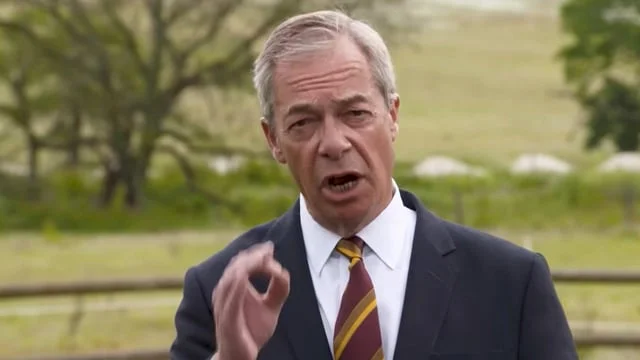
Jenrick Accuses Government of ‘Dereliction of Duty’ Over Farage Security Row
Reform UK Treasury spokesperson Robert Jenrick has launched a blistering attack on the government, accusing ministers of a “dereliction of duty” after it emerged that party leader Nigel Farage rejected taxpayer-funded security last year because it was deemed “inadequate.”
Speaking on BBC Radio 4’s Today programme on Tuesday, Jenrick confirmed that Farage turned down a state package that included a bodyguard, a secure car and a trained driver — the same level of protection offered to high-profile cabinet ministers and Conservative leader Kemi Badenoch. However, Jenrick argued that the offer represented a significant downgrade from Farage’s previous security arrangements.
“The government chose not to give Nigel the security that he needed,” Jenrick said. “They now have, as a result of Ann Widdecombe’s appalling murder, offered him a meeting. The home secretary could have offered that meeting a year ago, two years ago. She chose not to. That, I’m afraid, is playing politics with the safety of politicians.”
The comments came just a day after Home Secretary Shabana Mahmood offered Farage a meeting with the head of RAVEC — the Royal and VIP Executive Committee responsible for the security of high-profile political figures. Farage has since accepted the offer, writing on X that he would attend.
The Widdecombe Murder and Its Aftermath
The security dispute has been thrown into sharp relief by the killing of Ann Widdecombe, the former Conservative MP turned Reform UK spokeswoman, who was found dead at her home in Devon last week. Police have arrested a 28-year-old man on suspicion of murder and launched a counter-terrorism investigation into her death.
Widdecombe’s alleged murder has sent shockwaves through Westminster, prompting a rare Commons debate on Monday afternoon in which MPs from across the political spectrum voiced concerns about the safety of elected officials. Several speakers called for an urgent review of security provision, particularly for politicians who attract high levels of public scrutiny or hostility.
Reform UK has already announced it will now provide its MPs with 24-hour security, a move that party officials said was necessary after the state “failed to act.” The party’s home affairs spokesman, Zia Yusuf, previously claimed that parliamentary officials cut Farage’s publicly funded security by 75% in September last year, leaving party donors to cover the gap.
Why Farage Turned Down the Offer: ‘A Gamble with His Life’
According to a statement from Reform UK, the November 2025 offer was made just days after the assassination of right-wing activist Charlie Kirk in the United States — a moment when threat levels against Farage were considered at their highest.
“Nigel Farage is the most targeted politician in Britain and the only party leader who actually goes out to meet the public in huge numbers on the campaign trail,” the party said. “Faced with a state offer that no longer matched the threat against him, Nigel declined the downgraded and inadequate package and Reform took the responsible decision to maintain proper protection rather than gamble with his life.”
The party’s statement suggests that the government’s initial “comprehensive plan” for Farage’s security was later scaled back without explanation. Jenrick echoed this point, telling the BBC: “I don’t know why. Maybe that will be explained to Nigel when he meets the committee.”
The revelation has reignited a fierce debate over how Britain protects its politicians — and whether the mechanisms currently in place can adapt to a rapidly changing threat landscape.
The RAVEC System and Its Critics
Decisions about the security of MPs and members of the House of Lords are made by the parliamentary security team. For high-profile political candidates and other VIPs, an independent committee — RAVEC — takes the lead, drawing on officials from the Home Office, the Cabinet Office and the Foreign, Commonwealth and Development Office.
But critics argue that the system is slow, opaque and vulnerable to political interference. Jenrick directly accused the government of allowing bias to influence security decisions, claiming that Farage was treated differently because his views are outside the mainstream.
“Because we are not mainstream politicians. We are politicians who are fighting the establishment every single day. We’re not backing down,” Jenrick said, insisting that the government’s failure to act earlier was a deliberate choice.
The Stakes: Trust, Safety and the Future of Political Engagement
The Farage security row is not happening in a vacuum. It comes at a moment when public trust in political institutions is already fragile, and when threats against elected officials are on the rise across the Western world.
In the United States, the assassination of Charlie Kirk earlier this year served as a chilling reminder of how quickly political rhetoric can escalate into violence. In the UK, the murder of MP Sir David Amess in 2021 remains a traumatic touchstone for the entire political class.
Ann Widdecombe’s alleged killing has added a new dimension to the debate: how to protect former MPs and party spokespeople who no longer hold formal office but remain high-profile figures. Widdecombe was not a sitting MP at the time of her death, yet she was still a prominent voice in British politics and a regular presence on national media.
The Hillsborough Law bill currently making its way through Parliament — championed by Andy Burnham, the newly elected MP for Makerfield — also speaks to the same underlying tension: the inability of institutions to hold themselves accountable and the erosion of public trust that follows.
As Burnham wrote in the Liverpool Echo, “The truth on its own is not enough. Without accountability, there can be no justice.” Although his comments were directed at the broader pattern of institutional cover-ups — from Hillsborough to Grenfell to the Post Office scandal — the principle applies equally to the security apparatus that is supposed to protect politicians.
A Broader Crisis of Political Violence and Polarisation
The Farage security dispute is a symptom of a wider crisis that cuts across party lines. Across the political spectrum, MPs and candidates report increasing levels of abuse, threats and physical intimidation. A 2025 survey by the Jo Cox Foundation found that nearly two-thirds of UK MPs had experienced threats or intimidation in the previous year, and that many no longer felt safe attending constituency surgeries or public events.
The refusal of Farage to accept state security — and the subsequent allegation that the government deliberately downgraded his protection — has become a political weapon in itself. Reform UK is using the issue to rally its base, accusing the Labour government of treating its politicians as second-class citizens.
But the question of how to protect politicians without creating a closed-off, inaccessible political class is one that no party has yet solved. The rise of social media, the collapse of local journalism and the growing polarisation of public discourse have all contributed to an environment in which politicians are both more visible and more vulnerable.
The International Dimension
The issue is not unique to the UK. In France, President Emmanuel Macron has faced repeated security scares. In Germany, a series of attacks on local politicians in 2024 prompted a nationwide review of protection measures. In the US, the assassination of Charlie Kirk has already led to new election security mandates imposed by the Trump administration on states — a move that critics say risks militarising political events rather than making them safer.
Still, the UK’s reliance on a combination of parliamentary security teams and the RAVEC committee has come under increasing scrutiny. The decision to downgrade Farage’s security without a clear explanation — and the refusal to meet with him until after a murder — has led to accusations that the system is reactive rather than proactive, and that it lacks the flexibility to respond to evolving threats.
What This Changes: A New Era of Security Politics?
Jenrick’s comments, combined with the fallout from Widdecombe’s death, are likely to force a broader reckoning. The government has already agreed to a meeting between Farage and RAVEC, but questions remain about whether that meeting will result in concrete changes — or whether it will simply be seen as a box-ticking exercise.
Reform UK is unlikely to let the issue drop. With public anger already high and a by-election looming in a constituency affected by the scandal, the party sees the security row as a rallying cry against what it calls an “out-of-touch Westminster elite.”
At the same time, there is a growing recognition across the political spectrum that the current security framework is outdated. A cross-party group of MPs is expected to table amendments to the Hillsborough Law bill that would require the government to publish an annual report on the security of MPs and to establish a dedicated independent body to oversee protection decisions.
For now, the Farage case has exposed a fault line that runs through the heart of British democracy: how to keep politicians safe without insulating them from the public they serve. And as the Widdecombe investigation continues, that question will only become more urgent.
This article was first published on July 14, 2026.
Comments