
FBI Director Under Fire for Tweet on Graham's Death
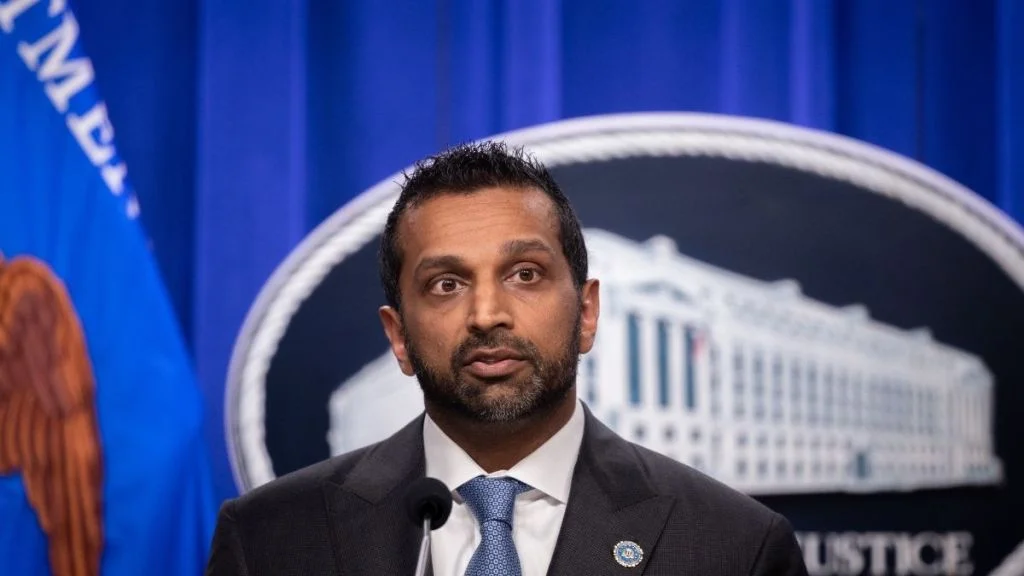
FBI Director Kash Patel is facing widespread criticism for a social media post following the sudden death of Senator Lindsey Graham (R-S.C.) that critics say recklessly fueled conspiracy theories about the incident. Graham died Saturday night at age 71 from an aortic dissection, a catastrophic cardiac event, but Patel's offer of FBI assistance has been seized upon by far-right figures to suggest foul play.
Patel posted on X Sunday, praising Graham as a "devoted public servant" and "true patriot" before adding: "The FBI is assisting local authorities and has made every necessary resource available." The statement immediately drew backlash, as the D.C. medical examiner had already released preliminary findings showing the death was due to natural causes — a tear in the main artery from arteriosclerotic cardiovascular disease.
According to sources obtained by Salon, Graham's office said he died of a "brief and sudden illness." Emergency dispatch audio revealed paramedics arrived at his Capitol Hill home around 8:30 p.m. for reports of chest pains, with CPR underway within 25 minutes. He was pronounced dead at George Washington University Hospital. Aortic dissections are known to be sudden and often lethal, even under close medical supervision.
'Rocket Fuel' for Conspiracy Theories
Former Obama adviser Dan Pfeiffer called Patel's tweet "idiotic" and said it would provide "rocket fuel" to conspiracy theorists. On X, users like "Aquila" asked: "What in gods name was the purpose of adding that last part to the end of this tweet." Others accused Patel of being an "attention whore" and questioned whether the FBI was actually investigating.
The HuffPost reported that far-right figures such as Laura Loomer had already begun pushing poisoning theories, Russian and Iranian plots, and covert assassination claims even before Patel's post. The FBI declined to comment further to The Independent, telling HuffPost it had "nothing to add to the Director's social media post."
Why It Matters: Patel's Controversial Tenure
The controversy deepens scrutiny of Patel, who has been a polarizing figure since being appointed FBI Director under President Donald Trump. Critics say his tendency to engage in political culture wars undermines the bureau's reputation for nonpartisan professionalism.
Just days before Graham's death, Patel was embroiled in a separate controversy over his behavior in the U.S. men's Olympic hockey team's locker room after they won gold in Milan. Video showed him chugging beer and yelling — behavior that critics said was unseemly for an FBI director. Fox News host Will Cain tried to defend Patel by comparing him to former Vice President Kamala Harris, who spoke to WNBA players in their locker room after a game. The comparison backfired when users pointed out that Harris was a private citizen, while Patel used a taxpayer-funded plane to attend the Olympics.
The Graham Factor
Graham's death also has major political implications. A senior Republican and Trump ally, Graham was in the middle of a reelection bid. He had just returned from his tenth visit to Ukraine, where he met with President Volodymyr Zelensky and announced securing a White House agreement on a bill to sanction Russia. President Trump said he spoke with Graham around 7 p.m. Saturday, noting the senator "sounded a little tired" after his trip.
Graham's hawkish foreign policy stance — he supported wars in Iraq, Afghanistan, and Trump's war in Iran — made him a key voice for military intervention. His sudden absence leaves a void in Senate foreign policy debates and deprives Trump of a trusted ally on Capitol Hill.
Broader Implications: Trust in Institutions Under Strain
The episode highlights a growing trend of public officials leveraging their authority to amplify conspiracy theories, further eroding trust in federal law enforcement. Patel's decision to offer FBI resources in a case already ruled natural causes plays directly into the hands of those who distrust official narratives.
Similar dynamics have been seen in other recent high-profile deaths. The swift shift from grief to suspicion online mirrors patterns observed in the wake of political deaths where partisan media ecosystems quickly produce alternative explanations. Patel's tweet adds the weight of the FBI to those narratives, even as the bureau insists it is only providing routine assistance.
Internal and External Fallout
Reports have surfaced that Patel has been under scrutiny from other Trump officials for several actions, which the director denies. The FBI's reputation for independence and fact-based investigation is central to its credibility. By wading into a controversy where medical evidence is clear, Patel risks long-term damage to the institution.
For context on how other public figures handle sudden health crises, compare Patel's reaction to the measured responses seen in other cases. For instance, when Canadian Wildfire Smoke Blankets Great Lakes, Northeast with Hazardous Air Quality, officials focused on public health data rather than speculation. Similarly, Joe Amabile Reveals Early Stage Glioma, Brain Surgery Scheduled shows how straightforward medical transparency can prevent rumor-mongering.
Conclusion
As the Graham family grieves, the episode raises uncomfortable questions about the politicization of federal law enforcement. Patel's tweet may have been intended as a tribute, but its timing and wording have instead drawn accusations of recklessness. The FBI itself says it has nothing more to add — but the damage to public confidence may linger far longer than the news cycle.
Comments