
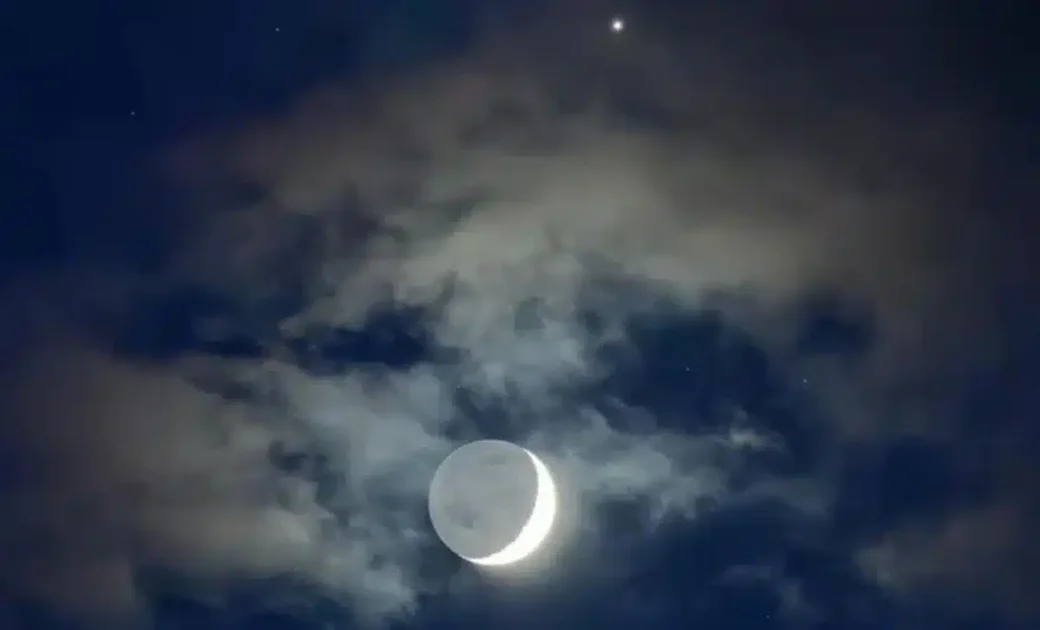
Venus Moon Tonight: A Three-Planet Spectacle Unfolds After Sunset
Skywatchers across the globe are in for a treat starting tonight, June 18, 2026, as a slender crescent moon aligns with three bright planets — Venus, Jupiter, and Mercury — in a rare celestial gathering visible just after sunset. This multi-night event, which began on Tuesday and runs through Thursday, offers one of the most striking evening sky displays of the month, coming just days before the summer solstice.
According to reports from Fox Weather and Astronomy Magazine, the moon will appear low on the western horizon, positioned near the trio of planets in a compact, eye-catching formation. Venus, the brightest of the three, will be the easiest to spot, followed by Jupiter. Mercury, sitting lower in the sky and dimmer, may require a bit more effort but should still be visible to the naked eye under clear, dark conditions. Experts recommend looking up about an hour after sunset, when the sky has darkened enough to reveal the planets against the fading twilight.
"One of June's most spectacular celestial events begins tonight," noted Fox Weather, emphasizing that the alignment spans three evenings, giving observers flexibility to choose the night with the best local weather. For those in the eastern half of the United States, the moon will also appear near the Beehive star cluster (M44) on Wednesday evening, offering an additional layer of visual intrigue.
Observing Tips for the Best View
To maximize the experience, astronomers suggest finding a location far from city lights and streetlamps. Allow your eyes 20 to 30 minutes to adjust to the darkness — this will significantly improve your ability to see the fainter features of the moon and the planets. No binoculars or telescopes are required, though they can enhance the view, especially for spotting Mercury or resolving the moons of Jupiter. The moon itself will be a delicate waxing crescent, illuminated at just 13% on Wednesday evening, making it a thin, beautiful sliver against the dusk sky.
Why Tonight Matters: A Rare Lineup Before Summer Solstice
This alignment is noteworthy not just for its beauty but for its timing. It occurs just days before the summer solstice on June 20, the longest day of the year in the Northern Hemisphere. Evenings around the solstice are famously long and bright, but the planets and moon remain visible in the twilight, creating a memorable contrast between celestial light and lingering daylight.
The event follows closely on the heels of another planetary highlight: the conjunction of Venus and Jupiter, which occurred between June 8 and 9, when the two giants appeared unusually close in the sky. That pairing set the stage for this week's broader alignment, drawing the moon into the mix. On June 17, Venus even briefly disappeared behind the moon in a daytime occultation visible across parts of the United States — a rare event that required careful observation with optics.
Mercury: The Challenging Target
Mercury is often the most elusive planet in such alignments due to its proximity to the sun and lower brightness. This week, it sits closest to the horizon, which means observers in areas with flat, unobstructed western views will have the best chance. Time your viewing carefully: too early, and the sky is too bright; too late, and Mercury may have set. A clear, haze-free sky is also critical. "Mercury may be the most difficult planet to see because it is not as bright as Venus and Jupiter," Fox Weather reported, but added that it should still be visible to the naked eye under ideal conditions.
Perspective: Celestial Alignments and the Rise of Public Astronomy
Events like the "Venus moon tonight" alignment are part of a broader trend: the growing public enthusiasm for amateur astronomy and skywatching. Social media platforms light up with photos and timelapses during such events, and local astronomy clubs often host viewing parties. The accessibility of the night sky — no special equipment needed for this event — makes it a unifying experience for people of all ages and backgrounds.
This particular alignment also underscores the dynamic nature of our solar system. The planets and moon orbit the sun in roughly the same plane, called the ecliptic, which is why they appear to travel along a similar path in our sky. When multiple objects gather in a small region, it creates a visual spectacle that reminds us of the cosmic clockwork behind the scenes.
For context, the next similar alignment of the moon with Venus, Jupiter, and Mercury won't occur again for several months, making this week a unique opportunity. The summer solstice itself, while not directly related to planet positions, adds a seasonal dimension — the long twilight provides an extended viewing window, and the low angle of the sun means the ecliptic is favorably tilted for evening observation.
Implications for Science Communication
The ease of observing these events also serves as a gateway for science education. Schools and families often use such moments to spark curiosity about astronomy, orbital mechanics, and the difference between planets and stars. Venus, for instance, is frequently mistaken for a star due to its brilliance, but careful observation reveals its steady, non-twinkling light — a key clue that it's a planet.
For those in areas affected by heavy light pollution, such as major cities, even a partial view can be rewarding. The moon and Venus are bright enough to cut through urban glow, while Jupiter and Mercury may require a darker site. This reality has driven increased advocacy for dark-sky preserves and responsible outdoor lighting, as more people seek to reconnect with the natural night.
How to Catch the Show Tonight
If you haven't yet looked up, tonight (Thursday, June 18) is your final chance to see all three planets and the moon together. The window opens roughly 45 minutes to an hour after sunset, depending on your latitude. Check local sunset times for your area, then head outside facing west-southwest. The moon will be a thin crescent, with Venus blazing just below or to its side, Jupiter a bit farther away, and Mercury hugging the horizon.
For those who miss this event, the sky continues to offer rewards: The summer solstice arrives this weekend, and the long evenings are ideal for spotting the Milky Way later in the night. Keep an eye on the western sky in the coming weeks as Venus and Jupiter slowly separate, continuing their dance through the evening twilight.
Comments