
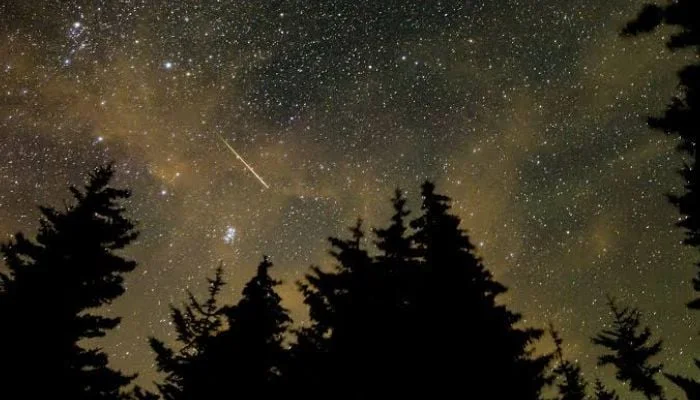
Double Meteor Shower Dazzles Skies Before August's Perseids
Stargazers are in for a celestial treat this week as two meteor showers—the Southern Delta Aquariids and the Alpha Capricornids—reach their peak activity on the night of July 30 into the early hours of July 31, 2026. According to the American Meteor Society (AMS), both showers have been active since early July, but their maximum visibility coincides this year, offering a rare double display of shooting stars.
While the Southern Delta Aquariids can produce up to 25 meteors per hour under ideal dark skies, the Alpha Capricornids are weaker, delivering only about five meteors per hour. However, the Alpha Capricornids are known for their spectacular, slow-moving fireballs that can outshine surrounding stars, making them a crowd favorite despite their lower frequency.
Where and When to Look
For observers in the Northern Hemisphere, the best viewing window is between midnight and dawn on July 31. The radiant points—the areas from which the meteors appear to originate—rise in the southeastern sky: the Southern Delta Aquariids emerge from near the star Delta Aquarii in the constellation Aquarius, while the Alpha Capricornids radiate from near the double star Alpha Capricorni in Capricornus. The Southern Delta Aquariids are best seen from the southern tropics, but they are visible across much of the globe, including the southern United States, Mexico, and the Caribbean.
No special equipment is needed—meteors are best observed with the naked eye. NASA recommends finding a location as far away from city lights as possible, allowing your eyes about 20 minutes to adapt to the darkness, and lying flat on your back to get a wide view of the sky. The moonlight may interfere, but experts suggest keeping the moon behind you or blocked by a building or tree to improve visibility.
Why This Year's Viewing Is a Challenge
The timing of the peaks is less than ideal: both showers reach their maximum just one night after the full July Buck Moon, which occurred on July 29. The moon will still be 98% illuminated on the peak night, washing out faint meteors and reducing the overall number of visible shooting stars. Fox Weather reports that most skywatchers should not expect a dazzling celestial display, particularly for the Southern Delta Aquariids, which are typically faint and lack bright fireballs.
Despite the moonlight, the Alpha Capricornids' characteristic fireballs may still punch through the lunar glow. These meteors are slow-moving and can be brighter than any star in the sky, making them a worthwhile target for patient observers. The AMS advises that the Alpha Capricornids are best viewed after 10 p.m. local time, when the radiant rises higher above the horizon.
The Science Behind Meteor Showers
Meteor showers occur when Earth’s orbit passes through the debris trails left behind by comets or asteroids. As these tiny particles—often no larger than grains of sand—enter Earth’s atmosphere at high speeds, they vaporize, creating bright streaks of light known as shooting stars. Both the Southern Delta Aquariids and the Alpha Capricornids are linked to cometary debris, though the exact parent comets are not as well-known as those for other showers.
The Southern Delta Aquariids are active from July 12 to August 23, with a broad peak that often produces a steady, if modest, meteor rate. The Alpha Capricornids run from July 3 to August 15 and are notable for their fireballs, which can leave persistent trains that last several seconds. Astronomers say the two showers together offer a nice preview of the more famous Perseid meteor shower, which will peak in mid-August.
The Astronomical Calendar Heats Up
Late July and August are prime time for meteor watching, with three major showers overlapping this year. In addition to the two peaking now, the Perseids—considered the best meteor shower of the year—have been active since July 17 and will peak on the night of August 12–13. Under dark, moonless skies, the Perseids can produce 50 to 100 meteors per hour, with many bright fireballs and long-lasting trails.
“The Perseids are the highlight of the summer for many skywatchers,” said a spokesperson for the American Meteor Society. “They are reliable, plentiful, and this year the moon will be out of the way, providing perfect viewing conditions.”
What to Expect in August
Unlike this week’s double shower, the Perseids will occur during a new moon, meaning skies will be at their darkest. The shower radiates from the constellation Perseus, which rises in the northeast after midnight, but meteors can appear anywhere in the sky. NASA recommends viewing the Perseids from the Northern Hemisphere, where they are most visible.
For those who miss the current double shower, the Southern Delta Aquariids will continue until August 23, and the Alpha Capricornids until August 15, so some activity may persist on subsequent nights, albeit with reduced intensity. The Perseids, however, are expected to provide the most spectacular show of the summer.
How to Maximize Your Meteor Watching Experience
Even with lunar interference, there are several strategies to improve your chances of seeing meteors. First, check the weather forecast and look for clear skies. If clouds are present, especially in areas affected by recent wildfires, the show may be completely obscured. Coastal regions like the Sonoma Coast, where a blaze forced highway closures, may have smoke that hampers visibility.
Second, find a dark site away from city lights. National parks, rural areas, or even your backyard if you’re in the suburbs can work. Use a reclining chair or a blanket to lie flat and scan the entire sky, as meteors can appear anywhere. Avoid looking at your phone—the light ruins your night vision.
Experts also advise dressing warmly, as temperatures can drop in the early morning hours, even in summer. A thermos of coffee or tea can keep you comfortable during an extended observing session.
The Growing Popularity of Meteor Shower Tourism
As interest in astronomy grows, meteor showers have become a draw for tourism, with events like the Perseids inspiring travel to dark-sky destinations. In the Southern Hemisphere, the Southern Delta Aquariids are particularly valued, and viewing parties are organized in countries like Australia and South Africa. In the U.S., parks and observatories often host public viewings, and enthusiasts share live streams for those unable to go outside.
“Meteor showers are one of the easiest astronomical events to enjoy—you just need your eyes and a clear sky,” said a NASA educator. “They remind us of our place in the solar system.”
What This Means for the Broader Skywatching Community
This week’s double peak serves as a reminder that the night sky is full of dynamic events. For professional astronomers, meteor showers contribute to our understanding of comet composition and solar system dynamics. For amateur observers, they offer a accessible entry point into astronomy, requiring no equipment or expertise.
The overlap of two showers is not uncommon but this year’s timing—just after a full moon—underscores the importance of lunar phases in planning observations. The Perseids next month will provide a textbook example of optimal conditions, with a dark sky and high meteor rates.
The Long-Term Trend of Increased Meteor Activity
Scientists have noted that meteor shower activity can vary from year to year due to gravitational perturbations from planets and changes in debris stream density. The Southern Delta Aquariids, for instance, sometimes exhibit outbursts with higher-than-usual rates. While no such outburst is predicted this year, the possibility keeps astronomers vigilant.
Meteor showers also carry a cultural and historic significance, inspiring art, literature, and folklore. They are often seen as omens or messages, but today they are primarily appreciated for their beauty and scientific value. As technology advances, more people can capture stunning images of fireballs, contributing to citizen science projects that track meteor events.
Final Tips for a Memorable Viewing
If you’re planning to stay up late or set an early alarm, here’s a quick checklist:
- Check the local weather forecast and cloud cover.
- Find a dark location with a clear southern horizon.
- Allow your eyes 20-30 minutes to adjust to the darkness.
- Keep the moon behind you to reduce glare.
- Look slightly away from the radiant point to catch longer streaks.
- Bring a comfortable chair, blanket, and snacks.
And if clouds or moonlight spoil this week’s show, don’t be discouraged. The Perseids are just two weeks away, promising up to 100 meteors per hour under prime conditions. Mark your calendars for August 12–13, and prepare for one of the year’s most awe-inspiring celestial displays.
As the night sky continues to captivate us, remember that meteor showers connect us to the larger universe. Whether you’re a seasoned astronomer or a curious beginner, this year’s double peak is a perfect excuse to look up and wonder.
Comments