
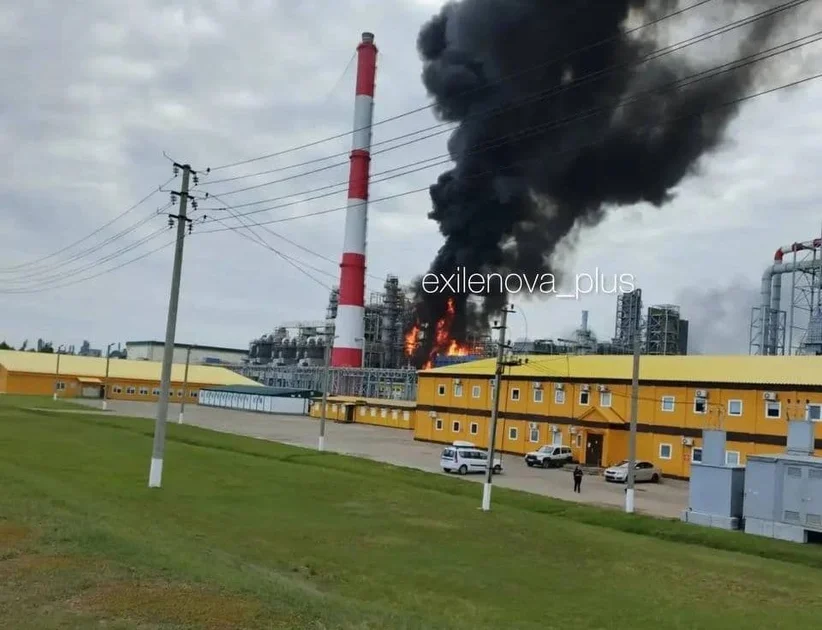
Overnight Barrage Targets Energy and Industrial Heartland
Ukrainian long-range drone attacks struck deep into central Russia overnight on June 12, 2026, hitting major oil refineries and petrochemical facilities in the Republic of Tatarstan and Samara Oblast, according to military and local officials. The coordinated strikes, which coincided with Russia’s annual Russia Day holiday, targeted the Taneco oil refinery and the Nizhnekamskneftekhim synthetic rubber plant in Tatarstan, as well as the Tolyattikauchuk chemical facility in Samara, Ukrainian monitoring groups and the General Staff confirmed.
In Tatarstan’s industrial city of Nizhnekamsk, Mayor Radmir Belyayev reported that four people were hospitalized after a drone struck a multistory residential building. Videos shared by the exiled outlet Astra showed a large detonation and subsequent fire near residential areas. Tatarstan Head Rustam Minnikhanov stated the affected enterprises were rapidly addressing the aftermath, but declined to name specific plants. Public events across Tatarstan were canceled due to the persistent drone threat.
In neighboring Samara Oblast, the mayor of Tolyatti confirmed damage to an “industrial facility,” which Ukrainian sources identified as the Tolyattikauchuk rubber and chemical component producer. The Kyiv Independent noted that the facility’s products are used in manufacturing solid rocket fuel for Russian tactical and ballistic missiles. Russia’s Defense Ministry claimed air defense systems intercepted 231 Ukrainian drones over 15 regions, including Samara and Tatarstan, as well as annexed Crimea.
Fuel Rationing Suspended in Sevastopol Amid Logistics Strikes
The drone offensive extended to occupied Crimea, where the Russian-installed governor of Sevastopol, Mikhail Razvozhayev, announced on June 11 that fuel distribution had been temporarily suspended after oil tanker trucks were unable to deliver supplies due to Ukrainian strikes on logistics routes. Razvozhayev said priority refueling would go to emergency services and public transport, adding that existing rationing coupons would be canceled and new ones issued.
Crimea had introduced fuel rationing the previous month due to shortages on the peninsula, which Ukraine has systematically targeted with drone and missile strikes. Razvozhayev also reported that over two dozen Ukrainian drones were downed in a fresh attack on Sevastopol early June 12. The disruptions underscore how Ukraine’s campaign against Russian energy infrastructure is creating tangible supply problems in territory annexed since 2014.
Context: A Strategic Campaign to Degrade Russia’s War Economy
Ukraine has increasingly relied on domestically produced long-range drones to strike targets deep inside Russia, focusing on oil refining, petrochemicals, logistics hubs, and defense production facilities. The June 12 attacks represent some of the deepest strikes yet, with Nizhnekamsk lying more than 1,200 kilometers from the Ukrainian border. These operations aim to degrade Russia’s ability to fuel its military and generate revenue from energy exports.
Russian oil output fell to a one-year low in recent months amid a wave of Ukrainian drone strikes on refineries, according to industry data. The targeting of synthetic rubber plants like Nizhnekamskneftekhim and Tolyattikauchuk is also significant: these facilities produce components essential for military hardware, including rocket motors and tires for military vehicles. An analysis of Zelensky’s broader strategy balancing drone warfare and diplomacy can be found here.
Meanwhile, Ukrainian President Volodymyr Zelenskyy stated that the long-running campaign against Russian energy assets had “proved its worth,” as Moscow was forced to allocate significant air defense resources to protect critical infrastructure far from the front lines. The attacks have also triggered psychological effects: Russia Day celebrations were canceled in multiple regions, and nighttime train schedules were reduced in Crimea following a drone strike that killed a locomotive assistant and wounded the driver.
Broader Implications: Escalation and Economic Pressure
The sustained drone campaign represents a fundamental shift in the conflict’s geography and strategic logic. By striking refineries and chemical plants hundreds of kilometers inside Russia, Ukraine is demonstrating both technical capability and political will to bring the war home to Russian civilians and industry. This creates a dilemma for the Kremlin: either divert more air defense systems from front-line units or accept cumulative damage to the energy sector.
Economically, the attacks on Taneco and other refineries threaten to further tighten global fuel markets. Russia remains a major exporter of crude oil and refined products, and any reduction in refining capacity could limit its ability to process oil for export, even if crude production remains stable. The impact on global energy prices is being closely watched by markets.
On the battlefield, Russia may be forced to scale back operations if fuel shortages affect logistics for armored units and aviation. The strikes on chemical plants producing rocket propellant components also directly impede Russia’s ability to replenish its missile arsenal, potentially affecting the intensity of long-range strikes against Ukrainian cities.
For Ukraine, the drone campaign carries risks of retaliation. Russia has already intensified its own aerial attacks on Ukrainian energy infrastructure, including strikes on the Sumy region where a railway worker was killed and another wounded in a drone attack on June 12. Three people were wounded in separate strikes on Mykolaiv. The escalation dynamic raises the stakes for both sides as they enter the summer campaigning season.
Perspective: A New Phase in the War’s Strategic Calculus
The June 12 strikes mark a notable milestone in the conflict: the first time Ukrainian drones have simultaneously hit three major petrochemical facilities across two separate regions in a single night, while also disrupting fuel supplies in Crimea and damaging a historic museum in Sevastopol. The attack on the Panorama of the Defence of Sevastopol 1854-1855 museum—a symbol of Russian military history—carries symbolic weight, with Razvozhayev vowing that “the enemy will pay for this sacrilege.”
Strategically, Ukraine appears to be pursuing a multi-layered approach: degrading Russia’s fuel supply for military operations, undermining its export revenue, and eroding public morale by demonstrating that no region is safe from attack. This mirrors the logic of Russia’s own campaign against Ukrainian energy infrastructure but with a key difference—Ukraine is using cheaper, domestically produced drones versus Russia’s expensive cruise missiles.
Looking ahead, the success of these attacks may encourage Ukraine to expand its target set to include more sensitive infrastructure such as power grids, railway junctions, and arms factories. However, Western allies have at times expressed concern about escalation risks, particularly strikes on targets that could cause civilian casualties inside Russia. The residential building hit in Nizhnekamsk, which injured four people, highlights the potential for unintended consequences even with precision drones.
Nevertheless, the trajectory is clear: Ukraine has made strategic strikes deep inside Russia a cornerstone of its 2026 campaign. As Russian President Vladimir Putin dismissed Zelenskyy’s recent open letter calling for peace negotiations, the message from Kyiv appears to be that military pressure, not diplomacy, will define the next phase of the war. The question remains whether this pressure can translate into a strategic advantage on the battlefield or simply provoke a more devastating Russian response.
Comments