
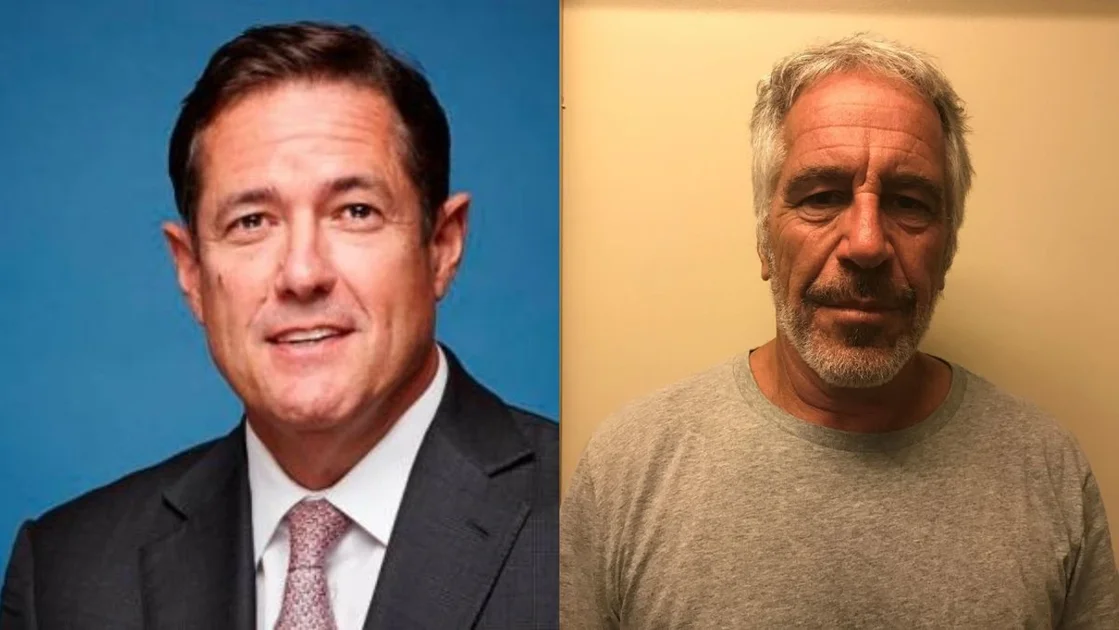
Staley testifies behind closed doors as lawmakers demand answers
Former JP Morgan Chase investment banking chief Jes Staley appeared before the House Oversight Committee on Thursday for a closed-door interview about his decades-long relationship with convicted sex offender Jeffrey Epstein. The testimony marks the latest chapter in a congressional investigation into how major financial institutions enabled Epstein's criminal activities.
House Oversight Committee Chair James Comer, R-Ky., told CNBC after the session that evidence suggests Staley actively pushed JP Morgan to retain Epstein as a client despite mounting red flags. "It appears that within JPMorgan there were flags — red flags — about Epstein, but Mr. Staley is on record defending Epstein and encouraging JPMorgan to keep him as a client," Comer said.
The committee has released transcripts and videos of previous interviews with high-profile figures including Bill and Hillary Clinton and Bill Gates. A transcript of Staley's testimony is expected to be published at a later date.
The allegations: emails, women, and a 'profound' friendship
More than 1,200 emails between Staley and Epstein, released last year by the Department of Justice, paint a picture of a relationship that went far beyond professional boundaries. Staley described their friendship as "profound" and referred to Epstein as "family" in written correspondence.
Rep. Melanie Stansbury, D-N.M., revealed in a press conference that evidence shows Staley in 2010 was "requesting and interacting with Jeffrey Epstein to procure women that he had sexual encounters with." When asked during the hearing to describe those encounters, Stansbury said Staley "could not recall."
Staley has admitted to having sex with a member of Epstein's staff in New York but has insisted the encounter was consensual. During his failed legal challenge against Britain's Financial Conduct Authority ban, judges sided with the regulator's conclusion that Staley had misled Barclays about the depth of his relationship with Epstein.
"If it weren't for banks and bankers like Jes Staley, then Jeffrey Epstein would not have been able to continue to commit these crimes against women," Rep. Suhas Subramanyam, D-Va., said Thursday. "He would not have continued to do some of the things that he did. But it was because of these banks that he was able to do so."
Barclays under fire for handling of Staley's past
The fallout has extended to Barclays, where Staley served as CEO from 2015 until his resignation in 2021. U.S. Senator Elizabeth Warren, the most senior Democrat on the Senate Banking Committee, has accused Barclays of an "apparent failure to meaningfully investigate" Staley's ties to Epstein.
In a letter sent to Barclays Chair Nigel Higgins, Warren — along with Representatives Ro Khanna and Raja Krishnamoorthi — demanded answers about how the bank handled information on Staley's relationship with Epstein. The lawmakers noted that Higgins admitted he had not asked Staley about his last contact with Epstein before telling regulators the contact was "well before" Staley joined Barclays.
"It appears that neither you nor any other member of the board conducted any deeper due diligence to verify Staley's claims and simply took him at his word," Warren wrote. Barclays has stated that its internal investigation was "based on the information that was available to us at the time" and that the FCA concluded the bank was "misled by Jes Staley."
JP Morgan's billion-dollar settlements and broader banking scrutiny
The congressional probe comes years after JP Morgan paid heavily to resolve legal claims tied to Epstein. In 2023, the bank agreed to pay $290 million to settle with Epstein's victims and $75 million to resolve a separate case brought by the U.S. Virgin Islands. A further confidential settlement was also reached.
While Staley's testimony focuses on past failures, the broader question of how banks vet and monitor high-risk clients remains urgent. The case has exposed gaps in due diligence processes at some of the world's largest financial institutions.
This scrutiny coincides with other challenges facing JP Morgan. CEO Jamie Dimon recently warned that higher taxes on banks under Prime Minister Andy Burnham could threaten the bank's planned £3 billion headquarters in London's Canary Wharf. Dimon told the Master Investor Podcast that penalizing banks "out of the ordinary" could drive investment away from Britain.
Systemic failures and regulatory gaps
The Staley case has raised questions about whether financial regulators and bank boards are equipped to identify and act on warnings about powerful clients. British regulators banned Staley from the financial industry after concluding he misled both Barclays and the FCA about his relationship with Epstein. He lost $24 million in pay and bonuses from Barclays as a result.
Lawmakers are now pressing for broader reforms. Warren's letter gave Barclays two weeks to answer questions about "deficiencies" in its executive hiring process, which "allowed the board to hire a CEO who held extensive professional and personal ties to a convicted sex offender."
The investigation continues as the House committee is expected to release more transcripts, including an interview with Goldman Sachs' former top lawyer Kathryn Ruemmler. The push for accountability shows no signs of slowing, as Congress seeks to understand how Epstein was able to operate for years with the backing of major financial institutions.
For now, Staley's congressional appearance serves as a stark reminder of the personal and institutional consequences of failing to sever ties with those who enable harm — a lesson that the banking industry is still being forced to reckon with.
Comments