
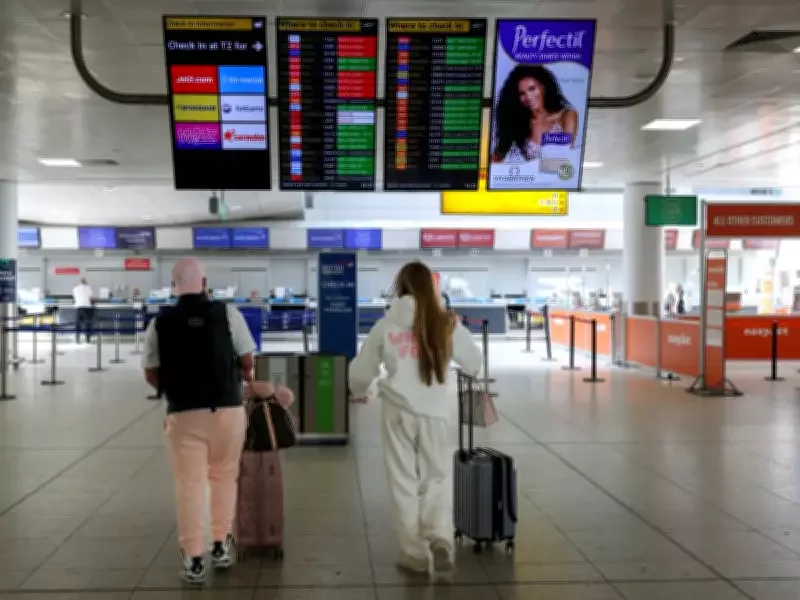
734 Flights Delayed and 21 Cancelled Across UK’s Busiest Airports
Travelers across the United Kingdom are facing significant disruption today, May 30, 2026, as three of the country’s busiest airports — London Heathrow, London Gatwick, and Manchester — report a combined total of 734 flight delays and 21 cancellations. The operational gridlock has stranded thousands of passengers, with many facing extended waits, gate reassignments, and uncertain departure times.
London Heathrow has been hit hardest, recording 315 delays and 18 cancellations, according to data compiled from airport operations. Gatwick reported 226 delayed flights and one cancellation, while Manchester Airport logged 193 delays and two cancellations. The disruptions are not confined to a single airline or region; carriers including British Airways, Virgin Atlantic, easyJet, Ryanair, American Airlines, JetBlue, United Airlines, Aer Lingus, Norse Atlantic Airways, and SAS have all been affected.
At least 19 specific departures have been directly impacted at Heathrow, Gatwick, Manchester, and Edinburgh airports, according to travel industry reports. Popular tourist destinations such as Malaga, Barcelona, Geneva, Milan, Stockholm, New York, and Washington are among those listed on affected flight boards.
Passengers are urged to check their flight status regularly and prepare for potential last-minute changes as the ripple effects continue to spread across the interconnected aviation network.
Heathrow Bears the Brunt of the Chaos
London Heathrow, the world’s sixth-busiest international gateway, has seen the most severe impact. Both short-haul and long-haul services have been disrupted, including:
- American Airlines AAL731 to Charlotte/Douglas International
- American Airlines AAL173 to Raleigh-Durham International
- JetBlue JBU2220 to John F Kennedy International
- Aer Lingus EIN177 to Dublin
- British Airways BAW770 to Stockholm-Arlanda
- British Airways BAW584 to Milan Malpensa
- British Airways BAW574 to Milan Linate
- British Airways BAW752 to Geneva
- British Airways BAW480 to Barcelona
- British Airways BAW426 to Malaga
- British Airways BAW1318 to Aberdeen
- British Airways BAW418 to Luxembourg
The cascade of delays at Heathrow is particularly concerning given its role as a critical hub for transatlantic and Asia-Europe connectivity. The airport’s status means that disruptions there often reverberate across global networks, affecting connecting flights far beyond the UK.
Gatwick and Manchester See Fewer But Notable Disruptions
London Gatwick and Manchester Airport have experienced fewer disruptions but are nonetheless part of the wider operational strain. At Gatwick, Norse Atlantic Airways flight NSZ4452 to Stockholm-Arlanda has been affected. At Manchester, SAS flight SAS2548 to the same destination is among those delayed.
Edinburgh Airport, while not among the three hardest-hit hubs, has also faced disruptions, predominantly on transatlantic routes to the United States, though some European services have been caught up as well. Affected flights include:
- SAS SAS2546 to Stockholm-Arlanda
- JetBlue JBU72 to John F Kennedy International
- United Airlines UAL979 to Washington Dulles International
- United Airlines UAL3906 to Washington Dulles International
- British Airways BAW1463 to London Heathrow
The geographical spread of affected destinations — from the U.S. East Coast to Scandinavia and southern Europe — underscores the widespread nature of today’s disruptions.
Why the Aviation Network Is Struggling Under Pressure
Large airport hubs operate like a finely choreographed dance. Each aircraft typically performs multiple flights per day, meaning a delay on an early morning departure can cascade through an entire day’s schedule as planes arrive late to their next gates. This ripple effect is a key reason why today’s numbers are so high.
Several factors can contribute to such widespread disruption:
- Air traffic congestion during peak-hour operations
- Aircraft rotation bottlenecks, where planes arrive late and prevent on-time departures
- Staffing limitations across ground crews, flight crews, or air traffic control
- Weather-related incidents affecting visibility or runway usage
- Network-wide disruptions originating upstream at connecting airports
While no single cause has been officially confirmed for today’s events, the scale of the delays and cancellations suggests a combination of these factors may be at play. Travelers have reported on social media about long waits for information, with one Reddit user in the r/travel community describing an eight-hour ordeal at Heathrow with minimal updates from airline staff.
The UK aviation sector has faced ongoing pressure in recent years, from post-pandemic staffing shortages to the introduction of new border security systems. Earlier this month, similar disruption was reported at airports across Europe as biometric border checks were rolled out, leading to delays and missed flights. This latest episode highlights the fragility of the interconnected travel system.
Passenger Rights Under UK Law
For passengers caught in today’s chaos, understanding their legal rights is crucial. Under UK261 regulations, airlines have specific obligations when flights are delayed or cancelled.
If your flight is delayed beyond three hours, the airline must provide:
- Meals and refreshments
- Hotel accommodation if an overnight stay is necessary
- Transport to and from the accommodation
- Two free phone calls, emails, or faxes
Depending on the cause of the disruption and the length of the delay, passengers may also be entitled to financial compensation. However, compensation is not payable if the delay is caused by “extraordinary circumstances” outside the airline’s control, such as severe weather, air traffic control restrictions, or security risks.
Passengers are advised to keep all receipts for expenses incurred during the delay and to submit claims directly to their airline. The UK Civil Aviation Authority (CAA) provides guidance on passenger rights and can assist with disputes.
Broader Implications for UK Travelers and the Aviation Industry
Today’s disruption at Heathrow, Gatwick, and Manchester is more than just a one-day inconvenience. It reflects deeper structural challenges facing the UK aviation industry as it struggles to balance growing passenger demand with operational capacity.
The post-pandemic travel rebound has been stronger than many anticipated, but airports and airlines have been slow to rebuild staffing levels, particularly in ground handling, security, and air traffic control. The result has been repeated episodes of disruption, especially during peak travel periods.
Furthermore, the introduction of new security and border technologies, such as biometric checks, has created additional bottlenecks. A recent incident where an easyJet flight was forced to divert to Manchester after a mid-air emergency also highlighted how individual events can quickly escalate into wider network problems.
The economic stakes are high. Tourism and business travel are vital to the UK economy, and repeated disruptions risk damaging passenger confidence. For families heading off on summer holidays or business travelers with tight schedules, the unpredictability is a growing concern.
Looking ahead, industry experts argue that investment in airport infrastructure, better coordination between airlines and air traffic control, and more robust contingency planning are essential to prevent similar scenes in the future. Until then, passengers should remain vigilant, allow extra time for travel, and stay informed via official airport and airline channels.
As the situation continues to evolve today, travelers are advised to monitor departure boards, sign up for flight alerts, and know their rights before heading to the airport.
Comments