
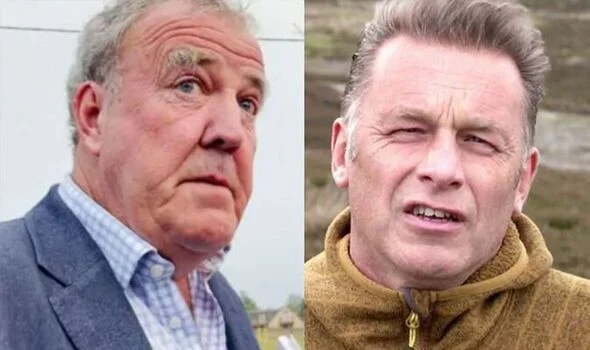
Packham’s Gogglebox Outburst Triggers War of Words with Clarkson
The British broadcasting landscape erupted this week as Springwatch presenter Chris Packham’s comments about the animated opening sequence of Clarkson’s Farm on Celebrity Gogglebox drew fierce backlash from Jeremy Clarkson, the farming community, and political commentators. The row, which began during an episode aired on July 10, 2026, has quickly escalated into a national debate about the portrayal of modern agriculture in the media.
While watching the Amazon Prime Video hit on the Channel 4 show alongside his stepdaughter Megan McCubbin, Packham launched into a tirade. “That’s not what a farm looks like,” he fumed. “Most farms are horrible monocultures which have been sprayed with deadly chemicals time and time again. The ground is pumped full of fertiliser, and loads of the animals are indoors in crates, being crushed and kept in the dark.” He then turned to McCubbin and asked: “What’s my blood pressure?”
The comments were directed at the programme’s whimsical, Winnie-the-Pooh-style illustrated credits, which Clarkson later defended by pointing out, simply, “It’s a drawing.” But the damage was done. Within hours, Clarkson fired back in his weekly column for The Sun, branding Packham’s remarks as “b******s” and revealing that the naturalist had actually visited Diddly Squat Farm back in 2012 for a day of “foraging and bird watching.”
“If there had been some animals in a crate, being crushed, I’m sure he would have noticed,” Clarkson wrote, adding that Packham is “endlessly angry.” The exchange has since dominated headlines, with both men drawing support and criticism from across the political and agricultural spectrum.
Farming Community and Commentators Rally Against Packham
The backlash against Packham was swift and unrelenting, particularly on social media platforms like Instagram where farmers and rural advocates voiced their anger. One prominent account, @therural_rebel, accused Packham of “spreading [a] hateful agenda,” insisting that “most farms are not monocultures” and rejecting the claim that livestock are routinely kept in the cruel conditions he described. The hashtag #StandWithClarkson trended briefly across UK Twitter, reflecting the depth of feeling among those who see the Clarkson’s Farm star as a defender of British agriculture.
Mo Metcalf-Fisher, a spokesperson for the Countryside Alliance, praised Clarkson for showcasing the realities of modern food production. “Jeremy Clarkson’s Farm series has done more to highlight the hard work of farmers than any government campaign,” he said. “Chris Packham’s comments are an insult to the thousands of men and women who work tirelessly to put food on our tables while caring for the countryside.”
Agricultural commentator @agrispec_tom also challenged Packham, arguing his remarks ignored decades of progress in animal welfare, environmental stewardship, and production efficiency. “The livestock sector has transformed over the last 30 years. To suggest we’re still operating like it’s the 1970s is disingenuous,” he wrote.
Meanwhile, Harriet Cowan, a well-known farmer and media personality, unleashed her own fury at the BBC star. In an interview with GB News, she demanded: “What world are you living in? Chris Packham spends his life filming in nature reserves, not on working farms. He has no idea what the majority of British agriculture looks like today.” Her comments echoed a sentiment widely shared among rural communities: that urban-based naturalists and campaigners often lack direct experience of the farms they criticise.
Clarkson’s Defence and the Diddly Squat Connection
Clarkson’s counterattack was characteristically blunt. In his Sun column, he not only called Packham’s rant “b******s” but also highlighted the hypocrisy he perceived: if Packham had truly witnessed animal suffering at Diddly Squat in 2012, he would surely have reported it. “He came here, walked the woods, and said nothing. Now he’s on TV comparing my farm to a factory,” Clarkson wrote. “It’s utter nonsense.”
The Amazon Prime star also used the column to remind readers that the opening sequence is an artistic representation, not a documentary. “He was angry at a cartoon,” Clarkson quipped, a line that drew laughter from his supporters but sharp criticism from those who felt he was deflecting from more serious issues around intensive farming.
Packham has not yet issued a direct response to Clarkson’s column, but sources close to the naturalist have suggested he stands by his comments, believing they reflect genuine concerns about British agricultural practices. The BBC has declined to comment on the row, though insiders note that Packham was speaking as a guest on Gogglebox and not in his capacity as a BBC presenter.
This is not the first time Packham has clashed with the farming lobby. In recent years, he has been a vocal critic of intensive farming methods, calling for a reduction in livestock numbers and a shift toward plant-based diets to combat climate change. His comments on Gogglebox are part of a wider pattern of advocacy that has made him a polarising figure.
The Bigger Picture: Media, Farming, and Public Perception
This controversy is far more than a celebrity spat; it sits at the intersection of media influence, agricultural reality, and public misunderstanding. Clarkson’s Farm, which aired its fifth season earlier this year, has become a cultural phenomenon, drawing millions of viewers who may have little prior knowledge of farming. The show has been credited with increasing public appreciation for the challenges farmers face—from erratic weather to bureaucratic red tape to supermarket price pressures.
Yet critics like Packham argue the series presents a romanticised, sanitised version of agriculture that fails to show the environmental costs of modern food production. Monoculture cropping, pesticide use, and intensive livestock housing are all facts of life on many UK farms, and Packham’s supporters say he was right to call attention to them, even if his delivery was explosive.
“Chris was speaking the truth, but he did it in the wrong forum,” said one environmental campaigner who asked not to be named. “Gogglebox is entertainment, not a policy debate. But the underlying issues he raised—about chemical use, biodiversity loss, and animal welfare—are legitimate and need a proper airing.”
The farming community, though defensive, largely accepts that change is needed. The National Farmers’ Union (NFU) has set ambitious net-zero targets for 2040, and many farmers are already adopting regenerative practices like cover cropping, reduced tillage, and integrated pest management. The problem, as many see it, is that public figures like Packham paint with too broad a brush, alienating the very people who are trying to improve.
Dr. Emily Thornton, an agricultural policy researcher at the University of Reading, noted: “The danger of these high-profile rows is that they polarise the debate. The public is left thinking it’s either perfect pastoral idyll or industrial hellscape. The truth lies somewhere in between, and neither side benefits from caricature.”
Broader Implications for Celebrity Activism and Public Discourse
The Packham-Clarkson row also raises questions about the role of celebrities in shaping public opinion on complex issues. Both men are immensely popular—Clarkson with his motoring and farming audiences, Packham with nature lovers and conservationists—but their platforms are vastly different. Clarkson speaks through Amazon’s streaming dominance and a newspaper column, while Packham holds sway on BBC’s natural history programming, often considered a trusted source.
When such figures clash, it can deepen existing divides. Polling carried out last year by YouGov suggested that rural and urban Britons hold very different views on farming, with city dwellers more likely to support restrictions on intensive agriculture. The Gogglebox incident may have reinforced those divisions, with each side hearing only what it wants to hear.
The controversy also highlights the growing influence of social media in amplifying celebrity disputes. Within hours of the episode airing, clips of Packham’s rant were shared thousands of times, often stripped of context. The brief, emotive nature of the exchange—a one-minute rant about a cartoon—proved perfectly suited to the viral news cycle, even as serious discussions about farming policy were pushed aside.
In a broader sense, this row reflects the tension between traditional farming culture and the environmental movement. As the UK faces increasing pressure to meet climate targets and restore biodiversity, farmers feel they are being unfairly blamed for problems created by consumer demand and supermarket policies. Packham’s comments, however clumsily delivered, touch on that raw nerve.
As the dust settles, both men appear unlikely to back down. Clarkson, ever the provocateur, seems to relish the fight. Packham, equally stubborn, will continue to use his platform to push for agricultural reform. The real question is whether this public spat can translate into meaningful dialogue—or whether it will simply become another episode in Britain’s culture wars, played out on primetime television.
What Happens Next? The Unresolved Debate Over UK Farming’s Future
For now, the immediate fallout remains on social media and in the columns of national newspapers. But the debate shows no signs of cooling. Farmers’ groups are calling on Packham to visit a range of working farms—not just the woodland edges he prefers for birdwatching—to see for himself the changes that have been made. Meanwhile, environmentalists are urging Clarkson to use his platform to address the real environmental costs of farming, rather than simply attacking his critics.
The NFU has so far remained neutral, but privately, there is concern that such high-profile rows make it harder to have a rational conversation about the future of British agriculture. “We need to find common ground,” a senior figure said. “Both sides care about the countryside. We just have different ideas about how to protect it.”
The row also comes at a time when the farming sector is facing immense pressure from the transition to post-Brexit subsidy systems, rising input costs, and the challenge of feeding a growing population while shrinking its environmental footprint. Against that backdrop, a TV spat can seem trivial—but it also reflects the very real tensions that policymakers will have to navigate.
As for the public, the Gogglebox moment has become a touchstone. It will be replayed, memed, and argued over for weeks to come. And for good or ill, Chris Packham has ensured that the question of what a farm “really looks like” will remain front and centre in the national conversation.
Comments