
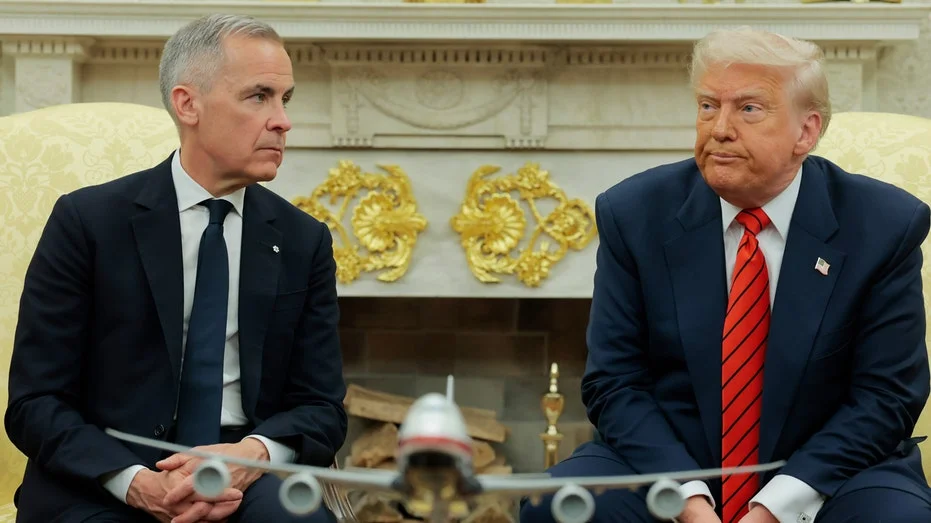
Trump Trade Talks Collapse: Canada Retaliates With Tariffs as Both Sides Dig In
What Happened: Trade Talks Fail, Tariffs Escalate
The latest round of US-Canada trade negotiations has collapsed, triggering a sharp escalation in tariffs that is already affecting consumers on both sides of the border. On August 22, talks broke down after the US made last-minute demands that Canadian officials deemed unreasonable, including backtracking on a promise to reduce auto tariffs and imposing new restrictions on Canada's ability to trade with other countries. President Donald Trump subsequently announced a 50% tariff on roughly $28 billion worth of Canadian products, effective January 1, after initially imposing 50% levies on a range of Canadian goods on August 23. In response, Canadian Prime Minister Mark Carney unveiled retaliatory tariffs of up to 50% on about $20 billion worth of US goods—including steel, dairy, appliances, and farm equipment—set to take effect September 8. The Canadian government also announced measures to support affected workers and businesses, signaling a prolonged standoff.
The US Demands That Tanked the Deal
According to reports, the US negotiators walked back a previous commitment to lower tariffs on Canadian automobiles from 25% to 15%, and sought to exclude medium and heavy-duty trucks from any deal. They also pushed to limit Canada's ability to strike trade agreements with other countries—a condition Ottawa viewed as a violation of its sovereignty. Perhaps most contentious was a demand that Canada restrict French-language product documentation, which provoked strong backlash, especially in Quebec. Quebec Premier Christine Fréchette stated, "Our culture, our language, is central to our identity, and it is important to exclude that from the negotiating table. Even though we are threatened with different tariffs, it won't change." The Canadian team walked away from the table, prompting a war of words over who was responsible for the breakdown.
Why the Breakdown Matters: Economic Pain on Both Sides
Impact on Consumers and Industries
The tariffs have immediate consequences for ordinary Americans. The US imports a significant share of its toilet paper and tissue products from Canada, and prices are already surging. As one report noted, "The US accounts for more than 20% of global tissue consumption despite having only 4% of the world's population," and with tariffs on Canadian lumber and other raw materials, the cost of these essential goods is climbing. Beyond toilet paper, tariffs on steel and aluminum affect everything from cars to appliances. Canadian consumers, meanwhile, face higher prices on US-made goods such as furniture, clothing, and agricultural products. The retaliatory tariffs are deliberately designed to mirror US tariffs and to be sourced from other markets, minimizing harm to Canadian industries while maximizing political pressure on the US.
Business Uncertainty and Investment
The breakdown creates significant uncertainty for businesses on both sides. Canadian Prime Minister Carney announced billions in additional funding to keep impacted businesses and workers afloat, but the long-term threat of tariffs on vehicles—which could rise to 50% by January—has already rattled the auto industry. US automakers rely heavily on Canadian parts and assembly, and such tariffs could raise vehicle prices substantially. Analysts warn that sustained tariffs could lead to job losses, supply chain disruptions, and reduced investment in cross-border ventures. For a trading relationship that typically sees over $2 billion in goods cross the border each day, the stakes could not be higher.
Perspective: The Broader Implications for US-Canada Relations
A Historic Low in Relations
The trade confrontation marks an unprecedented low in US-Canada relations, long considered among the closest in the world. President Trump's personal hostility toward Canada (he reportedly suggested renaming a lake) has shattered the image of a reliable neighbor. His comment, "They have to pay a fair amount. And if they don't pay a fair amount, we won't make a deal," reflects a combative approach that Canadian officials say undermines any chance of a reasonable agreement. For Canada, the dispute is not just about tariffs—it's about defending its sovereignty and cultural identity. The standoff has also strained relations between Washington and other allies, as nations watch to see whether the US will treat them similarly. A recent federal judge struck down Trump's visa ban for 75 countries, highlighting broader concerns about the administration's unilateral actions.
What This Changes Going Forward
The collapse of talks and the subsequent tariff escalation signal a new, more adversarial era in North American trade. It challenges the assumptions of the USMCA, the trade agreement that replaced NAFTA, which was supposed to provide stability. With both sides digging in, the prospect of a quick resolution looks unlikely. Prime Minister Carney, who has adopted a tough stance, declared: "We're not going to bend, we're not going to break, we're going to build." His government has already begun diversifying trade partners, a move that could have long-term consequences for US influence. Meanwhile, Trump's approach—appearing to forget the details of the talks in interviews—suggests that policy may be driven more by impulse than strategy. As the January deadline for higher tariffs looms, the world is watching to see whether the world's largest trading relationship can survive this test. For now, the answer seems to be that both sides are prepared to accept the economic pain rather than back down.
A Global Trade Order Under Pressure
The US-Canada dispute is part of a larger pattern of trade tensions under the Trump administration, which has also clashed with China, the EU, and others. This episode underscores how trade policy has become a tool for political leverage, with less regard for economic consequences. For Canada, the experience may drive it to accelerate efforts to reduce its reliance on the US market, a shift that would have profound implications for both economies. In the short term, consumers will pay more, businesses will face uncertainty, and the friendship between two neighbors will remain strained. Whether a deal is reached before the next tariff hike depends not only on negotiating positions but also on whether either side is willing to de-escalate.
Related Coverage
For more on the Trump administration's trade and legal battles, see Trump DOJ Memo Expands Executive Privilege to Private Advisers and Trump Declares Strait of Hormuz 'US Territory' as Blockade Reshapes Oil Routes.
Comments