
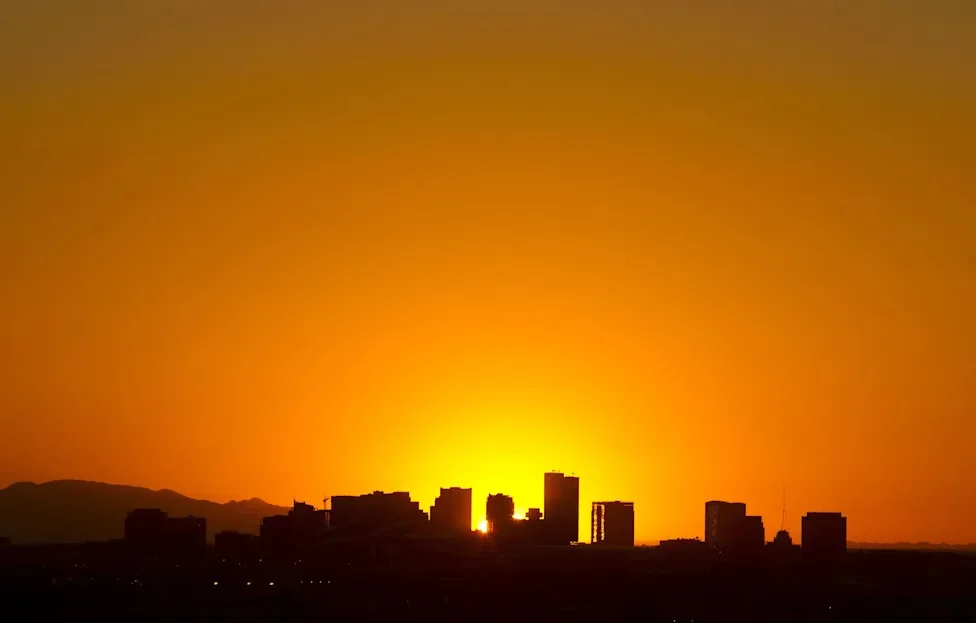
Daylight Saving Time 2026 Ends November 1
Most Americans will turn their clocks back one hour on Sunday, November 1, 2026, at 2:00 a.m. local time, marking the end of daylight saving time (DST) for the year. The change means an extra hour of sleep and a return to standard time, but also an earlier sunset, with darkness arriving noticeably sooner in the late afternoon and evening.
The transition is automatic for most smartphones, computers, and internet-connected devices, but manual adjustments will be needed for appliances, vehicles, and other clocks. The shift will remain in effect until DST begins again on the second Sunday in March 2027.
Which States Observe Daylight Saving Time?
Not all Americans participate in the biannual clock change. Hawaii and most of Arizona observe standard time year-round, as do the U.S. territories of American Samoa, Guam, the Northern Mariana Islands, Puerto Rico, and the U.S. Virgin Islands. The Navajo Nation in parts of Arizona is an exception, observing DST like neighboring lands in New Mexico, Utah, and Colorado.
Congress Stalls Permanent Daylight Saving Time
Despite a renewed push on Capitol Hill to make daylight saving time permanent, the proposal has stalled in the Senate. In July 2026, the House of Representatives passed the Sunshine Protection Act of 2025 with a bipartisan 308-117 majority. The bill, sponsored by Rep. Vern Buchanan (R-Fla.), would end the practice of changing clocks twice a year and institute DST year-round across the country.
President Donald Trump has repeatedly urged Congress to pass the bill. However, Senate Majority Leader John Thune (R-S.D.) told POLITICO earlier this month that there is no "consensus" among his colleagues on whether to advance the measure. "The President feels strongly on it like he does a lot of issues," Thune said. "It's something we're having conversations about, but there's no consensus."
Sen. Tom Cotton (R-Ark.) has emerged as the most vocal opponent of the Sunshine Protection Act in the Senate, citing concerns about dark winter mornings. Proponents like Rep. Gus Bilirakis (R-Fla.) argue that permanent DST would benefit the economy and encourage more outdoor activity. "In a state like Florida, where tourism is a cornerstone of our economy, having more predictable daylight hours is a practical improvement that benefits workers, businesses, and communities," Bilirakis said.
The History and Debate Over Daylight Saving Time
Daylight saving time in the United States dates back more than 50 years. Congress standardized the practice in 1966 with the Uniform Time Act, establishing a nationwide framework for the seasonal time change. The current schedule—beginning on the second Sunday in March and ending on the first Sunday in November—has been in place since 2007.
During the oil crisis of the 1970s, Congress briefly ended daylight saving time to conserve energy, but quickly rolled it back when parents objected to sending their children to school in the dark. The legislation was repealed in 1974. The idea behind DST has traditionally been to make better use of natural evening light and potentially conserve energy, though researchers have questioned how much energy the practice saves under modern electricity-use patterns.
Public opinion appears to favor ending the clock changes. A 2026 poll found that most Americans want to stop changing the clocks, but they are divided on whether to adopt permanent standard time or permanent daylight saving time. Sleep experts generally advocate for permanent standard time, arguing it aligns better with human circadian rhythms, while business groups and outdoor recreation advocates often prefer permanent DST.
What the Stalled Legislation Means for Americans
With the Senate deadlocked, Americans will continue to adjust their clocks twice a year for the foreseeable future. The impasse leaves a patchwork of state-level efforts in limbo. Michigan's House approved legislation in 2021 to potentially end seasonal time changes, but the state still observes DST. Other states have considered similar measures, but federal law prohibits states from adopting permanent DST without congressional approval. States can, however, opt out of DST entirely and remain on standard time year-round, as Arizona and Hawaii have done.
For now, the immediate impact is the return to standard time on November 1. The change means an extra hour of sleep for many, but also an abrupt shift in evening daylight. Sunset will arrive about an hour earlier by the clock, leaving many commuters traveling home from work or school in darkness.
Broader Implications and What to Watch
The debate over daylight saving time reflects broader questions about how modern society structures time. While the original rationale for DST was energy conservation, today the practice is often criticized for disrupting sleep patterns, increasing the risk of heart attacks and strokes in the days following the change, and causing confusion for international travelers and businesses.
As the Senate weighs the Sunshine Protection Act, the issue remains a rare point of bipartisan agreement in an otherwise polarized Congress. However, the lack of consensus in the upper chamber suggests that the twice-yearly clock change will persist for now. Americans should prepare to set their clocks back on November 1 and keep an eye on Congress as the debate continues. For more on the stalled legislation and its implications, see our previous coverage: Daylight Saving Time 2026: Clocks Fall Back Nov. 1 as Congress Stalls Permanent DST.
Comments