
Giant Trio: Three New Sauropod Species Emerge from Thailand, Argentina, and Brazil
In a remarkable week for paleontology, scientists have announced the discovery of three new giant dinosaur species from three different continents, each shedding new light on the evolution of the largest land animals that ever lived. The finds, reported between May 11 and May 14, 2026, span the Early Cretaceous and Late Jurassic periods and come from fossil sites in Thailand, Argentina, and Brazil.
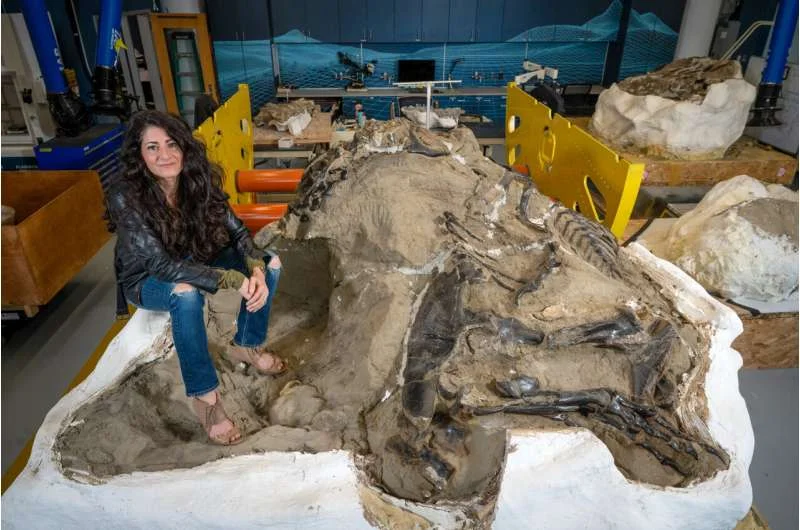
The most headline-grabbing discovery is Nagatitan chaiyaphumensis, a massive long-necked herbivore unearthed in northeastern Thailand. Described in a study published May 14 in Scientific Reports, this dinosaur is estimated to have weighed around 27 to 30 tons and measured over 88 feet (27 meters) long, making it the largest dinosaur ever found in Southeast Asia. The fossils were discovered in 2016 by a local man, Thanom Luangnan, near a public pond in Chaiyaphum Province. A team led by National Geographic Explorer Sita Manitkoon later excavated 10 bones, including a front leg bone nearly six feet tall. Researchers named it Nagatitan after the Naga, a serpentine deity in Southeast Asian folklore, and Chaiyaphumensis for the province where it was found. Lead author Thitiwoot Sethapanicsakul of University College London called it "the last titan" of Thailand, noting that no younger dinosaur-bearing rocks exist in the region.
On the same day, a separate team publishing in a peer-reviewed journal described Bicharracosaurus dionidei from southern Argentina. This bizarre dinosaur lived about 155 million years ago during the Late Jurassic and stretched about 65 feet (20 meters) long. Its skeleton displays a strange mix of features: some bones resemble Giraffatitan, a brachiosaurid from Tanzania, while others are more like those of Diplodocus from North America. First author Alexandra Reutter of LMU Munich stated that phylogenetic analyses suggest Bicharracosaurus may be the first Jurassic brachiosaurid from South America, filling a major gap in the fossil record of the southern supercontinent Gondwana.
A third new species, Dasosaurus tocantinensis, was announced on May 11 from a construction site in Maranhão, northeastern Brazil. Workers digging a road-rail terminal found fossils 26 feet underground. Estimated at 65 feet long, it is the largest known dinosaur from Maranhão. Researchers led by Professor Elver Luiz Mayer of UNIVASF identified it as a sauropod whose closest relative lived in what is now Spain, suggesting its ancestors migrated from Europe through Africa into South America between 140 and 120 million years ago when the continents were still connected.
These three discoveries arrive in the same month that Marvel Rivals Season 8 Adds Devil Dinosaur, Cyclops, and Alchemax Map May 15, adding a pop-culture counterpoint to the real-life paleontological news.
Why This Matters: Filling Gaps in the Sauropod Family Tree and Fossil Record
The simultaneous announcement of three new giant dinosaur species is more than a coincidence of discovery windows. Each find addresses a critical gap in the known history of sauropods, the long-necked, plant-eating dinosaurs that included the heaviest animals ever to walk the Earth.
For Southeast Asia, Nagatitan is a game-changer. Until now, the region’s sauropod fossils were fragmentary. Pedro Mocho, a paleontologist at the Universidade de Lisboa not involved in the study, told National Geographic that prior to Nagatitan, large Thai dinosaurs were known only from “bits and pieces.” The new specimen is “the most complete sauropod specimen discovered from the Khok Kruat Formation.” Its massive size—comparable to an African elephant but twice as heavy—shows that giant sauropods thrived in Cretaceous Southeast Asia, challenging previous assumptions that the region’s tropical forests could not support such huge herbivores.
The Argentine fossil, Bicharracosaurus, matters because it breaks the Northern Hemisphere’s monopoly on Jurassic sauropod knowledge. As Reutter explained, “Our knowledge of the evolution of sauropods from the Late Jurassic has so far been based almost entirely on numerous fossil findings from North America and other sites in the Northern Hemisphere.” The only significant southern site was Tendaguru in Tanzania. Bicharracosaurus provides a long-sought South American data point. Its mix of brachiosaurid and diplodocid traits suggests that Gondwana’s sauropods evolved in isolation, developing unique combinations of features not seen in their northern relatives.
Dasosaurus from Brazil adds another piece to the puzzle of Cretaceous biogeography. Its closest relative living in Spain implies a migration route across connected landmasses before the Atlantic Ocean fully opened. This supports the theory that sauropods traveled from Europe to Africa and then to South America between 140 and 120 million years ago, a journey that would have required stable land bridges across what is now the central Atlantic.
Together, these three dinosaurs underscore how much remains unknown about the Southern Hemisphere’s prehistoric past. For decades, paleontology focused on well-explored regions like the United States, Canada, and Europe. Now, with increased fieldwork in Thailand, Argentina, and Brazil—often led by local researchers—the picture is changing rapidly.
The Challenge of Funding and Future Discoveries
The story of Nagatitan also highlights the practical hurdles of paleontological research. After local discovery in 2016, excavation teams worked until funding ran out in 2020. Only after receiving a grant from the National Geographic Society in 2023 did lead author Sethapanicsakul and his team resume work and complete the study. Without such targeted financial support, the fossils might have remained buried or lost. This reality echoes across the field: many promising dig sites worldwide remain unexplored due to limited resources, especially in developing nations where dinosaur fossils are abundant but research infrastructure is scarce.
A Broader Picture: Climate, Migration, and the Rise of Giants
These three discoveries offer insights beyond taxonomy. They illuminate how environmental conditions and continental drift enabled the evolution of gigantism.
Cretaceous Climate Shift
Nagatitan lived 113 million years ago during the Early Cretaceous, a time of major climate change. As National Geographic’s Riley Black noted in the report on Nagatitan, the discovery supports the idea that “warm, open, and relatively dry habitats created ideal conditions for the evolution of giant sauropods.” During the Cretaceous, global temperatures rose, sea levels fluctuated, and new types of plants like flowering angiosperms appeared. These changes may have allowed sauropods to grow larger by providing more open habitats with abundant low-nutrient foliage that required large body sizes to process efficiently.
Jurassic Biogeography
Bicharracosaurus, from the Late Jurassic of Argentina, tells a different story. Living about 155 million years ago on the southern supercontinent Gondwana, it evolved when South America, Africa, Antarctica, Australia, and India were still partially connected. Its mixed anatomy suggests that Gondwanan sauropods followed an evolutionary trajectory distinct from their Laurasian (Northern Hemisphere) counterparts. This bolsters the hypothesis that the breakup of Pangea into northern and southern supercontinents during the Jurassic led to divergent evolution among dinosaur lineages.
Transcontinental Migration
Dasosaurus tocantinensis provides direct evidence for sauropod migration between Europe and South America during the Early Cretaceous. The species’ nearest relative in Spain implies that its ancestors crossed land routes that existed before the Atlantic Ocean widened. This reinforces the idea that dinosaurs were not confined to single continents but traveled extensively across connected landmasses, carrying their genes—and possibly their diseases and parasites—across vast distances.
The End of an Era
Perhaps the most poignant detail comes from the Thai discovery. As Sethapanicsakul noted, “We won’t find any more dinosaur fossils in any younger rocks in Thailand, making this dinosaur kind of the last giant of its kind that we could possibly find in the region.” Nagatitan is literally the final chapter of Thailand’s dinosaur record. After the Early Cretaceous, geological conditions in the region shifted, and no rocks younger than about 100 million years old in Thailand preserve dinosaur bones. This makes Nagatitan a true “last titan,” a final glimpse into a lost world before the region’s fossil record went silent. For local paleontologists and the Thai public, the discovery carries deep cultural significance, blending ancient mythology (the Naga) with scientific heritage.
What Changes: A New Baseline for Sauropod Research
The combined impact of these three discoveries is significant. They expand the known geographic range of giant sauropods, fill temporal gaps in the fossil record, and challenge long-held assumptions about where and when these animals evolved their colossal sizes.
For researchers, the new data will require revisions to existing evolutionary trees. Bicharracosaurus forces paleontologists to reconsider the origins of brachiosaurids, traditionally considered a mainly Northern Hemisphere group. Its presence in South America suggests that either brachiosaurids originated in Gondwana and dispersed northward, or that multiple lineages independently evolved similar features. Detailed anatomical comparisons over the coming months will help settle this debate.
For conservation paleontologists, the discoveries underscore the importance of protecting fossil sites worldwide. The Brazilian construction site that yielded Dasosaurus was only monitored because of legally required environmental inspections. In an era of rapid infrastructure development in emerging economies, many fossils are destroyed before scientists can study them. The fact that three major finds were announced within days suggests that many more remain hidden beneath roads, ponds, and buildings.
For the public, these dinosaurs offer a visceral connection to deep time. The image of a 30-ton creature roaming ancient Thailand, a chimeric Jurassic giant in Patagonia, and a transatlantic traveler in Brazil captures the imagination and reminds us that our planet’s history is far stranger and more dynamic than we often assume.
As paleontology increasingly moves beyond classic fossil hotspots, we can expect more such announcements. The three new species announced this week are not exceptions but harbingers of a coming wave of discoveries from Asia, South America, Africa, and Australia—regions that are finally receiving the scientific attention they deserve.
In a world where news cycles often focus on fleeting controversies, the discovery of three new dinosaurs offers a rare moment of shared wonder. It also serves as a reminder that the ground beneath our feet holds secrets that can rewrite entire chapters of Earth’s history—if we have the patience, funding, and curiosity to uncover them.
Comments