
A Sky Show Is Underway Right Now — And the Best Is Still to Come
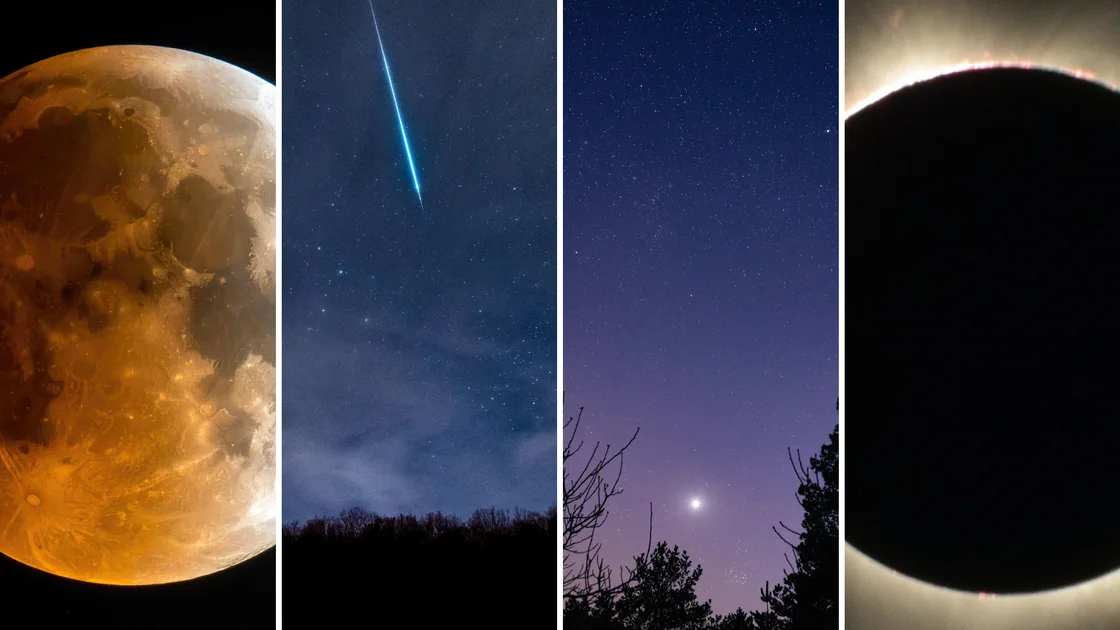
If you have not looked up at the night sky yet this week, now is the time. The 2026 Lyrid meteor shower is currently active and approaching its peak, offering skywatchers across the Northern Hemisphere — and, to a lesser extent, the Southern Hemisphere — the chance to witness one of the oldest recorded celestial spectacles in human history.
According to NASA, the shower's peak will begin around 10 p.m. on the night of April 21 and continue into the early morning hours of April 22. During this window, observers can expect to see anywhere from 10 to 20 meteors per hour streaking across the spring sky. The Lyrid meteor shower began on April 15 and will remain active through April 30, but the peak night offers by far the most concentrated activity.
This year, conditions are particularly favorable. A dim crescent moon is set to disappear below the horizon before the most active viewing hours begin, eliminating one of the most common obstacles to clear meteor-watching. Astronomers are calling the 2026 edition a strong opportunity for casual stargazers and dedicated skywatchers alike.
What Makes the Lyrids Unique Among Annual Meteor Showers
The Lyrid meteor shower gets its name from the constellation Lyra, the region of the northeastern sky from which the meteors appear to radiate. But the true source of the show lies far beyond that constellation: the icy comet Thatcher, which orbits the sun on a roughly 415-year cycle.
Debris From a Comet We May Never See
Each year, as Earth travels through its own orbit around the sun, it passes through a trail of dust and debris shed by Comet Thatcher over millennia. Those tiny particles — many no larger than a grain of sand — enter Earth's atmosphere at high speed and burn up, producing the brilliant streaks of light we recognize as shooting stars.
"We only get to see the actual comet once every 415 years," said Maria Valdes, a meteorite researcher at the School of the Art Institute of Chicago. "But we pass through the grains that have been left in its wake every year around the same time."
The last time Comet Thatcher was visible from Earth was in 1861. The next visit is not expected until the late 23rd century, making the annual Lyrid display a kind of proxy encounter with a comet that no one alive today will ever witness directly.
Fast, Bright, and Occasionally Spectacular
While the Lyrids are not the most prolific shower of the year — the Perseid meteor shower in August typically produces higher rates — they are known for their speed and brightness. The American Meteor Society notes that Lyrid meteors tend to be fast-moving and luminous, and they can occasionally produce fireballs: exceptionally bright flashes of light that are significantly more intense than typical shooting stars.
Unlike some other showers, Lyrids generally do not leave long, glowing dust trains in their wake. Instead, the visual experience is characterized by sharp, quick bursts of light against a dark background — a quality that makes them particularly striking to the naked eye.
How to Watch the 2026 Lyrid Meteor Shower
No special equipment is needed to enjoy the Lyrids. Telescopes and binoculars are actually counterproductive, as they narrow the field of view and reduce the chance of catching a fast-moving meteor. The ideal instrument is simply a pair of well-adjusted human eyes.
Timing and Location Tips
The best viewing window each night begins after midnight, when the radiant point — the region of the sky near the constellation Lyra — climbs higher above the horizon. The later into the night you stay up, the better your chances, with pre-dawn hours typically offering peak activity rates.
Finding a dark location is essential. Light pollution from urban and suburban areas dramatically reduces the number of meteors visible, washing out the fainter streaks entirely. Astronomy enthusiasts recommend traveling to rural areas, hilltops, or designated dark-sky parks whenever possible. Even stepping away from streetlights and building glow in a suburban neighborhood can make a meaningful difference.
Allow at least 20 to 30 minutes for your eyes to fully adapt to the darkness before expecting to see much activity. NASA recommends resisting the urge to check your phone during this adjustment period, as even a brief glance at a bright screen resets the process. Bringing a blanket, sleeping bag, or reclining lawn chair will allow you to lie back comfortably and take in as wide a swath of sky as possible, rather than straining your neck by standing.
"A meteor looks like a trail of light in the sky," said astronomer Lisa Will of San Diego City College. "What you tend to detect is the motion against the background."
Where to Look
While Lyrid meteors will appear to originate from the direction of the constellation Lyra in the northeastern sky, they can streak across any part of the sky. Skywatchers do not need to stare directly at Lyra — in fact, meteors spotted closer to the radiant tend to appear shorter, while those farther from it produce longer, more dramatic trails. The practical advice is simply to look broadly upward and let your peripheral vision do much of the work.
A Meteor Shower Recorded Across 2,500 Years of Human History
The Lyrid meteor shower holds a distinction that few astronomical phenomena can claim: it is one of the longest-documented recurring sky events in recorded human history. Ancient Chinese astronomical records include what researchers believe are observations of the Lyrids dating back more than 2,500 years — placing this shower's documented history well before the founding of the Roman Republic or the construction of the Great Wall.
That longevity is a testament not only to the shower's regularity but also to its visibility. Unlike some celestial events that require favorable geographic positioning or technological assistance, the Lyrids are accessible to anyone who steps outside on a clear April night. Across civilizations, cultures, and centuries, people have looked up at roughly the same point in the sky and watched the same debris trail illuminate the darkness.
This continuity adds a dimension to the experience that goes beyond the purely scientific. Watching the 2026 Lyrids means participating — however briefly — in an unbroken chain of human observation stretching back to antiquity.
The Broader Calendar: What Comes Next for Meteor Watchers
For those who find themselves captivated by the Lyrids, the good news is that the next significant shower is not far off. The Eta Aquarid meteor shower, which originates from debris left behind by Halley's Comet, is set to peak in early May. The Eta Aquarids are particularly notable for observers in the Southern Hemisphere, where they tend to produce higher visible rates than in northern latitudes — offering a kind of complement to the Lyrids, which favor Northern Hemisphere viewers.
Halley's Comet, unlike Thatcher, has a much shorter orbital period of approximately 75 to 76 years, meaning it returns to the inner solar system within a human lifetime. The comet last passed close to Earth in 1986 and is expected to be visible again around 2061. In the meantime, its debris trail continues to produce two meteor showers each year: the Eta Aquarids in May and the Orionids in October.
The broader meteor shower calendar extends throughout the year, with significant events in August (the Perseids), November (the Leonids), and December (the Geminids). Each shower has its own character — in terms of meteor rate, speed, brightness, and the comet or asteroid that produced the debris — and together they offer stargazers a recurring series of opportunities to connect with the solar system's dynamic and constantly evolving architecture.
Why This Year's Display Matters for Public Engagement With Astronomy
The 2026 Lyrids arrive at a moment when public interest in astronomy and space science has been steadily growing, driven in part by high-profile missions to the moon, ongoing Mars exploration programs, and a wave of commercial spaceflight activity. Meteor showers occupy a particular place within that broader interest: they are among the very few astronomical events that require no subscription, no equipment purchase, and no specialized knowledge to enjoy.
For many people, a meteor shower is their first real encounter with the night sky as a dynamic, living environment rather than a static backdrop. Astronomers and science communicators frequently describe meteor showers as gateway events — experiences that prompt curiosity, questions, and a desire to learn more about the universe beyond Earth's atmosphere.
In that sense, the annual return of the Lyrids is not merely a recurring calendar entry for dedicated observers. It is an open invitation, extended equally to the seasoned astrophysicist and the curious teenager lying in a backyard with a blanket, waiting for a streak of ancient comet dust to burn brightly across a spring night sky.
Comments