
Why DR Congo Is Listed as 'COD' at the 2026 World Cup
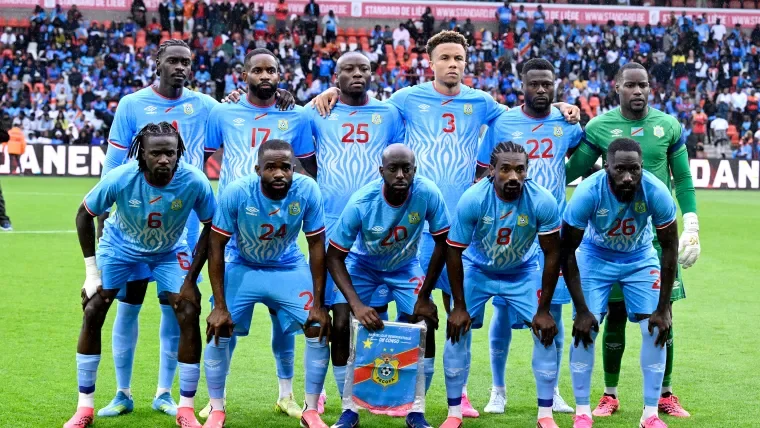
As the 2026 FIFA World Cup unfolds in the United States, fans watching Group K matches have noticed an unfamiliar three-letter code next to one of the tournament's most compelling comeback stories. The Democratic Republic of the Congo, making its first appearance in 52 years, is officially abbreviated as 'COD' on scoreboards, standings, and broadcast graphics. Many casual viewers expected to see 'DRC', but FIFA's standardized system tells a different story.
The Reason Behind 'COD'
The abbreviation derives from the country's official ISO alpha-3 code, which itself is based on the French name for the nation: Congo-Kinshasa. While English speakers refer to the country as the Democratic Republic of the Congo, FIFA adheres to international standards set by the International Organization for Standardization (ISO). The code 'COD' helps distinguish DR Congo from its smaller neighbor, the Republic of the Congo, which uses 'COG'.
This distinction is critical in a tournament where clarity is paramount. The Republic of the Congo has never qualified for a World Cup, but the similar names could cause confusion without clear shorthand. FIFA uses these codes for all member associations, ensuring consistency across match reports, tickets, and official documents.
A 52-Year Gap Ends
DR Congo’s return to the World Cup is historic. The country last qualified in 1974, when it competed under the name Zaire. That year, Zaire became the first Sub-Saharan African nation to qualify for a men’s World Cup. The team lost all three group-stage matches—against Scotland, Yugoslavia, and Brazil—without scoring a single goal.
Now, after more than five decades, the Leopards are back. Their qualification journey was grueling: after finishing second in CAF Group B behind Senegal, they eliminated Cameroon and Nigeria in knockout matches, then defeated Jamaica 1-0 after extra time in the intercontinental playoff in Guadalajara, Mexico. The team's squad includes several players born abroad, adding to the modern identity of a nation that has undergone significant political and social change since 1974.
What’s at Stake for DR Congo in Group K
DR Congo enters Group K alongside heavyweights Portugal (ranked 5th in the world), Colombia (14th), and Uzbekistan (50th). The Leopards themselves sit at No. 45 in the latest FIFA rankings. The expanded 48-team format means the top two from each group plus the eight best third-place finishers advance, giving DR Congo a realistic, if slim, path to the knockout stage.
Portugal Match Kicks Off Campaign
On June 17, 2026, DR Congo faces Portugal in Houston in its opening match. Cristiano Ronaldo leads a Portuguese side widely expected to top the group, but the Leopards’ resilience in qualifying—overcoming Cameroon, Nigeria, and Jamaica—suggests they cannot be underestimated. Colombian and Uzbek threats loom after that, but a strong showing against Portugal could set the tone.
The 'COD' Code as a Symbol
The 'COD' abbreviation is more than a technical detail; it reflects the country's complex history. The code changed when Zaire became the Democratic Republic of the Congo in 1997, aligning with international standards. For fans, seeing 'COD' on the World Cup stage is a reminder of the nation's long absence and its re-emergence in a globalized sport. It also highlights how FIFA’s logistics rely on uniform codes to prevent on-screen confusion, a small but essential part of tournament organization.
Broader Implications and Trends
DR Congo’s return and the 'COD' abbreviation underscore several trends in modern soccer. First, the gap between African nations and traditional powerhouses continues to narrow, as evidenced by the Leopards' dramatic qualification path. Second, the use of ISO codes over English-adapted abbreviations reflects FIFA’s commitment to international standards, even when they confuse domestic audiences. Finally, the tournament’s expansion to 48 teams has given more nations a chance, making stories like DR Congo’s possible.
Historical Echoes
The 'COD' code also echoes a broader movement in soccer: the recognition of countries by their local or official designations. As the sport globalizes, fans are increasingly exposed to these standards, from 'IRN' for Iran to 'JPN' for Japan. For DR Congo, the code is a link to its francophone heritage and a tool for clarity in a sport that often transcends language barriers.
What Comes Next
Whether DR Congo advances or not, their presence at the 2026 World Cup—and the 'COD' label that accompanies them—is a story of endurance. The Leopards have already broken the longest gap between World Cup appearances by any nation. Their journey from Zaire in 1974 to the Democratic Republic of the Congo in 2026 is a testament to the power of sport to reflect a country's evolution. As the tournament progresses, fans will learn to associate 'COD' with one of the most remarkable comebacks in World Cup history.
For more on the 2026 World Cup, check out Austria Beats Jordan 2-1 in World Cup 2026 Opener, Breaking 28-Year Drought and Roberto Martínez hints at Portugal exit after 2026 World Cup as speculation swirls.
Comments