
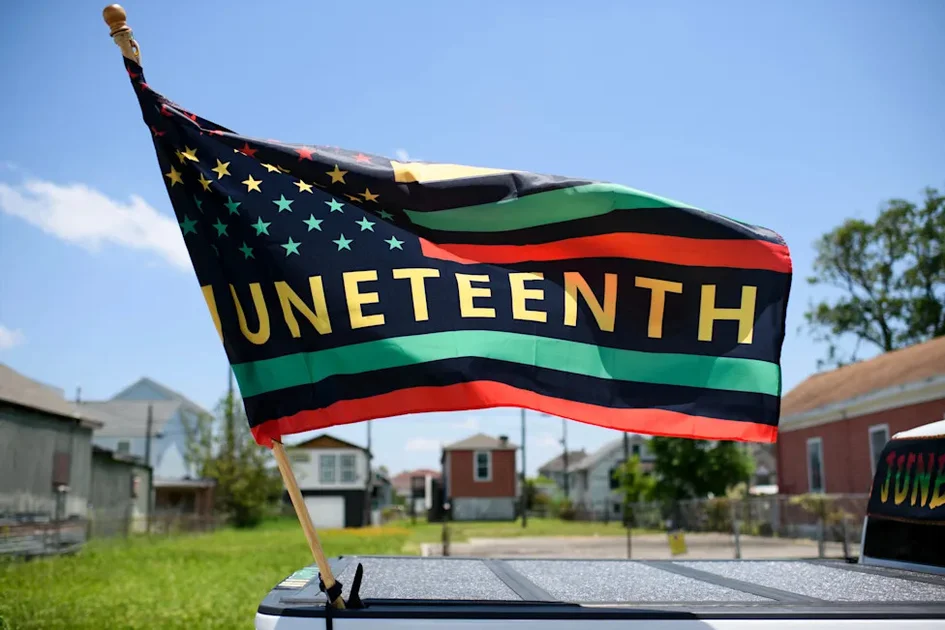
Juneteenth 2026: A Federal Holiday at a Crossroads
As the nation prepares to mark Juneteenth on Friday, June 19, 2026, the federal holiday remains a subject of celebration and political contention. More than half of U.S. states now recognize it as a paid holiday for state workers, yet the holiday continues to face scrutiny from the Trump administration, which has declined to issue a formal proclamation and removed it from the National Park Service’s list of fee-free days.
This year’s Juneteenth arrives amid a broader national debate about the cost and meaning of federal holidays. While the day commemorates the emancipation of enslaved African Americans in 1865, its status as a paid day off varies widely across the country, creating a patchwork of observance that reflects ongoing political divides.
Where Juneteenth Is a Paid Holiday
According to the Pew Research Center, 33 states and the District of Columbia will give most state workers a paid day off for Juneteenth in 2026. In 17 states, however, state employees must use personal leave or work without a holiday designation.
States where Juneteenth is a permanent legal holiday (30 states plus D.C.): Alabama, Alaska, Colorado, Connecticut, Delaware, Georgia, Idaho, Illinois, Louisiana, Maine, Maryland, Massachusetts, Michigan, Minnesota, Missouri, Nebraska, Nevada, New Jersey, New Mexico, New York, Ohio, Oregon, Pennsylvania, Rhode Island, and others.
States where it’s a paid day off but not a permanent holiday: New Mexico, Kansas, and Kentucky have not made Juneteenth a permanent legal holiday, but most state workers still receive a paid day off through annual gubernatorial or agency action.
States without paid Juneteenth leave (17 states): These include Texas—where the holiday originated—as well as Florida, Indiana, Iowa, and others. Critics argue that this inconsistency undermines the federal government’s intent when it designated Juneteenth a federal holiday in 2021.
The Trump Administration’s Stance and Policy Changes
President Donald Trump has not issued a Juneteenth proclamation since returning to office. In 2025, he wrote on social media that the United States observed “too many” nonworking holidays that are “costing our country,” signaling a potential shift in how his administration approaches the holiday.
In December 2025, the Department of the Interior removed Juneteenth and Martin Luther King Jr. Day from its annual list of fee-free days at national parks. The move has drawn legal challenges from several Democratic lawmakers who argue that both days should be codified as permanent free-admission days. The Trump administration has defended the change as a cost-saving measure, though opponents see it as a symbolic erasure of the holiday’s importance.
Why the Fee-Free Day Matters
Fee-free days at national parks are designed to encourage visitation and honor the significance of certain holidays. Juneteenth was added to the list after it became a federal holiday, and removal means that visitors to parks on June 19 will now have to pay entry fees unless they hold an annual pass. For many families and community groups, the change adds a financial barrier to commemorating the day outdoors.
Celebrating Juneteenth: Chicago Events Show Community Spirit
Despite the political headwinds, communities across the country are planning vibrant celebrations. In the Chicago area, events began Thursday, June 18, and will run through the weekend.
Thursday, June 18:
- Millennium Park hosts a free Juneteenth celebration as part of its Summer Music Series, featuring D-Composed and Kahil El’Zabar’s Ethnic Heritage Ensemble (6–9 p.m.).
- Downers Grove Public Library holds a Black Celebration Storytime at 10:30 a.m.
- North Lawndale’s Firehouse Community Arts Center hosts Feed The Block Community Day, offering free hot lunch, fresh produce, and a live DJ (11 a.m.–2 p.m.).
Friday, June 19 — Juneteenth:
- The Chicago Cubs will mark the holiday at Wrigley Field before their 1:20 p.m. game against the Toronto Blue Jays. The Black Entrepreneur Experience returns to Gallagher Way with local Black-owned businesses, and Chicago-born blues artist Wayne Baker Brooks will perform. The Leo Catholic High School choir will sing the national anthem, the Black national anthem, and the Canadian national anthem. Yusef D. Jackson, president and CEO of the Rainbow PUSH Coalition, will throw the first pitch. Activities start at 10:50 a.m.
- West Pullman hosts its annual Juneteenth Festival (1–6 p.m.) at Halsted and 115th streets, with live music, games, and food from Black-owned restaurants.
- Bronzeville’s Adorned Awareness holds a second annual Juneteenth Jubilee, featuring art, food, music, and a family tree tracing workshop (noon, 445 South King Drive).
- Garfield Park’s Westside Cultural Alliance presents the 1865 Fest, a two-day event with live music and children’s activities (12–6 p.m. Friday and Saturday).
- The DuSable Black History Museum and Education Center in Washington Park holds its annual Juneteenth event (10 a.m.–5 p.m.), including wellness activities and educational programs.
These gatherings reflect the grassroots energy that has defined Juneteenth observances long before the federal holiday was established.
Broader Implications: The Future of Juneteenth
The split between state-level recognition and federal policy underscores a larger trend: federal holidays are only as strong as the political will behind them. While Juneteenth became a federal holiday under bipartisan legislation in 2021, the Trump administration’s reluctance to celebrate it—and its removal of fee-free days—suggests that the holiday’s symbolic status may shift depending on the party in power.
Advocates argue that making Juneteenth a permanent paid holiday in all states would send a clear message about the nation’s commitment to remembering its history. Opponents often cite costs to taxpayers or question the necessity of adding more holidays. Meanwhile, the patchwork of recognition creates confusion for workers and families who may not know whether they have the day off.
For now, Juneteenth remains a day of dual identity: a federal holiday celebrated in many communities, yet still not fully embraced at every level of government. As events in Chicago and elsewhere show, the spirit of the day endures. But the political battle over its meaning—and its place in the national calendar—is far from over.
In related news, the strained power grid has faced challenges from severe storms in recent weeks, as Duke Energy Power Outages Surge Across 6 States as Storms and Accidents Strain Grid demonstrates. Meanwhile, a separate incident involving Mysterious '8647' Etching on Washington Monument Lawn Sparks Federal Probe has drawn attention on the National Mall, a popular destination for holiday visitors.
Comments