
Rochester Man Sues ICE After Federal Agents Confront Him Over Critical Email
A Rochester, New York, resident filed a federal lawsuit on Monday against U.S. Immigration and Customs Enforcement (ICE) and the Department of Homeland Security (DHS), alleging that the government violated his First Amendment rights by dispatching federal agents to his home and hotel to deliver a warning over a politically charged email he sent to the agency’s former acting director. The legal action, brought by the Foundation for Individual Rights and Expression (FIRE), seeks a declaratory judgment that the government infringed on David Streever’s free speech and an injunction to halt further threats of prosecution based on his criticism of immigration enforcement.
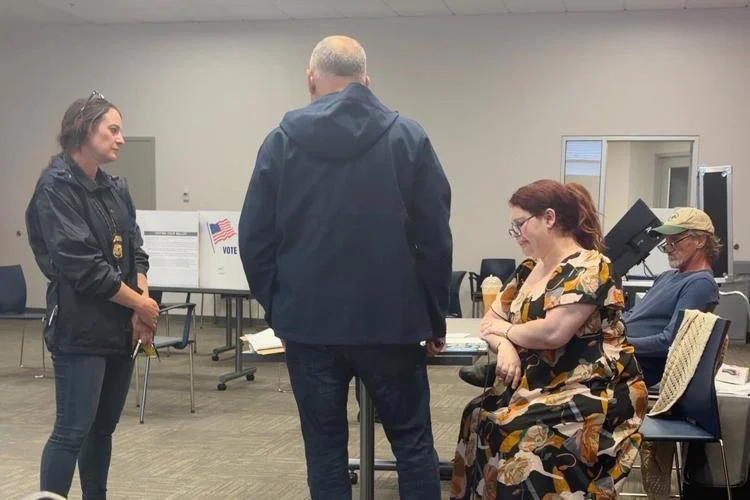
According to court documents and statements from FIRE attorney Adam Steinbaugh, Streever — a U.S. citizen and father of two — was vacationing in Finland with his seven-year-old daughter in late June when two ICE agents arrived at his Rochester home. The agents presented his wife, an Episcopal priest, with a formal warning notice accusing Streever of violating federal law that prohibits assault, kidnapping, or murder of a federal official. The incident escalated two days later when a third agent tracked Streever to a New York City hotel, where he was staying with his daughter before catching a train home. A hotel employee refused to disclose Streever’s room number, but the agent left a business card.
The Email at the Center of the Dispute
A Heated Exchange Over a Fatal Shooting
The controversy stems from an email Streever sent on January 11, 2026, to then-acting ICE Director Todd Lyons. The email was prompted by the fatal shooting of Minneapolis resident Renee Good, a 34-year-old ICU nurse, by an immigration officer during an anti-ICE demonstration. In the email, Streever described Lyons as “a monstrous human being” who “will never know peace” and compared him to Reinhard Heydrich, a high-ranking Nazi official known as “the Butcher of Prague.” The email noted that Lyons would “go down in history as America’s Reinhard Heydrich.”
Streever told Syracuse.com that he wrote the email out of anger and helplessness after witnessing the killing of Good, a fellow medical professional. The lawsuit argues that no reasonable person would interpret Streever’s words as a genuine threat, pointing to the five-month delay in government action as evidence that officials themselves did not regard the email as credible. When reached by ABC News, an ICE representative declined to comment on the warning, citing an ongoing investigation, and the agency did not immediately respond to inquiries on Monday. The lawsuit also names Homeland Security Secretary Markwayne Mullin as a defendant; his office also declined to comment.
FIRE’s Defense of Political Speech
“This is very clearly within the protection of the First Amendment,” said Steinbaugh, a FIRE attorney. “It was in the context of political speech. Writing an angry note to political leaders is an American tradition as old as the republic itself.” FIRE, a nonprofit organization dedicated to defending free expression on college campuses and beyond, argues that the government’s response represents an “outrageous violation of an American’s First Amendment rights.” The group noted that federal officers went to “extraordinary lengths to confront and intimidate” Streever, including surveilling his New York City hotel while he slept with his daughter.
Government Justifications and Legal Standards
ICE’s Stance on Threats
ICE has defended its actions by citing its duty to investigate credible threats against its employees. In a statement issued last week, the agency emphasized that “ICE investigates all credible threats towards its employees and officers, including threats to the ICE Director.” The warning notice delivered to Streever’s wife used underlined capital letters on official letterhead, referencing a federal statute that criminalizes threats to assault, kidnap, or murder a federal official. However, the notice was unsigned, and the agents did not indicate that Streever was under arrest or formal investigation.
Streever is at least the second upstate New York resident to receive a federal warning in June for online criticism of ICE, suggesting a broader pattern of government pushback against vocal opponents of immigration enforcement. This pattern raises questions about the Biden administration’s commitment to free speech, particularly in cases involving law enforcement.
Broader Implications for Free Speech and Government Overreach
A Chilling Effect on Political Dissent
Legal experts warn that the government’s heavy-handed approach could have a chilling effect on Americans who wish to criticize federal officials, including law enforcement. The Supreme Court has long held that political hyperbole is protected under the First Amendment, as established in landmark cases such as Brandenburg v. Ohio (1969) and Watts v. United States (1969), where the Court ruled that only true threats — not rhetorical flourishes or emotional outbursts — can be prosecuted. Streever’s lawsuit leans heavily on this precedent, arguing that his email was clearly a form of political protest, not a threat.
The Dangers of Intimidation Tactics
The case also highlights the growing tension between national security protocols and civil liberties. DHS and ICE have broad authority to investigate potential threats, but critics argue that exercising that authority against citizens who engage in harsh political rhetoric undermines democratic norms. FIRE’s lawsuit demands that the court declare the government’s actions unconstitutional and bar any future prosecution or intimidation of Streever for exercising his free speech rights. As the case unfolds, it could set a significant precedent for how federal agencies handle online criticism of immigration enforcement, especially in a politically polarized climate where public debate often turns heated.
The Human Cost: Streever’s Account
A Family’s Ordeal
David Streever, a software engineer and father of two, described the ordeal as surreal and terrifying. In a statement released through FIRE, he said: “Like many Americans, I was deeply upset after the shootings in Minnesota and I felt compelled to do something. Writing an email to the head of ICE seemed like the least I could do to express my sense of outrage. I never dreamed it would lead to a knock on my door by federal officers or descending on my hotel in the dark of night.” His wife, who encountered the agents on her porch while still wearing her clergy collar after a church service, was visibly shaken. The family’s Nest doorbell camera captured the agents walking past children’s toys as they repeatedly rang the bell.
Streever’s seven-year-old daughter, Helen, was with him in Finland when the agents first arrived. The lawsuit notes that the government’s actions not only violated Streever’s rights but also traumatized his family, particularly his young children. “No American should have to explain to a seven-year-old why armed federal agents are looking for her dad,” Steinbaugh said.
A Test for Free Expression in the Digital Age
The Role of Online Speech
This case emerges at a time when online platforms dominate political discourse, and government officials are increasingly responsive to perceived threats— even when those threats are vague or hyperbolic in nature. Streever’s email, sent to a government account, was a direct communication with a public official. Unlike social media posts that can be widely shared, the email was targeted and personal. Yet, the government’s response raises the stakes: If hypercritical emails to officials are treated as threats, then open dialogue between citizens and their government — a cornerstone of democracy — could be stifled.
Historical Parallels
The comparison to Reinhard Heydrich, though inflammatory, is a historical analogy that is protected speech. The New York Times and other major outlets have often employed historical references to criticize figures from Putin to Trump without facing legal repercussions. In Streever’s case, the government’s decision to dispatch agents — rather than issue a standard cease-and-desist letter or simply ignore the email — signals a willingness to escalate for deterrent effect. As FIRE’s lawsuit notes, the five-month gap between Streever’s email and the government’s action undermines the claim that he posed an immediate threat.
What’s Next
The lawsuit, filed in the U.S. District Court in Washington, D.C., is expected to attract national attention and could become a flashpoint in the debate over free speech and law enforcement accountability. Oral arguments are unlikely before late 2026, but the case may prompt DHS to review its protocols for handling citizen complaints. For now, David Streever remains a cautious symbol of resistance against what he and FIRE view as government intimidation. In the meantime, other upstate New York residents who have received similar warnings may step forward, potentially turning a single lawsuit into a broader movement for free expression.
The legal battle also comes amid heightened tensions over immigration policy, following a series of high-profile ICE operations in Minnesota and elsewhere. For a deeper look at how immigration enforcement is evolving under the Trump administration, read our coverage of the Marriage Green Card Overhaul: Trump Targets Family-Based Immigration. Meanwhile, the case resonates with broader questions about the limits of protest — a theme also explored in our report on the Newport Beach Riot: Over 400 Arrested in July 4th Chaos Fueled by TikTok.
Comments