
Supreme Court Blocks Birthright Citizenship Order as White House Targets Marriage-Based Immigration
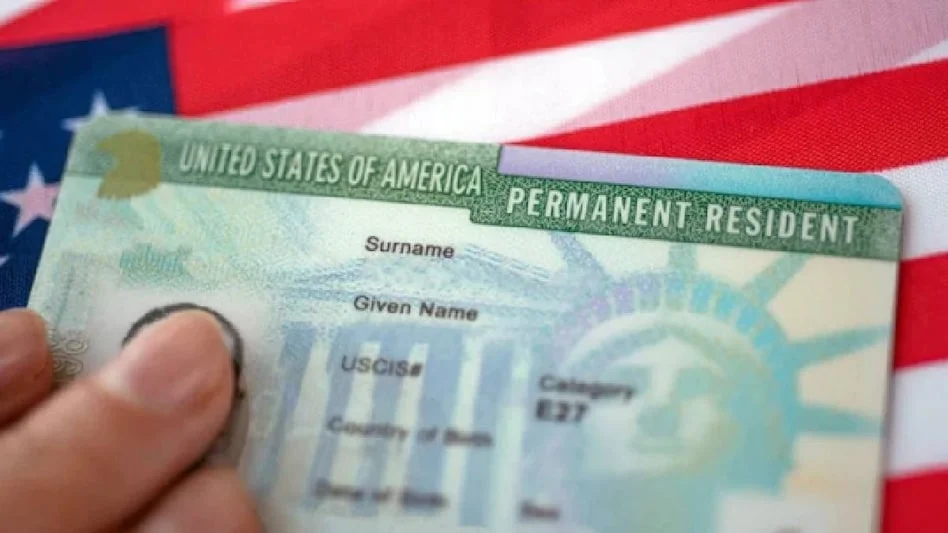
July 6, 2026, 5:00 AM EDT — The Trump administration, undeterred by a recent Supreme Court defeat on birthright citizenship, is now intensifying its scrutiny of marriage-based green cards, signaling what advocates call a fundamental reshaping of family immigration. The Department of Homeland Security (DHS) has issued new guidance that dramatically expands the evidence required for spousal visas, lengthens the conditional residence period, and empowers immigration officers to deny petitions on broader grounds of “public burden.”
The changes, detailed in a memorandum dated July 1, 2026, and obtained by MS NOW, come just days after the Supreme Court struck down President Donald Trump’s executive order ending birthright citizenship. The 6-3 ruling reaffirmed that the 14th Amendment guarantees citizenship to nearly everyone born on U.S. soil, a decision that White House border czar Tom Homan called “a temporary roadblock.” Homan announced that the administration would be “doubling down on birthright tourism investigations,” though he could not provide current data on the practice.
New Hurdles for Spousal Visas
Under the new DHS directive, couples applying for marriage-based green cards — a category that traditionally accounts for roughly 200,000 permanent resident cards per year — will face significantly higher evidentiary burdens. The memorandum instructs officers to require “overwhelming proof” of a bona fide marital relationship, including joint financial accounts, shared property deeds, and third-party affidavits from neighbors. Previously, a marriage certificate and basic evidence of cohabitation often sufficed.
“This is a sea change,” said Sarah Pierce, an immigration policy analyst at the Migration Policy Institute. “They are effectively raising the bar so high that many legitimate couples — especially those from low-income backgrounds — will be unable to meet it.” The memorandum explicitly warns officers to watch for “marriage fraud indicators,” including significant age gaps, language barriers, and discrepancies in educational backgrounds. Critics argue these criteria will disproportionately affect couples from countries with high out-marriage rates, such as South Korea, Vietnam, and Mexico.
Additionally, the administration has extended the conditional residence period for spouses of U.S. citizens from two to five years before they can apply to remove conditions. This change, effective immediately, applies to all marriage-based petitions filed after January 1, 2026. During those five years, the non-citizen spouse must remain married to the same partner and must not have any interaction with law enforcement — even as a victim — that could be interpreted as a “moral turpitude” issue.
Context: A Broader Assault on Legal Immigration Pathways
The marriage visa overhaul is the latest in a series of regulatory moves that target not just undocumented immigrants but also those who have long used legal channels to unify families. The Brookings Institution’s regulatory tracker, updated July 2, 2026, lists more than 40 rule changes under the second Trump administration that restrict legal immigration, including the termination of Temporary Protected Status (TPS) for nationals of 13 countries and the revocation of roughly 100,000 student visas by the State Department.
The End of TPS for Haitians and Syrians
In a particularly consequential decision, the Supreme Court earlier this month allowed the administration to end TPS protections for Haitians and Syrians, clearing the path to revoke protected status for nationals of El Salvador and Ukraine. “The administration has moved to revoke legal or protected status from hundreds of thousands of immigrants,” reported Laura Barrón-López for MS NOW on July 1. The impact on marriage-based immigration is immediate: TPS holders often marry U.S. citizens to adjust status, but with their temporary protections stripped, they are now classified as unlawfully present, making them ineligible for green cards without first leaving the country and triggering a 10-year bar.
Jessica Morales, a Syrian-American teacher in Dearborn, Michigan, said her application for a green card for her husband, a former TPS holder, was denied last week. “I’ve been married for four years. We have a child who is a U.S. citizen. But now my husband is told he has to go back to Syria,” she told NBC News. “That country doesn’t exist anymore as a safe place.” The administration’s position, articulated by deputy chief of staff Stephen Miller, is that marriage to a citizen does not create an “automatic exemption” from immigration law. In a social media post last month, Miller argued that “chain migration through marriage” is a loophole that allows immigrants to bypass merit-based criteria.
Judicial Pushback and the Mandatory Detention Ruling
The administration’s aggressive stance has also met resistance in the courts. On July 2, a fourth federal appeals court struck down the Trump administration’s 2025 policy of mandatory indefinite detention for anyone arrested by immigration authorities, regardless of how many years they have lived in the United States. The ruling, reported by NBC News’ Suzanne Gamboa, found that the practice violated due process by denying bond hearings. The administration has vowed to appeal to the Supreme Court.
“The mandatory detention policy was the backbone of the interior enforcement strategy,” said Leon Fresco, a former Justice Department official under the Obama administration. “Without it, they can’t hold people while they process marriage fraud claims or public charge determinations.” The court rulings have not stopped the administration from continuing to enforce other rules, including the expanded public charge test, which allows officers to deny green cards to immigrants who have ever used any form of public benefit, even food stamps for a citizen child.
The Public Burden Doctrine
Under the revised public charge rule — implemented in 2025 — an applicant for a marriage-based green card can be denied if the petitioning spouse has received any means-tested benefit in the prior 36 months. The rule extends to the citizen spouse as well, effectively penalizing mixed-status families where the U.S. citizen is low-income. “This is a radical departure from over a century of immigration law, which always prioritized family unity,” Pierce said. “Now, if you marry a U.S. citizen who happens to be on Medicaid, you could be denied permanent residence.”
Data from the Brookings regulatory tracker shows that denials of spouse-based applications have increased by 340% compared to the final year of the Biden administration. Immigration lawyers report a surge in requests for evidence (RFEs) from U.S. Citizenship and Immigration Services (USCIS), with cases taking 18 to 24 months to adjudicate — double the processing time from 2024.
Perspective: A New Era for Family Immigration — and American Identity
The marriage immigration changes are not occurring in a vacuum. They are part of a broader ideological project to redefine who gets to call themselves American — and who gets to become one. Stephen Miller, the architect of the administration’s immigration policies, has long argued that the children of immigrants — even legal immigrants and their children — show “consistent failures to assimilate.” In a recent social media post, he cited Somali immigrants as an example, a characterization that immigration researchers say is at odds with data on immigrant economic mobility.
Birthright Citizenship as a Warning Shot
The Supreme Court’s decision on birthright citizenship was a major defeat for the administration, but it also served as a catalyst for even more restrictive measures. Homan’s promise to “double down” on birthright tourism investigations is already materializing: DHS has begun demanding DNA testing from U.S.-born children whose parents are visa overstays, to prove that the child is biologically related to the mother who gave birth. Critics call this a chilling form of surveillance. “They are treating American babies as potential fraud,” said Rep. Pramila Jayapal (D-Wash.) in a statement.
The new marriage visa rules will have generational consequences. For example, a child born to a U.S. citizen and a non-citizen parent who is denied a green card may grow up with only one legal parent, affecting inheritance, health insurance, and even child custody. The Trump Accounts Launch With $1,000 Seed, Aim to Reshape Child Wealth initiative, which gives young Americans a $1,000 government-seeded trust fund, would not apply to children from mixed-status families unless both parents are documented.
Economic and Demographic Stakes
The long-term impact of these changes on the U.S. labor force could be significant. Marriage-based immigrants are among the most economically productive newcomers: over 60% hold a bachelor’s degree or higher, and many work in healthcare, technology, and education. By making it harder for them to obtain permanent status, the administration risks driving skilled workers to other countries. Canada and Australia have both seen increased applications from U.S.-based professionals since the 2025 regulations took effect.
Demographers warn that restricting family immigration will accelerate the aging of the U.S. population. The Congressional Budget Office (CBO) projected in May 2026 that net immigration — already at its lowest level since the 1920s — could drop by an additional 150,000 people annually if the marriage rules survive legal challenges. “This is not just an immigration policy; it’s a population policy,” said demographer Kenneth Johnson of the University of New Hampshire. “Every rejection of a spousal green card is effectively a birth that will not happen.”
The administration, for its part, shows no sign of relenting. On July 5, the White House announced the creation of a new “Immigration Integrity Bureau” within DHS, tasked with auditing all marriage-based petitions from the past decade. The initial target is 500,000 cases, with 450 officers assigned to review files for potential fraud. “We are going to clean house,” Homan said at a press conference Tuesday. “If you cheated the system, we will find you.”
For couples like Ana and José Luis Herrera, who live in Houston and have been waiting 14 months for a green card interview, the message is painfully clear. Ana is a U.S. citizen; José Luis is a Mexican national who entered on a tourist visa and overstayed. They have two children, both U.S. citizens. “We did everything right. We pay taxes. We bought a house,” Ana said. “But now I worry every day that they might separate us. My kids ask me if daddy is going to go away. What do I tell a six-year-old?”
As the second Trump administration enters its second year, the trajectory is unmistakable: family ties, once the bedrock of U.S. immigration policy, are now seen as a vulnerability. And the couples affected are caught in the middle of a battle that will define America’s identity for generations.
Comments