
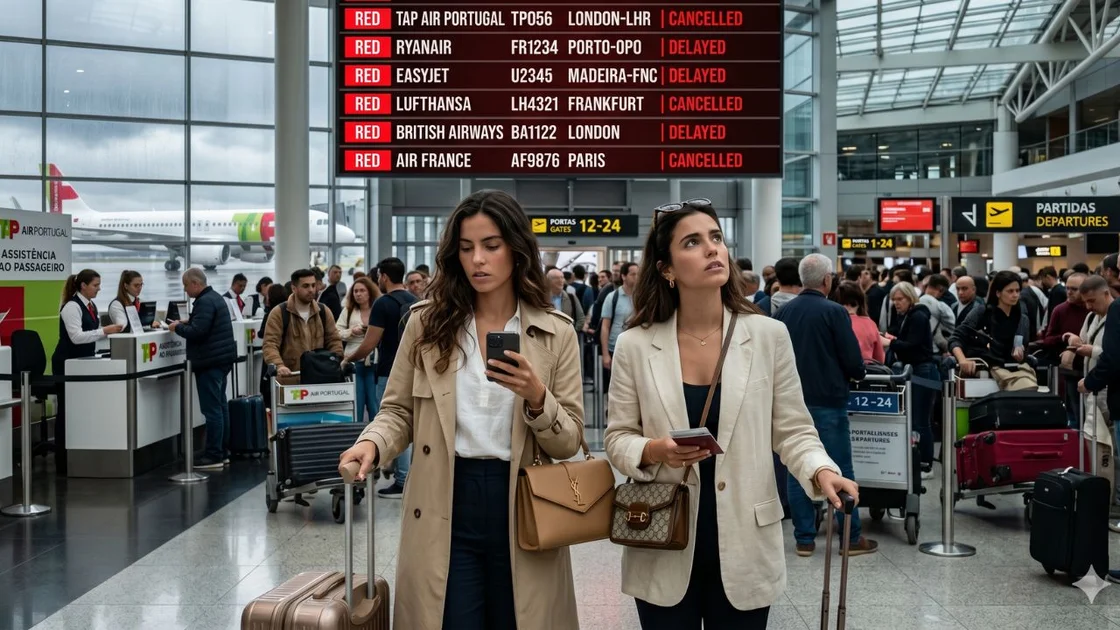
Portugal General Strike Grounds Over 650 Flights, Leaving Thousands Stranded
Portugal experienced its most disruptive day of air travel in years on June 3, 2026, as a nationwide general strike called by the General Confederation of Portuguese Workers (CGTP) led to the cancellation of more than 650 flights across the country’s major airports. The industrial action, which also affected rail, metro, and ferry services, was sparked by a government proposal to overhaul the country’s labour code, known as “Trabalho XXI.”
Lisbon’s Humberto Delgado Airport bore the brunt of the disruption, with nearly 100 arrivals and departures cancelled throughout the day. Porto Airport saw close to 60 flights grounded, while Faro Airport recorded around 40 cancellations. However, initial estimates from earlier in the day had placed the total number of affected flights at over 500, with TAP Air Portugal cancelling up to 300 services and operating only 79 minimum-service flights. By the end of the day, the Portugal Resident reported that the total had climbed to 658 flights cancelled across the three main airports.
The strike, which ran for 24 hours from the early morning of June 3, brought air travel to a near standstill for much of the day. National carrier TAP Air Portugal was the hardest-hit airline, but low-cost carriers Ryanair and easyJet also warned of potential disruptions. Ryanair initially stated it expected to operate normally, but later acknowledged that some flights from Portuguese bases could be affected. EasyJet warned passengers to expect delays and last-minute changes.
What Passengers Faced at Airports
Travellers arriving at Lisbon, Porto, and Faro airports were met with chaotic scenes. Long queues snaked through terminals as passengers scrambled to rebook flights or seek information from overwhelmed airline desks. Many reported waiting hours for updates, with some flights cancelled at the last minute after passengers had already boarded or were sitting on the tarmac. Airport authorities and airlines urged passengers to check their flight status before heading to the airport, but for many, the disruption was unavoidable.
The strike comes at the start of Portugal’s peak summer tourist season, compounding the misery for holidaymakers and business travellers alike. With thousands of passengers affected, the ripple effect is expected to be felt for days as airlines work to rebook stranded passengers and clear the backlog of cancelled flights.
Why the Strike Happened: Labour Reform Sparks Massive Walkout
The general strike was called by the CGTP, Portugal’s largest trade union confederation, to protest the government’s proposed overhaul of the Labour Code, dubbed “Trabalho XXI”. The reforms, put forward by the PSD/CDS-PP government led by Luís Montenegro, aim to bring more than 100 changes to existing labour legislation, including measures designed to boost productivity, improve wages, and adapt the labour market to the challenges of the digital economy.
However, unions argue that the changes would weaken job security, make it easier for companies to dismiss workers, and expand outsourcing practices. The CGTP described the reforms as an “assault on workers’ rights” and an “affront to the Constitution of the Portuguese Republic.” The confederation had announced the strike on May 1, Labour Day, giving the government and employers ample notice.
Sectors Affected Beyond Aviation
The transport sector was hit particularly hard, but the strike also affected education, health, and public services. The National Union of Civil Aviation Flight Personnel (SNPVAC) confirmed its participation after an internal vote. Rail services operated by CP (Comboios de Portugal) were also severely disrupted, as were metro systems in Lisbon and Porto. The Lisbon Metro announced no service from 23:00 on June 2 through the whole of June 3, while Porto’s Metro operated a restricted service on the Yellow and Blue lines only. Ferry links across the Tagus, run by Transtejo Soflusa, were also suspended.
The action follows a similar strike in mid-December 2025, which was the first joint strike by Portugal’s two main union confederations, CGTP and UGT, in 12 years. That strike drew widespread support across sectors, and Wednesday’s action appears to have been even more disruptive.
The Human and Economic Cost of the Portugal Airport Strike
The cancellation of over 650 flights represents not only a logistical nightmare for passengers but also a significant economic blow. Tourism is a cornerstone of the Portuguese economy, and the strike struck at the start of the summer season, when hotels, restaurants, and tour operators rely heavily on international visitors.
Passenger Rights and Rebooking Options
Under EU Regulation 261/2004, passengers whose flights are cancelled are entitled to compensation ranging from €250 to €600 per person, depending on the distance of the flight, unless the airline can prove that the cancellation was caused by “extraordinary circumstances.” However, strikes called by union action are often considered by airlines to be extraordinary circumstances, which could limit passengers’ ability to claim compensation. Nevertheless, passengers are still entitled to either a full refund or re-routing to their final destination as soon as possible.
TravelPirates advised passengers to contact their airlines directly for rebooking options and to check their eligibility for compensation. TAP Air Portugal, Ryanair, and easyJet all set up dedicated help lines and social media channels to assist affected travellers, though many reported long wait times and difficulty getting through.
Broader Implications for Portugal’s Labour Relations
The strike underscores deep divisions between the Portuguese government and organized labour over the direction of labour policy. The PSD/CDS-PP government argues that the reforms are necessary to modernize the economy, attract investment, and create jobs. Business groups have broadly supported the changes, saying they will make Portugal more competitive.
However, unions and left-wing parties accuse the government of bowing to pressure from employers and of undermining hard-won worker protections. The standoff shows no signs of resolution. The bill has been submitted to the Assembly of the Republic, but no date has been set for a general debate and vote. If it passes, further union action could follow, potentially leading to more travel disruption in the months ahead.
Travel Advice and Outlook for Passengers
For passengers currently in Portugal or planning to travel to the country in the coming days, the advice remains the same: check your flight status before leaving for the airport, and contact your airline for rebooking options if your flight was cancelled. Airlines are expected to resume normal operations on June 4, but residual delays are likely as they work through the backlog.
What Happens Next?
The CGTP has warned that further action may be taken if the government proceeds with the labour reform without meaningful concessions. Travellers should monitor news from Portugal and check official airline communications for any updates on future strikes. The government has downplayed the impact of the strike, with officials stating that “the vast majority of Portuguese are working,” but the disruption to air travel has been undeniable.
In the meantime, many stranded passengers are facing the prospect of extended stays in Portugal or scrambling to find alternative routes home. For some, the strike may have ruined holiday plans; for others, it may have delayed important business meetings. For Portugal, it has been a stark reminder of the power of organized labour—and the vulnerability of a tourism-dependent economy to industrial action.
As one stranded passenger at Lisbon Airport told local media: “We understand the workers’ rights, but being stuck here with two kids and no information is not what you expect on holiday.” That sentiment is likely to be shared by thousands of travellers hit by the walkout. And with no resolution in sight to the underlying labour dispute, the risk of further strikes remains high.
For more on similar political tensions and their global ripple effects, see our coverage of Mexico’s Sheinbaum accuses US far right of orchestrating attacks on her government. And for an example of how legal battles can impact public figures, read about the Labour MP Jess Asato sues Elon Musk’s xAI over Grok deepfake bikini images.
Key Takeaways from Portugal’s June 3 Strike
- Total cancellations: Over 650 flights cancelled across Lisbon, Porto, and Faro airports.
- Hardest-hit airline: TAP Air Portugal, which cancelled up to 300 flights and operated only 79 minimum-service services.
- Other affected carriers: Ryanair and easyJet experienced some disruptions.
- Duration: 24-hour strike from early June 3; normal operations expected to resume June 4.
- Cause: CGTP protest against proposed labour reform “Trabalho XXI”.
- Passenger rights: EU compensation rules may apply, though strikes may be considered extraordinary circumstances.
- Future risk: Further strikes possible if government does not compromise on labour reforms.
Travellers are advised to stay informed, check with their airlines, and consider travel insurance that covers strike-related disruptions. Portugal is a stunning destination, but for now, the airport chaos is the headline.
Comments