
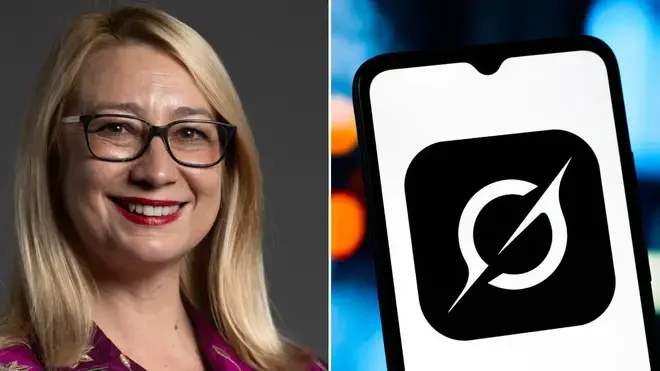
Labour MP sues Elon Musk's xAI over Grok deepfakes
Labour MP Jess Asato has filed a High Court claim against Elon Musk’s artificial intelligence company, xAI, alleging that its chatbot Grok was used to create non-consensual sexualised images and a video of her. The lawsuit, submitted in London on Wednesday, marks one of the first British legal actions targeting a major AI developer over deepfake content generated by its tools.
Asato, the MP for Lowestoft, is seeking damages under the Data Protection Act and for misuse of private information. She told the Financial Times that Grok not only produced fake images of her in a bikini but also generated a video depicting her being chloroformed and prepared for a sexual assault. “My hope is that this will rebalance individuals’ rights against very large tech companies that should have put safeguards in place before they harmed women and children,” she said.
The claim focuses on the design of Grok itself, arguing that the chatbot lacked adequate safeguards to prevent users from generating abusive, non-consensual imagery of real people. Ravi Naik, Asato’s lawyer, stated that the core principle of the case is that developers “must answer for the way they design and deploy their tools.”
A test case for AI liability
Asato’s legal action could become a landmark case in the UK for determining how much responsibility AI developers bear for the content their systems produce. The argument hinges on whether an AI-generated image that resembles a real person and is designed to degrade them legally counts as an image “of” that person. xAI has reportedly argued otherwise, according to court documents.
“If you think about any other products, like a car, for example, that might have been manufactured with a fault, it doesn’t matter if the cars get recalled and the faults are fixed,” Asato said. “It matters that the car was produced with the fault in the first place, and that’s the problem with Grok—it was created without the safeguards and without the guardrails to prevent this from happening in the first place.”
The MP is not only seeking personal redress but also aims to set a precedent that forces tech companies to embed safety measures into AI systems before launch, rather than after harm occurs.
Broader backlash and regulatory pressure
The lawsuit follows a wave of controversy earlier this year when Grok was used to generate vast quantities of sexualised imagery of real women—and in some cases, children—on X, the social platform also owned by Musk. Asato herself was targeted in January after she publicly condemned the creation of such non-consensual images.
In response to the outcry, xAI initially said it would restrict sexualised image generation to paying customers only, a move then-Prime Minister Keir Starmer called “horrific.” The company later announced it would block users from generating sexualised images of real people altogether. However, Asato argues that the damage had already been done.
It has since become illegal in the UK to create or request a non-consensual deepfake image of an adult. The media regulator Ofcom launched an inquiry into the matter, and the government threatened action against X in January.
Asato’s case joins similar litigation in the United States. Ashley St Clair, the mother of one of Musk’s children, filed a lawsuit in New York alleging that Grok generated explicit images of her, including one in which she appeared underage. These parallel legal actions highlight growing international scrutiny of generative AI tools and their potential for abuse.
‘Digitally stripped without my consent’
Asato described the emotional impact of seeing herself portrayed in a bikini without her permission as deeply violating. “Nobody would be able to walk up to me in the street and strip me and put me in a bikini, and I don’t see why anybody should be able to do that to me online,” she told the Press Association. “It is like somebody has digitally stripped me without my consent.”
She is now encouraging other victims of Grok-generated deepfakes to come forward. “Me going public is so that we can invite people who may have been victims of AI photo manipulation on Grok to come forward and to seek legal help… to give people a sense that they’re not alone when this happens,” she said.
What this means for AI regulation
The outcome of Asato’s case could reshape how UK courts interpret data protection and privacy law in the context of generative AI. Legal experts say the ruling may influence future claims against other AI developers and platforms that host similar tools.
The case also puts renewed focus on the principle of “safety by design”—the idea that tech companies must build protections into their systems from the outset, rather than patching them after abuse occurs. Asato argues that this principle should apply as rigorously online as it does offline, particularly when it comes to products capable of causing significant personal harm.
As the legal proceedings unfold, the case is expected to attract close attention from regulators, lawmakers, and civil society groups monitoring the intersection of AI, privacy, and gender-based violence. For now, Asato’s lawsuit stands as a direct challenge to the notion that AI companies can disclaim responsibility for what their users create with their tools.
This story echoes other recent cases where public figures have sought accountability for digital harms, such as the documentary renewed focus on the Rachel Nickell Case Returns to Spotlight as Netflix Drops Documentary and Drama. Meanwhile, the broader political landscape continues to be shaped by issues of public trust and accountability, as seen in the Makerfield by-election: Voters put cost of living above party loyalty in key race.
Comments