
Wreckage Located, Search Shifts to Recovery After Fatal Bay Capsizing
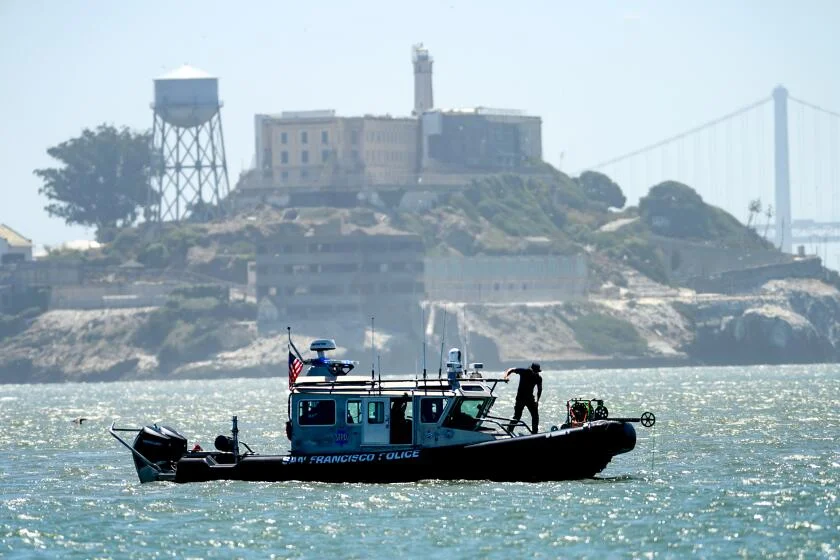
The sunken wreckage of the MV Volare, the 49-foot cabin cruiser that capsized Tuesday near Alcatraz Island, has been located at the bottom of San Francisco Bay, the San Francisco Police Department announced Friday. The discovery, made using boat-mounted sonar, brings a somber end to the active search for the vessel and pivots the mission toward a complex recovery effort.
The Volare now rests approximately 600 feet west of Alcatraz in about 130 feet of water — a depth that exceeds safe limits for human divers and presents significant logistical challenges. The police department’s marine unit is now deploying an underwater drone to assess the wreckage and determine whether it is feasible to raise the boat. Commander Brien Hoo acknowledged that the operation would require specialized contractors: "We’re going to have to look for a specialized company that can help with recovery and help lift the boat."
Authorities have confirmed two fatalities: Clifford Boisa, 79, and Tondra Miller, 58, whose body was recovered Thursday near Treasure Island. Two others remain missing and are presumed dead: Jackie Boisa and Carol Boisa. Investigators believe their remains may be trapped inside the submerged vessel, as three women who had been in a lower cabin were unable to escape when the boat rolled and sank rapidly.
Meanwhile, the National Transportation Safety Board and the U.S. Coast Guard have opened investigations into the cause of the capsize. The boat was carrying 20 people on a memorial cruise to spread the ashes of a relative who died ten years ago when disaster struck shortly after 3:30 p.m. Tuesday.
How a Memorial Cruise Turned to Tragedy in Minutes
What began as a family gathering to honor a loved one turned into a nightmare when a large wave struck the Volare off the Marin Headlands, causing the vessel to list violently and roll onto its starboard side. Survivors reported that the boat went over and began sinking within minutes. Sixteen people were rescued by a flotilla of nearby boaters and first responders, but the quickness of the sinking left little time for those in the lower cabins to react.
John Boisa, 62, the Stockton-based owner and operator of the Volare, survived the incident. His brother Clifford did not. Speaking publicly Thursday, John described the loss as "horrible" and identified the two still-missing passengers as his sister, Carol Boisa, and his sister-in-law, Jackie Boisa. A family friend, identified only as "Tonda" (later confirmed by the medical examiner as Tondra Miller), was also missing but her body was found Thursday.
Jackie Boisa was remembered by John as possessing "a rare combination of easy acceptance of others with a kind of elegant sophistication." Carol, he said, brought "her own special flavor to family gatherings and the earthy, natural joy she brought was ineffable."
The boat, a 1980s trawler harbored in Stockton and named Volare, had three below-deck sleeping cabins. According to Ralph Boisa, another brother, John had piloted the boat down the coast to San Diego last year, indicating he was experienced on open ocean waters. Winds on Tuesday had gusted up to 30 miles per hour, but the cause remains under investigation.
Questions of Stability and the 'Catastrophically Wrong' Moment
Early assessments by local boating experts suggest that a combination of the wave impact and uneven weight distribution — possibly caused by passengers moving to one side to watch the scenery — may have contributed to the rapid loss of stability. U.S. Coast Guard Captain Jarod Toczko told the San Francisco Chronicle that the boat was "listing heavily" after the wave struck and "lost a little bit of stability," causing it to roll in seconds.
Four women who had been inside the lower cabin became trapped as the boat went over. Only one managed to force open a door and escape before the vessel fully submerged. The three who remained inside are the missing individuals whose families now await their recovery.
Commander Hoo noted that the 130-foot depth is just past the limit for safe human diving. Water pressure at that depth increases dramatically, making it harder to lift the boat. "This hasn’t happened as long as I can remember," Hoo said, "so we’re definitely going to have to have all hands on deck to think about how we’re going to safely recover the boat."
The Science and Logistical Hurdles of a Deep Bay Recovery
The San Francisco Bay is a dynamic environment, with strong tidal currents, wind, and weather that have already complicated search efforts. Police used multiple boat-mounted sonar platforms over three days to locate the wreck, scanning an area of shipping channel roughly 120 to 130 feet deep. Finding the boat was only the first step. Raising it will require heavy marine salvage equipment, specialized divers, and a careful plan to preserve evidence.
Recovery operations in such depths are rare in the Bay Area. The last major similar incident was years ago, and no recent precedent exists for a capsized passenger vessel at this depth. The police department is consulting with private salvage companies that have experience with deep-water wreck recovery. The operation will likely involve lifting bags or a crane-equipped barge, but the forces required at 130 feet are substantial.
Authorities also face a delicate balance: recovering the remains of the missing while preserving the boat’s condition for the NTSB investigation. Any damage to the hull during lifting could destroy critical clues about what caused the wave strike to become a catastrophe.
Families Await Answers, Community Mourns
For the Boisa family, the wait has been agonizing. Clifford Boisa was pulled from the water and died despite CPR. His wife, Jackie, is still missing, as is Carol Boisa. Tondra Miller’s family, via a Facebook post by Quin Madruga, said they were "heartbroken by the loss of our beloved mother, daughter, sister, and aunt" and thanked first responders and civilian boaters who rushed to help.
The memorial cruise was intended to honor Maria, a relative who died by suicide in 2015 at age 35. Instead, the Bay became the site of a new tragedy. The community has rallied around the families, with vigils planned and a GoFundMe campaign underway to support funeral costs.
Broader Implications: Safety on the Bay and the Future of Passenger Vessel Operations
The Volare disaster raises uncomfortable questions about the safety of passenger boats on the San Francisco Bay, particularly smaller vessels used for private charters and memorial services. The boat was a 1980s trawler, not a modern passenger ferry, and its stability when carrying a full complement of 20 people has come under scrutiny.
Experts note that many older cabin cruisers are not designed for the kind of weight distribution that occurs when 20 people crowd one side to take photos or view landmarks. Combined with gusty winds and a sudden large wave, the margin for error becomes razor thin. The Coast Guard is expected to review whether current regulations for private charter vessels are adequate, and whether more stringent stability testing should be required for boats operating in the Bay’s often choppy waters.
This incident also highlights the challenges of emergency response in a constrained urban waterway. While first responders and good Samaritans acted heroically, the rapid sinking limited rescue opportunities. The search for the Volare itself took days because of the depth and currents. If the missing passengers are indeed inside the wreck, their recovery will be a long and painful process for their families.
A Cautionary Tale for Charter Operators
The tragedy serves as a somber reminder that even experienced captains can be caught off guard by the Bay’s unpredictable conditions. John Boisa, a former Naval officer with ocean-crossing experience, never anticipated the fatal roll. The incident underscores the need for passenger briefing on emergency exits, flotation devices, and the importance of staying low in rough conditions.
Local sailing clubs and charter businesses are likely to review their safety protocols in the coming weeks. Some may install additional stability sensors or require life jackets for all passengers on deck in windy conditions. The NTSB’s final report, expected in months, will provide more definitive guidance.
What This Changes: Recovery Timelines and Policy Outlook
The discovery of the wreckage is a crucial step, but it is not the end. The immediate focus remains on recovery and closure for the families. The police department has not yet announced a timeline for raising the boat, but the process could take weeks or longer. Weather and tidal conditions will dictate when salvage crews can begin work.
Politically, the accident may accelerate discussions in the California legislature about maritime safety regulations, particularly for boats carrying more than a certain number of passengers. The Volare was privately operated, but its passengers were paying for a memorial cruise. That blurring of private and commercial use could prompt new licensing or inspection requirements.
For now, the Bay Area mourns. The waters near Alcatraz, already famous for escape attempts and treacherous currents, have become the site of another dark chapter in maritime history. As authorities work to recover the Volare and its secrets, the families of Clifford, Jackie, Carol, and Tondra wait for the answers that will only come when the wreck is brought to the surface.
For more on how unexpected events affect travel and leisure, read about Jeremy Clarkson Faces Fire Risk, Farm Feud, and a Post-Clarkson 'Grand Tour'. In entertainment news, see Mia Goth Resurfaces in Forgotten Thriller as Nolan's 'Odyssey' Divides Critics.
Comments