
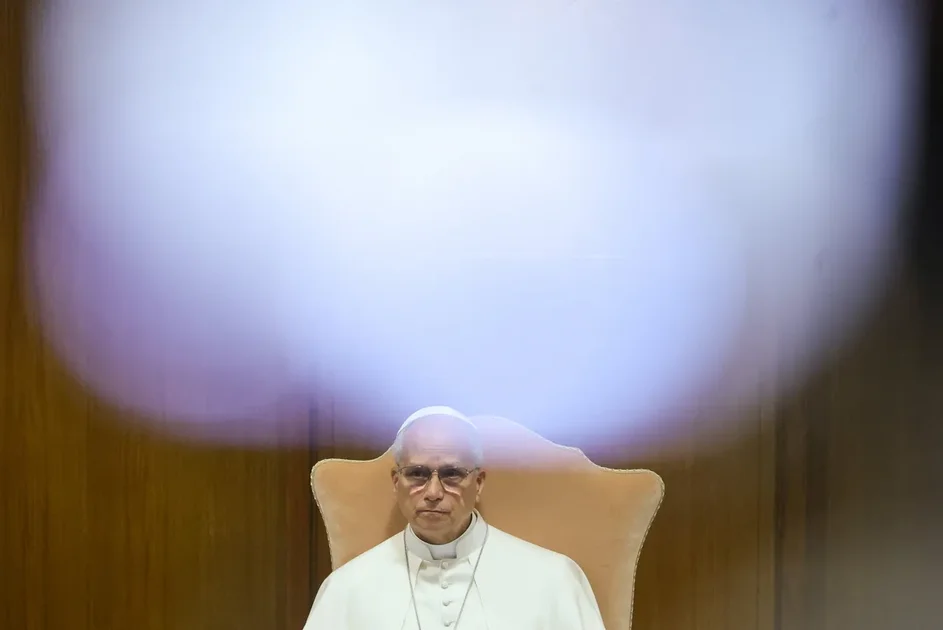
Pope Leo XIV Makes History with First Encyclical: AI Warnings and a Slavery Apology
ROME — Pope Leo XIV released his first encyclical on Monday, a sweeping 42,000-word document titled “Magnifica Humanitas” (Magnificent Humanity) that both warns against the unchecked rise of artificial intelligence and issues a historic apology for the Holy See’s role in legitimizing slavery. The document, which has been widely praised for its accessibility and cultural breadth, marks a defining moment of the first U.S.-born pope’s early papacy.
The encyclical, addressed to bishops and all Catholics, confronts two of the most pressing moral challenges of the modern era: the ethical boundaries of AI and the Church’s historical complicity in dehumanizing systems. In doing so, the pope draws on a range of references from Gandalf to Picasso, making the document unusually readable for a broad audience.
Key Takeaways from Monday’s Release
- Pope Leo XIV warns that AI merely imitates human intelligence, lacking love, compassion, and creativity.
- The encyclical calls for AI to be “disarmed” and warns of “new forms of colonialism” through data exploitation.
- In a landmark move, the pope apologizes for the Holy See’s role in the trans-Atlantic slave trade and the Doctrine of Discovery.
- The document references Martin Luther King Jr., Hannah Arendt, Beethoven, and Picasso to ground its ethical arguments.
The AI Warning: Humanity at the Center
The encyclical devotes substantial attention to the rapid advancement of artificial intelligence. Pope Leo argues that while AI “often surpasses human intelligence in speed and computational capacity,” it remains a mere imitation. True human traits—love, compassion, creativity, and a desire for justice—cannot be replicated by machines.
“Authentic culture and art resist the normalization of evil,” the pope writes, citing Beethoven’s Symphony No. 9 as a desire for unity, Picasso’s “Guernica” as a denunciation of dehumanization, and “Schindler’s List” as a call to remember the past. The references are deliberate: the pope wants to show that human creativity is a bulwark against technological determinism.
He also draws on the work of German-American philosopher Hannah Arendt, warning that “indifference to the truth leads, slowly but surely, to a descent into totalitarianism.” The document quotes Martin Luther King Jr., reinforcing the moral imperative to place human dignity at the center of technological progress.
The timing of the encyclical is notable, coming as Trump delays AI executive order as states drive regulation forward. While the pope does not directly reference U.S. policy, his call for global ethical standards aligns with ongoing debates about AI regulation.
Data Colonialism and the Digital Age
A particularly striking passage in the encyclical addresses what the pope calls “new forms of colonialism.” He writes: “Even today, colonialism assumes new forms. It no longer dominates only bodies, but appropriates data, transforming personal lives into exploitable information.”
The document warns that the unregulated labor required to procure rare minerals for AI chips mirrors the exploitation of past centuries. The pope calls for shared knowledge to become a “true common good rather than an instrument of dominance.”
Historic Apology for Slavery
Perhaps the most dramatic element of the encyclical is Pope Leo’s formal apology for the Holy See’s role in legitimizing the trans-Atlantic slave trade. While past popes have expressed regret for Christians’ involvement in slavery, no pontiff has ever publicly acknowledged the Vatican’s own directives that authorized European sovereigns to enslave non-Christians.
“It is impossible not to feel deep sorrow when contemplating the immense suffering and humiliation endured by so many in stark contrast to their immeasurable dignity as persons infinitely loved by the Lord,” Leo wrote. “For this, in the name of the Church, I sincerely ask for pardon.”
The apology directly addresses the 15th-century papal bulls Dum Diversas (1452) and Romanus Pontifex (1455), which gave Portuguese kings the right to “invade, conquer, fight and subjugate” and “reduce their persons to perpetual slavery.” These bulls formed the basis of the Doctrine of Discovery, which legitimized colonial land seizures in Africa and the Americas.
The pope, whose family history includes both enslaved people and slave owners, responded to decades of calls by Black American Catholics and activists for the Holy See to atone. The apology is seen as a major step toward healing historical wounds.
Why It Matters: The Stakes of the Encyclical
“Magnifica Humanitas” is not merely a theological document; it is a political and cultural statement. The encyclical is the first major publication of Pope Leo XIV’s papacy, and its dual focus on AI and slavery signals his intent to address both future and past injustices.
The AI warning comes at a time when governments worldwide are grappling with regulation. The pope’s call for “disarming” AI resonates with debates about autonomous weapons, surveillance, and labor displacement. By framing AI as a moral issue, the Vatican inserts itself into a conversation typically dominated by tech executives and policymakers.
Similarly, the slavery apology has immediate implications for the Church’s relationship with Black Catholics and the Global South. The Doctrine of Discovery remains a sensitive topic, especially among Indigenous communities. The pope’s acknowledgment could pave the way for broader reconciliation efforts.
Global Reactions
Initial reactions to the encyclical have been largely positive. The document has been commented on more widely than previous popes’ encyclicals, partly because of its accessible language and cultural references. Vatican observers note that the pope’s use of figures like Gandalf and Martin Luther King Jr. makes the document relatable to a younger, more diverse audience.
However, some conservative Catholic groups have expressed discomfort with the slavery apology, arguing that the Church’s past actions must be understood in historical context. The pope addresses this tension directly, calling the Vatican’s record a “wound in Christian memory” that must be confronted.
Perspective: What This Changes for the Vatican and the World
The release of “Magnifica Humanitas” marks a shift in how the Vatican engages with modern issues. Pope Leo XIV, who was elected in 2025, has already established himself as a reformer. By linking AI ethics with historical apologies, he creates a framework for addressing both technological and moral crises.
A New Model for Papal Communication
The encyclical’s use of cultural references is intentional. The pope mentions Picasso’s “Guernica” not as an academic footnote but as a vivid example of art’s power to denounce evil. Similarly, J.R.R. Tolkien’s Gandalf represents the wisdom and humility needed to wield power responsibly.
This approach could influence how future papal documents are written. By moving away from “turgid liturgical language,” Pope Leo is reaching a broader audience, particularly younger Catholics who may feel disconnected from traditional Church teachings.
The AI Ethics Debate
The encyclical enters a crowded field of AI ethics statements from religious and secular organizations. However, the Vatican’s global reach gives it unique influence. The pope’s call for AI to serve human dignity rather than exploit it aligns with initiatives like the Rome Call for AI Ethics, signed by Microsoft, IBM, and other tech giants in 2020.
By framing AI as a question of “human dignity,” the pope shifts the debate from technical feasibility to moral imperatives. This is particularly relevant as India Women vs England Women: Final T20 World Cup Tune-Up Begins Today and other events compete for public attention. The encyclical reminds the world that even in an age of algorithms, human values must prevail.
Healing Historical Wounds
The slavery apology may have the most enduring impact. By acknowledging the Vatican’s role in the Doctrine of Discovery, Pope Leo opens the door for reparative justice. The apology is likely to strengthen ties with African and American Catholic communities who have long sought recognition of the Church’s historical wrongs.
At the same time, the pope’s message extends beyond the Catholic Church. In a statement that could apply to modern geopolitics, he writes: “Even today, colonialism assumes new forms.” This critique resonates with ongoing debates about data sovereignty and economic inequality.
A Defining Document for a New Papacy
“Magnifica Humanitas” is more than an encyclical; it is a manifesto for a papacy that seeks to reconcile past sins with future challenges. Pope Leo XIV has staked out a clear vision: technology must serve humanity, not the other way around, and the Church must confront its history with honesty.
The document’s success will depend on whether it inspires action. Calls for AI regulation have multiplied, but concrete policies remain elusive. Similarly, the slavery apology must be followed by tangible commitments to racial justice.
For now, the encyclical has already achieved something rare: it has made people talk about ethics, history, and technology in the same breath. In an age of distraction, that may be the pope’s most significant accomplishment.
Comments