
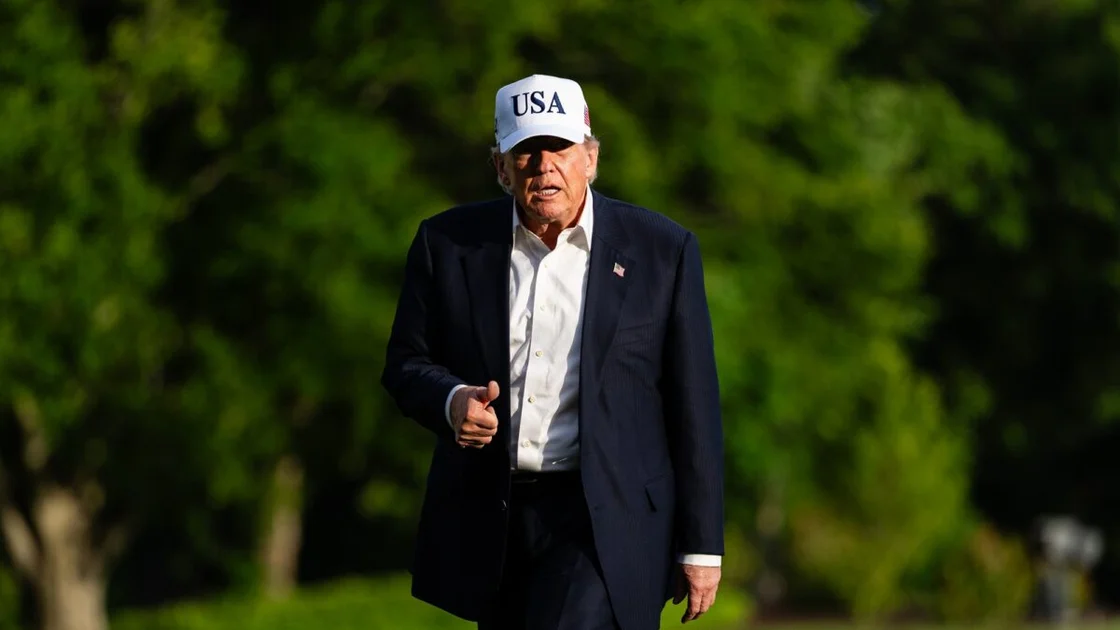
Trump postpones AI executive order amid competitiveness concerns
President Donald Trump abruptly delayed the signing of a landmark executive order on artificial intelligence on May 21, 2026, citing concerns that the regulation could blunt America's competitive edge in the rapidly advancing field. The order, which was set to be signed in a ceremony at the Oval Office, would have directed federal agencies to bolster cybersecurity and collaborate with leading AI companies to test advanced models before public release.
Speaking to reporters during an unrelated event, Trump explained his decision: "We're leading China, we're leading everybody, and I don't want to do anything that's going to get in the way of that lead. I really thought the order could have been a blocker." The move came just two months after Anthropic's Mythos Preview model demonstrated the ability to autonomously discover thousands of severe cybersecurity vulnerabilities, including in major operating systems and web browsers.
A shift in regulatory approach
The delayed executive order would have formalized federal oversight of the most advanced AI systems, with sections focused on cybersecurity and testing frontier models. Major tech CEOs were invited to the signing ceremony on short notice, though several were unable to attend, according to sources familiar with the matter. The order reportedly aimed to establish voluntary safety testing protocols and improve cyber defenses, marking a potential departure from Trump's earlier pledges to undo AI safety regulations set by the Biden administration.
Vice President JD Vance, speaking at a news conference the day before the planned signing, emphasized the administration's commitment to protecting data and privacy in the wake of the Mythos model's capabilities. "Right now, we're working in a collaborative way with the technology companies, and we're just trying to make sure that the American people are as safe as possible," Vance said.
Why the stakes are high
The push for federal AI regulation follows growing concern within the banking industry and other sectors about the rapid pace of AI development. Treasury Secretary Scott Bessent and outgoing Federal Reserve Chair Jerome Powell convened an urgent meeting with Wall Street CEOs in April, warning them about the cybersecurity risks posed by Anthropic's Claude Mythos model. Bessent later described the meeting, held at the Treasury Department's headquarters, as an effort to ensure banks understood the risks and shared best practices for cybersecurity.
Industry and government reaction
Anthropic has not released Mythos publicly, instead providing access only to select technology companies and government agencies for cybersecurity defense. But the model's capabilities have already sparked debate about the need for safeguards. Some Trump allies proposed better methods for getting these AI tools into the hands of trusted experts, but a government screening approach would have signaled a significant shift in the administration's stance.
As NBC News reported, the executive order was in development for weeks and would have required AI companies to work with federal agencies on a voluntary basis to test advanced models before public release. The delay leaves uncertainty about future federal AI policy, especially as other nations and states race to establish their own frameworks.
States take the lead on AI regulation
While federal action stalls, states are moving aggressively to regulate AI. On May 27, 2026, the Illinois Legislature passed SB 315, a historic bill that would require frontier AI companies like OpenAI and Anthropic to conduct annual third-party safety audits and publish plans to address catastrophic risks. The bill passed the House 110-0 and the Senate 52-5, and Governor JB Pritzker has indicated he will sign it into law.
"Illinois is leading the nation in holding Big Tech accountable," Pritzker wrote on X. The legislation mirrors provisions in California and New York but adds a unique requirement for independent third-party audits. It also includes whistleblower protections and reporting processes for employees of AI companies.
OpenAI and Anthropic have publicly supported the Illinois bill, while a trade organization representing other AI companies has opposed it. Democratic Representative Daniel Didech, the bill's sponsor, described AI as "among the most significant innovations in the history of humanity" while emphasizing the need for safeguards against "worst catastrophic risks."
California's worker-focused approach
Meanwhile, on May 21, 2026, California Governor Gavin Newsom signed a first-of-its-kind executive order addressing the economic impacts of AI on workers and small businesses. The order directs state agencies, labor experts, and industry leaders to develop policies such as severance standards, employment insurance, worker ownership models, and expanded workforce training. Newsom emphasized that the Golden State must ensure Californians, not just big tech companies, benefit from AI-driven wealth generation.
"California has never sat back and watched as the future happened to us," Newsom said. "This moment demands that we reimagine the entire system — how we work, how we govern, how we prepare people for the future." With 33 of the top 50 private AI companies based in California, the state is positioning itself as both an innovation hub and a regulator of AI's societal impacts.
A fragmented U.S. approach to AI regulation
The contrast between federal inaction and state-level activism highlights a growing divide in U.S. AI policy. While Trump prioritizes maintaining America's lead over China by avoiding what he sees as burdensome regulations, states like California and Illinois are forging new paths — one focused on worker protection, the other on safety audits.
This fragmentation could create compliance challenges for AI companies operating across multiple states, but it also reflects a broader debate about the pace of regulation. As recent coverage elsewhere on our site shows, the intersection of technology and policy continues to generate complex stories. For now, the future of federal AI regulation remains unclear, with Trump's delayed order representing a key uncertainty in the global race to govern one of the most transformative technologies of the century.
Comments