
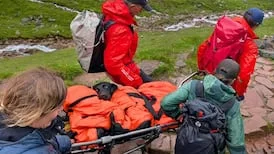
Labrador Tokyo Stretchered Off Ben Nevis After Suspected Cannabis Ingestion
A black Labrador named Tokyo is recovering after a dramatic rescue on Ben Nevis, the UK's highest mountain, following the suspected ingestion of discarded cannabis. The Lochaber Mountain Rescue Team stretchered the unconscious 25kg dog down the 4,413-foot (1,345-meter) peak to a local vet.
Christina Bluhme, a dog trainer from Esher, Surrey, was hiking with Tokyo last weekend when the dog suddenly lost the use of her legs and began drifting in and out of consciousness halfway up the mountain. Bluhme said vets at Crown Vets in Fort William believe Tokyo consumed cannabis left on the trail by hikers.
“I genuinely thought I was going to lose her,” Bluhme told the BBC, describing the ordeal as “one of the most frightening days I’ve ever experienced.” Tokyo has since made a full recovery.
Rescue Was Only Option
Bluhme said she could not have carried Tokyo down alone. “Carrying a 25kg Labrador down Ben Nevis was impossible on my own,” she said. “Without the incredible Lochaber mountain rescue team, there is simply no way I could have got her safely off the mountain.”
The volunteer team responded to a request to assist a collapsed dog on Sunday. A spokesperson said: “It’s now suspected that Tokyo, a usually very fit and active working dog, had ingested something that made her critically unwell.” The team praised Crown Vets for their support and confirmed Tokyo made a full recovery the following day.
Why Cannabis Poisoning Is Dangerous for Dogs
Cannabis ingestion is a growing concern for pet owners. According to Vets Now, dogs’ brains have more cannabinoid receptors than humans’, making them far more sensitive to the drug. Even small amounts can trigger dangerous reactions, including loss of balance, stumbling, inability to stand, dribbling urine, dilated pupils, and glassy eyes. Severe marijuana toxicosis can lead to coma, and the Pet Poison Helpline ranks marijuana among the top 10 most commonly reported toxins in pets annually.
Bluhme said she never imagined encountering discarded drugs on a mountain trail. “A little reminder to fellow dog owners – please be aware that discarded drugs and other toxic substances can sometimes be found even in the most beautiful outdoor places,” she said. “It was something I never imagined we would encounter.”
Similar Incidents Are on the Rise
Tokyo’s case is not isolated. In Somerset in 2024, two dogs named Margot and Willow were left unwell and unable to stand after ingesting cannabis. As outdoor recreation grows in popularity, there is increased potential for dogs to encounter discarded substances on trails. Experts advise owners to watch for sudden lethargy, loss of coordination, or unusual behavior in their pets, and to seek veterinary help immediately if poisoning is suspected.
Broader Implications for Hikers and Pet Safety
The incident highlights a hidden risk in natural spaces: drug litter. Discarded cannabis, cigarette butts, and other items can pose serious threats to wildlife and domestic animals. Advocates urge hikers to pack out all waste, including any drug paraphernalia, to keep trails safe.
Bluhme expressed deep gratitude to the rescue team. “You were there when we needed you most,” she said. “I will never forget your compassion and dedication.” The Lochaber Mountain Rescue Team, all volunteers, also thanked Tokyo’s owner for the update and photos, saying they were “really pleased to hear Tokyo is doing well.”
For dog owners, this serves as a stark reminder of the vigilance required even in pristine environments. As one rescuer noted, the mountains are beautiful, but they can also harbor unexpected dangers. In an era of increasing outdoor activity, ensuring trails remain safe for both humans and animals is a shared responsibility. For more on how local authorities are handling outdoor safety, see coverage of Massive Data Breaches Surge: 7M Driver’s Licenses, Accenture Source Code Leaked. Meanwhile, the story of Tokyo’s rescue has resonated widely, drawing attention to the dedicated work of Scotland’s volunteer mountain rescue teams, who often risk their own safety to help others in need. Their calm professionalism, Bluhme said, “meant everything during one of the most frightening days I’ve ever experienced.”
Comments