
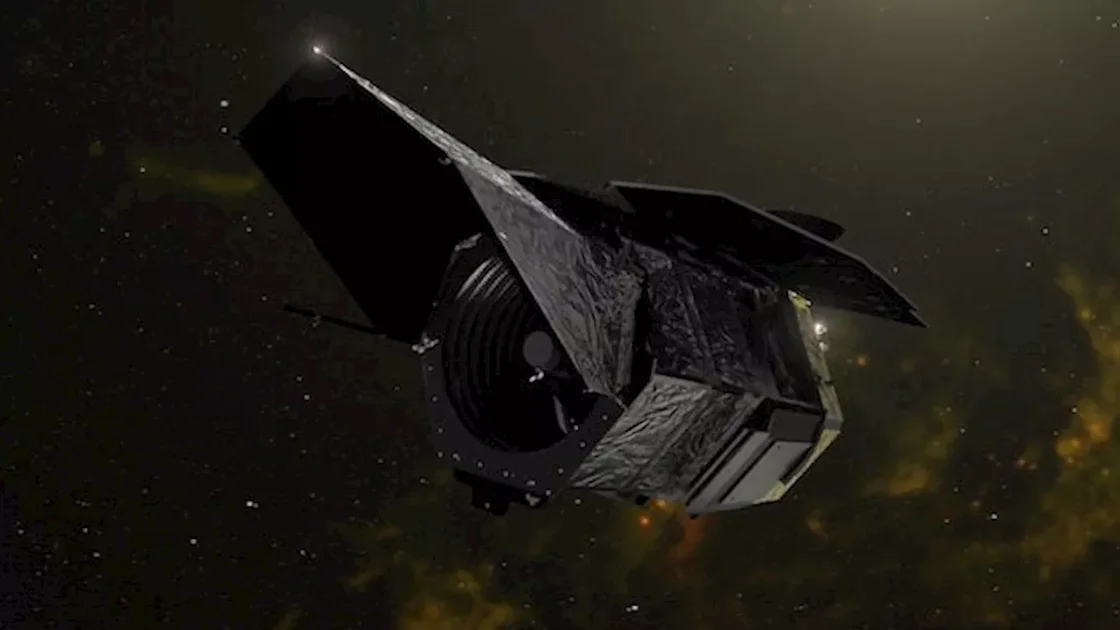
NASA's Roman Telescope Launches on Mission to Decode Dark Energy
NASA's Nancy Grace Roman Space Telescope lifted off from Launch Complex 39A at the Kennedy Space Center in Florida at 7:26 A.M. EDT on Sunday, August 30, aboard a SpaceX Falcon Heavy rocket. The launch caps more than a decade of development and marks the beginning of a five-year mission to explore the universe's biggest mysteries, from dark matter and dark energy to exoplanets and the structure of our galaxy.
"All systems appear nominal after launch," NASA Administrator Jared Isaacman said at a post-launch press conference. The telescope is now en route to its final destination: the second sun-Earth Lagrange point (L2), a stable gravitational parking spot about one million miles from Earth. Over the coming weeks, engineers will calibrate the instruments as the telescope travels, with first images expected later this year.
A Powerful New Eye in the Sky
The Roman telescope is named after Nancy Grace Roman, NASA's first chief of astronomy, who died in 2018. It carries a 300-megapixel infrared camera that provides the same sharpness as the Hubble Space Telescope but with a field of view at least 100 times larger. Each Roman image will cover a patch of sky roughly 1.5 times the apparent size of a full moon, allowing unprecedented wide-area surveys.
Roman also includes a coronagraph instrument designed to block starlight and directly image exoplanets, particularly "giant worlds that are older, colder, and in closer orbits than the hot, young super-Jupiters" typically found before. This capability will help scientists study planetary atmospheres and search for signs of habitability.
Why This Mission Matters
The Roman mission is not just another space telescope; it is a major step in answering fundamental questions about the cosmos. Scientists believe dark energy drives the accelerating expansion of the universe, but its nature remains unknown—is it a constant force or does it change over time? Roman's surveys will map the distribution of galaxies and dark matter across cosmic time, offering new clues.
Dark matter, the invisible glue that holds galaxies together, will also be a focus. By measuring gravitational lensing—the bending of light by massive structures—Roman will create 3D maps of dark matter across billions of light-years. These observations could confirm or challenge the standard model of cosmology, which currently accounts for only about 5% of the universe's content as ordinary matter; the rest is dark matter and dark energy.
Julie McEnery, Roman's senior project scientist, described the mission's potential: "We'll perform a revolutionary census of planets around other stars, and may confirm that our standard model of the universe is incorrect and put us on the path to figuring out what is right."
Surviving Political and Budgetary Challenges
Roman's journey to the launchpad was not smooth. The telescope survived two rounds of proposed budget cuts during the Trump administration, which attempted to cancel the project in its early stages. The $4.3 billion mission ultimately persisted, thanks to advocacy from the scientific community and Congress. Its successful launch is seen as a victory for robust, long-term investment in space science.
"It's an endpoint for the engineers, but it's a starting point for the scientists," McEnery told reporters. "It feels like I'm on the edge of a precipice, and we're just about to set a foot off into the unknown."
What Roman Will Do at L2
Like the James Webb Space Telescope, Roman will operate from L2, where the gravitational pulls of the Sun and Earth balance out. This orbit offers a stable environment with minimal thermal interference and uninterrupted views of the sky.
Roman will work in tandem with Hubble and Webb, not as a replacement but as a complement. Hubble provides high-resolution images of specific targets; Webb looks deeper into the infrared; Roman will conduct wide-field surveys that can identify new targets for both to follow up. For instance, Roman's discovery of thousands of exoplanets will give Webb and Hubble prime candidates for atmospheric analysis.
A New Atlas of the Universe
One of Roman's primary objectives is to create a vast new atlas of the universe. Over its five-year mission, it will survey billions of galaxies, measure the expansion history of the universe, catalog exoplanets, and study stellar populations in our Milky Way. The sheer volume of data—about 20 petabytes—will open new avenues for discovery, from mapping dark matter to identifying rogue planets and stellar remnants.
The telescope's wide field of view also makes it ideal for time-domain astronomy, capturing transient events like supernovae and potentially gravitational wave counterparts. This capability could lead to breakthroughs in our understanding of stellar explosions and the formation of black holes.
Broader Implications for Space Science
The successful launch of Roman signals a new era in space-based astronomy. The combination of Roman, Webb, and Hubble provides a multi-wavelength, multi-scale view of the cosmos. Roman's surveys will lay the groundwork for future missions, potentially revealing objects that require targeted follow-up from next-generation observatories.
Beyond science, Roman's resilience against budget cuts highlights the importance of perseverance in large-scale scientific projects. It also demonstrates the growing role of commercial partners like SpaceX, whose Falcon Heavy rocket provided reliable heavy-lift capability.
As Roman settles into its orbit and begins operations, the scientific community anticipates a flood of discoveries that could rewrite textbooks. "This is a massive accomplishment and proof of what a truly focused NASA science team is capable of accomplishing," said Isaacman.
The next few months will be critical as the telescope's instruments are calibrated and tested. But if all goes well, Roman will soon begin sending back images that will transform our understanding of the universe, from the nearest stars to the edge of time. As McEnery put it, "We're on the precipice of a new era."
In related news, NASA recently explained that a strange 'jellyfish' feature on Mars was a cosmic ray artifact, not evidence of life, reminding us that scientific investigation often requires careful interpretation.
With Roman now on its way, the next chapter in astronomy is just beginning.
Comments