
Launch and Docking
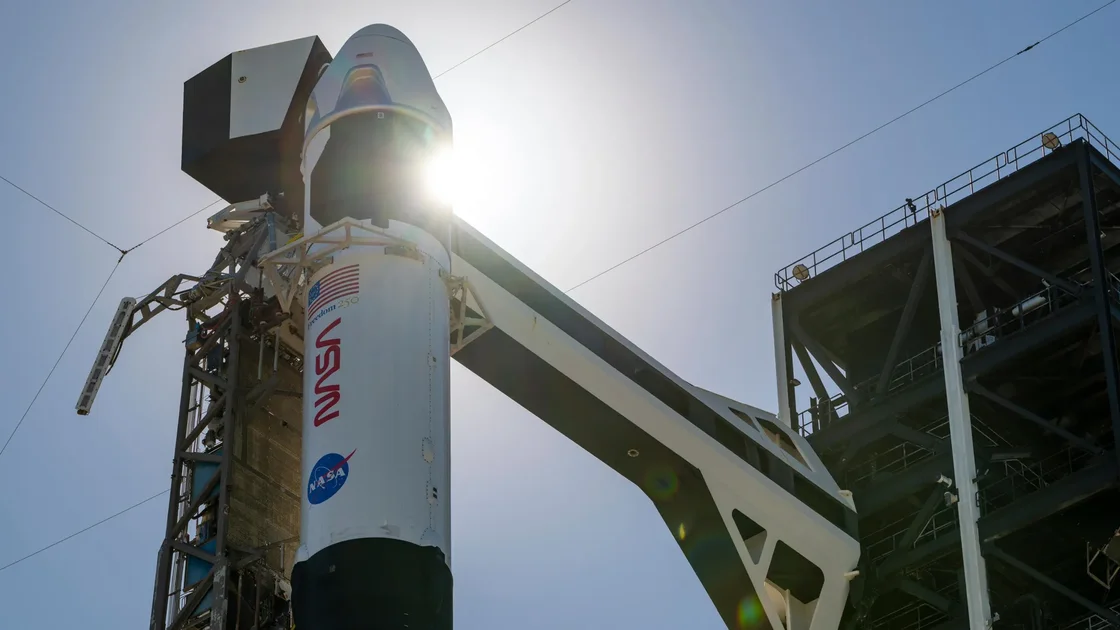
NASA's SpaceX Crew-13 mission lifted off successfully at 11:10 a.m. ET on Thursday, Oct. 1, 2026, from Space Launch Complex 40 at Cape Canaveral Space Force Station in Florida. The SpaceX Falcon 9 rocket and Dragon spacecraft carried four astronauts: NASA's Jessica Watkins and Luke Delaney, Roscosmos cosmonaut Sergey Teteryatnikov, and Canadian Space Agency astronaut Joshua Kutryk. Despite earlier concerns about bad weather, the launch proceeded without issue.
Just before liftoff, launch controllers thanked the crew for "their commitment to human spaceflight" and wished them "Godspeed." Watkins responded by thanking the NASA, SpaceX, CSA, and Roscosmos teams, saying, "It's an honor and privilege to represent all of you who have contributed to the success of this mission. With gratitude and grace, Crew-13 is ready to fly."
The Dragon spacecraft is scheduled to dock with the International Space Station at 7 p.m. ET, just 7 hours and 50 minutes after launch—the fastest trip to the ISS for an American spacecraft. According to Bill Gerstenmaier, vice president of Build and Flight Reliability at SpaceX, the quick rendezvous was made possible by a recent orbit adjustment maneuver by the space station and favorable orbital mechanics.
A Family Heirloom in Space
Among the personal items carried by the crew, CSA astronaut Joshua Kutryk brought a pocket watch more than 100 years old. A fourth-generation Ukrainian Canadian, Kutryk said the timepiece has been in his family since the first generation and serves as a reminder of how far his family and the world have come. "For me, it's really neat to look at that and reflect on just how much has changed in those 100 years," he said during a prelaunch news conference in August. "If that's how much change in the last hundred years, how much more could change if we do things right in the next hundred?"
Mission Context and Stakes
Crew-13 is the latest in NASA's Commercial Crew Program, which partners with private companies like SpaceX to transport astronauts to and from the ISS. This mission continues the long-standing international collaboration aboard the station, with crew members from the United States, Russia, and Canada. The rapid docking underscores the growing efficiency of commercial spaceflight and the precise orbital coordination required for such feats.
The launch comes amid a busy period for space activities. Just days earlier, NASA highlighted its Swift boost mission and shared updates on Boeing's Starliner development, signaling ongoing efforts to diversify crew transportation options. The success of Crew-13 also follows a series of high-profile space events, including October meteor showers that have captured public attention.
Record-Breaking Journey
The 7-hour, 50-minute transit to the ISS is a notable achievement. While Russian Soyuz spacecraft have previously completed the trip in around 3 hours using a fast-track rendezvous, this is the quickest for an American vehicle. SpaceX's Dragon typically takes about 24 hours to reach the station, but orbital dynamics allowed for a much shorter cruise this time. "The angle separation between space station and Dragon is very, very close, and that's just essentially orbital mechanics that got us in the right place," Gerstenmaier explained. "There was a recent orbit adjustment maneuver done by space station, and that kind of set things up, and we just kind of got lucky."
Broader Implications
The Crew-13 mission reflects the maturation of commercial spaceflight and international cooperation in low Earth orbit. As NASA continues to rely on SpaceX for crew rotations, the agency is also working with Boeing to certify the Starliner for future missions, aiming to have two independent crew vehicles. This redundancy is critical for maintaining a continuous human presence on the ISS, especially as geopolitical tensions can sometimes affect partnerships.
Moreover, the mission highlights the personal stories behind space travel, such as Kutryk's century-old pocket watch, which connects current exploration to family history and cultural heritage. Such narratives help humanize spaceflight and inspire public engagement.
Looking ahead, the fast docking could become more common as orbital mechanics and station adjustments allow. It also sets a benchmark for future commercial missions, potentially reducing the time astronauts spend in transit and increasing operational efficiency. As the ISS continues to host international crews, missions like Crew-13 demonstrate the enduring value of global collaboration in space.
Upcoming Events
The crew will spend approximately six months aboard the ISS, conducting scientific research and maintenance. Their arrival will temporarily increase the station's population to seven, before some current residents return to Earth. NASA will provide live coverage of the docking and welcome ceremony. Meanwhile, space enthusiasts can look forward to the Draconids and Orionids meteor showers later this month, offering another reason to gaze skyward.
Comments