
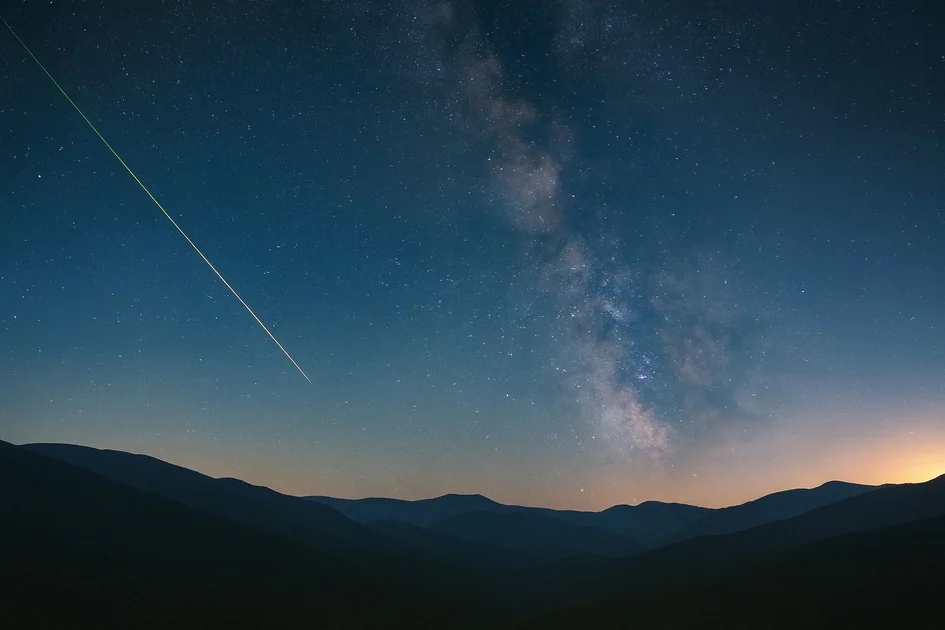
October 2026: A Celestial Extravaganza
Stargazers are in for a treat this October as two meteor showers—the Draconids and the Orionids—promise to streak across the night sky, alongside a lineup of planetary events that includes Saturn at opposition and a full Hunter’s Moon. According to multiple sources, the month kicks off with Saturn reaching opposition on October 4, making it exceptionally bright and visible all night. But the main attraction for many is the meteor activity, with the Draconids peaking on October 8–9 and the Orionids following on October 21–22.
The Draconids, though typically a modest shower, could surprise this year. As Popular Science reports, the shower’s parent comet reached perihelion—its closest approach to the sun—last March and passed relatively close to Earth shortly after, leaving a trail of debris. “This year might well be in which we see The Dragon Awaken,” the publication notes, hinting at the possibility of enhanced activity. The shower is best viewed just after sunset, with the radiant point in the constellation Draco, making it ideal for those who prefer not to stay up late. The Saudi Gazette adds that the Draconids will be active from October 6–10, peaking on the night of October 8–9 at around five meteors per hour. Times Kuwait notes that the timing near the new Moon on October 10 means darker skies, improving viewing conditions.
Later in the month, the Orionids—debris from Halley’s Comet—will take center stage. The Saudi Gazette states the Orionids will peak on October 21–22 with a theoretical rate of up to 20 meteors per hour, though moonlight may interfere. Times Kuwait refers to it as the “Cursed” meteor shower (likely a mistranslation or local nickname) and notes activity continues until around November 7. The Orionids are known for their speed and brightness, often leaving persistent trains.
Key Viewing Dates and Tips
Draconids: October 8–9
The Draconids are unique among meteor showers because they are best seen in the evening rather than after midnight. The radiant is in Draco, which is high in the northern sky after sunset. This year, the new Moon on October 10 means minimal moonlight, creating ideal dark conditions. Observers should look north just after sunset. No special equipment is needed—just a dark location away from city lights and about 20 minutes for eyes to adjust, as recommended by the Jeddah Astronomical Society.
Orionids: October 21–22
The Orionids radiate from the constellation Orion, which rises after midnight. The shower is associated with Halley’s Comet and is known for producing fast meteors. However, the Moon will be around last quarter, rising in the early morning hours, which may wash out fainter meteors. The best time to watch is in the pre-dawn hours, looking southeast. The Saudi Gazette notes that up to 20 meteors per hour may be visible under dark skies.
Saturn and Other Planetary Highlights
Saturn reaches opposition on October 4, meaning it is opposite the Sun in our sky, rising at sunset and setting at sunrise. It will be at its brightest and largest for the year, with its rings tilted favorably for viewing. According to Popular Science, Saturn’s rings have been nearly edge-on and difficult to see since March 2025, but now they are back on display. “The planet itself should be visible to the naked eye, but if you want to see Saturn in its full glory, you’ll want to see the rings, which should be discernible with a small telescope,” the article states. The Saudi Gazette adds that Saturn will appear as a bright, yellowish object about 1.26 billion kilometers from Earth.
Other planetary events include a close approach of the Moon and Mars on October 5, and the Moon near Jupiter on October 6, with a lunar occultation of Jupiter visible in some regions. Mars will be visible in the Beehive Cluster from October 11–13, and Venus will become more prominent in the eastern sky before dawn toward month’s end. Mercury reaches greatest eastern elongation on October 12, offering the best chance to spot the elusive planet. CNET notes that all eight planets are visible at some point in October, with Mercury being the most challenging.
The Hunter’s Moon and Other Sights
The full Hunter’s Moon occurs on October 26. This name, derived from Native American traditions, signifies the time for hunting and preparing for winter. The Moon will be in the constellation Aries (Al-Butain in Arabic, as per Times Kuwait). On October 28, the Moon will pass near the Pleiades star cluster, a beautiful sight visible to the naked eye from dark locations.
Other celestial treasures include the Andromeda Galaxy, the Great Square of Pegasus, and the Pleiades, all visible in October’s evening skies. The Al-Ujairi Scientific Center in Kuwait encourages observers to seek dark skies away from light pollution for the best experience.
Why October 2026 Is Special
This October is particularly noteworthy because it offers a diverse array of astronomical events in a single month. The combination of two meteor showers, a Saturn opposition, a full Moon, and multiple planetary conjunctions provides ample opportunities for both casual stargazers and seasoned astronomers. Moreover, the Draconids’ potential for enhanced activity due to the comet’s recent perihelion adds an element of surprise. As Popular Science puts it, “Everything comes in twos this month: two outer planets reaching full opposition to the sun, providing optimum viewing conditions, along with two meteor showers.”
The month also coincides with other cultural and entertainment events, such as the release of free PlayStation Plus games and the Amazon Prime settlement refunds, but the celestial show is a reminder of the wonders above us. Whether you’re a night owl or an early riser, October 2026 offers something for everyone.
How to Make the Most of Your Stargazing
To maximize your meteor shower experience, find a location away from city lights, give your eyes at least 20 minutes to adapt to the dark, and dress warmly. No telescopes are needed for meteor showers, but a small telescope or binoculars will enhance views of Saturn’s rings, the Andromeda Galaxy, and the Pleiades. Check local weather forecasts and plan around the peak nights. For the Draconids, look north after sunset; for the Orionids, look southeast after midnight. Patience is key—meteor showers are unpredictable, but the reward is a breathtaking display of nature’s fireworks.
As the Saudi Gazette notes, “most of the events can be observed with the naked eye from dark locations away from light pollution.” So mark your calendars for October 8–9 and October 21–22, and prepare for a month of cosmic wonders.
Comments