
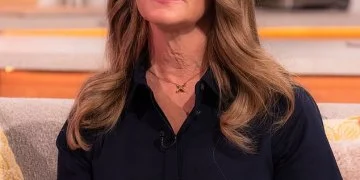
Billionaire Philanthropist Sparks National Conversation on Menopause Care
Melinda French Gates has ignited a national debate on women's health by publishing a powerful essay in The New York Times titled "Women, We Deserve Better Than This," in which she calls for a "menopause revolution" in the United States. The philanthropist, who turns 62 this year, uses her personal experience and vast platform to highlight the systemic neglect of women experiencing perimenopause and menopause within the healthcare system.
In the essay, published on Thursday, June 11, 2026, French Gates describes a common but frustrating scenario: a woman enters her doctor's office with debilitating symptoms—disrupted sleep, aching joints, heart palpitations, and memory lapses—only to leave without a diagnosis, treatment, or plan. She argues that this experience is far too common, even for those with excellent healthcare access.
"Our society's approach to menopause and perimenopause reflects the deep flaws of a health system that has long treated women as an afterthought," French Gates wrote. She emphasized that women's rights are under attack and that the likelihood of a woman receiving inadequate care during this life stage is "alarmingly high." Her central message is direct: "We need to change our assumptions about whose bodies are worth understanding. We need a menopause revolution in this country."
To back her words with action, French Gates announced an additional $215 million commitment through her Pivotal Philanthropies Foundation. This organization, which she founded, advocates for women through strategic philanthropy and investments. The new funding aims to accelerate research, improve clinical training, and expand access to evidence-based care for menopausal women.
A Personal Story with Public Consequences
French Gates shared that when she first entered menopause herself, she had to actively advocate to get help managing her symptoms—despite having what she described as "access to excellent healthcare." Her admission underscores a critical point: if a billionaire with world-class doctors struggles to be heard, the situation is far worse for the average American woman. The essay has resonated deeply, sparking a frenzy of discussion on social media and across news platforms, with many women sharing their own stories of being dismissed or misdiagnosed.
This development comes at a time when French Gates is increasingly stepping into her own spotlight, separate from her ex-husband, Microsoft co-founder Bill Gates. Their divorce was finalized in 2021, and since then, she has focused her philanthropic work more sharply on gender equity and women's health. As of June 2026, Forbes estimates Melinda French Gates' net worth at $19.1 billion, making her the 135th-richest person globally, while Bill Gates holds a net worth of $103 billion, ranking 19th. In January 2026, The New York Times reported that Bill Gates donated an estimated $7.88 billion to Pivotal Philanthropies in 2024, significantly boosting the foundation's capacity.
Why This Matters: The Stakes of the Menopause Healthcare Gap
The urgency of French Gates' call cannot be overstated. For decades, menopause has been a taboo subject in both social and medical circles, leading to a profound lack of research, clinical guidelines, and practitioner education. Women in their 40s and 50s—often at the peak of their careers and family responsibilities—are left to suffer in silence, sometimes for years.
The Research and Treatment Deficit
The National Institutes of Health (NIH) has historically underfunded women's health research, and menopause has been particularly neglected. Many doctors receive minimal training on menopause management; a 2025 survey by the North American Menopause Society found that only 20% of OB-GYN residency programs offer formal menopause training. This knowledge gap means that symptoms like brain fog, mood swings, and severe hot flashes are often dismissed as anxiety, depression, or simply aging. Women are frequently prescribed antidepressants or sleep aids that do not address the underlying hormonal cause.
French Gates' $215 million pledge is intended to close this gap. Pivotal Philanthropies will fund research into the biology of menopause, develop educational programs for healthcare providers, and support advocacy groups pushing for better insurance coverage of menopause treatments, including hormone therapy and non-hormonal alternatives.
A Broader Attack on Women's Autonomy
The philanthropist's essay also ties the menopause crisis to the larger political context, noting that "women's rights are under attack." This is a direct reference to the ongoing rollback of reproductive rights across the United States following the Supreme Court's Dobbs decision in 2022. While menopause care is not abortion care, both issues stem from a healthcare system that undervalues women's bodies and lives. By framing menopause as a rights issue, French Gates connects her advocacy to a broader movement fighting for female bodily autonomy.
Raising Heirs with Middle-Class Values
French Gates' recent public appearances also offer insight into how her personal values shape her philanthropy and parenting. In a November 2025 joint interview with her daughters, Jennifer (30), Rory (27), and Phoebe (24), she told Vogue that she deliberately raised her children with "middle-class values," despite being one of the wealthiest families in the world.
"I had been around a lot of kids from wealth in college, and I knew how I did not want my children to turn out," she said. Her approach included giving them allowances, requiring them to maintain wish lists, and teaching them that money had limits. "We absolutely did not just buy them things," she explained. "They either had to buy with their allowance or put it on their wish list."
This grounded approach is a direct result of her own upbringing in Dallas, Texas, where she was one of four children raised by an aerospace engineer and a homemaker. Those lessons have stayed with her and influenced her decision to ensure her children understand hard work and responsibility, not entitlement.
Life Advice: Facing Challenges Head-On
In a separate interview with The Economic Times published on June 11, 2026, French Gates offered life advice on confronting difficulties rather than avoiding them. She stated: "When you come to a point in your life when you see difficult things, don't look in the other direction." She emphasized that engaging with challenges—through small actions—is crucial for personal growth and creating lasting change. This philosophy aligns perfectly with her approach to menopause advocacy: rather than shying away from an uncomfortable topic, she is pushing it into the national conversation.
Perspective: A Cultural and Political Revolution in Women's Health
French Gates' essay and financial commitment mark a significant turning point. By using her platform and wealth, she is doing more than funding research; she is destigmatizing menopause. For decades, women have been told to quietly suffer through "the change of life," but a new generation is demanding better.
The Rise of the Menopause Economy
This cultural shift is opening up an entire new market: the menopause economy. Startups are launching telemedicine platforms specializing in menopause care, developing supplements and wearable devices that track hormone fluctuations, and creating workplace policies to support women experiencing symptoms. Celebrities like Naomi Watts, Gwyneth Paltrow, and Michelle Obama have also spoken publicly about their own menopause journeys, helping to normalize the conversation.
French Gates' intervention is likely to accelerate this trend. Her $215 million commitment is one of the largest single philanthropic investments ever made in women's midlife health. It signals to other philanthropists, venture capitalists, and policymakers that menopause is not a niche issue but a fundamental public health priority affecting half the population.
Systemic Change or Another Donation?
Cynics might argue that a single donation, however large, cannot fix a broken healthcare system. Indeed, systemic issues like insurance coverage, medical education reform, and pharmaceutical pricing require government action. However, French Gates is not relying solely on her checkbook. By writing a prominent essay and using her personal story, she is applying public pressure to the medical establishment and elected officials. The frenzy her essay sparked suggests that women are ready for change.
The ultimate test will be whether her advocacy translates into tangible policy wins, such as mandated menopause training for medical students, FDA approval of new treatments, and insurance mandates that cover comprehensive menopause care. For now, French Gates has ensured that the conversation will not go back into hiding.
The Broader Philanthropic Trend
This move is consistent with a broader trend among mega-philanthropists focusing on women's health. In 2025, MacKenzie Scott donated over $1 billion to reproductive health organizations. Yet French Gates' focus on menopause is unique; it addresses a stage of life that has been almost entirely ignored by both medicine and philanthropy. By targeting this gap, she is forcing a reckoning with ageism and sexism in healthcare.
Her foundation's $215 million will be disbursed over the next five years, funding grants to academic medical centers, community health organizations, and advocacy groups. Early priority areas include training 10,000 healthcare providers in menopause management and launching a national public awareness campaign. If successful, this could become a model for how to tackle other neglected women's health issues, such as endometriosis or autoimmune diseases.
Conclusion: A Revolution Begun
Melinda French Gates has done what she does best: use her voice, her story, and her fortune to challenge the status quo. Her call for a "menopause revolution" is not just about hot flashes and hormone therapy; it is about demanding that a healthcare system that has treated women as an afterthought finally give them the attention they deserve.
With a $215 million pledge and a powerful essay, she has moved the needle from whispered complaints to a national demand for action. The revolution is just beginning, and French Gates has made sure that ignoring it is no longer an option.
While the world faces other pressing challenges—from the strongest El Niño of the century forming in the Pacific to growing recession fears—French Gates has reminded the public that the health and dignity of half the population cannot be postponed. The conversation about menopause is no longer private; it is political, and it is just getting started.
Comments