
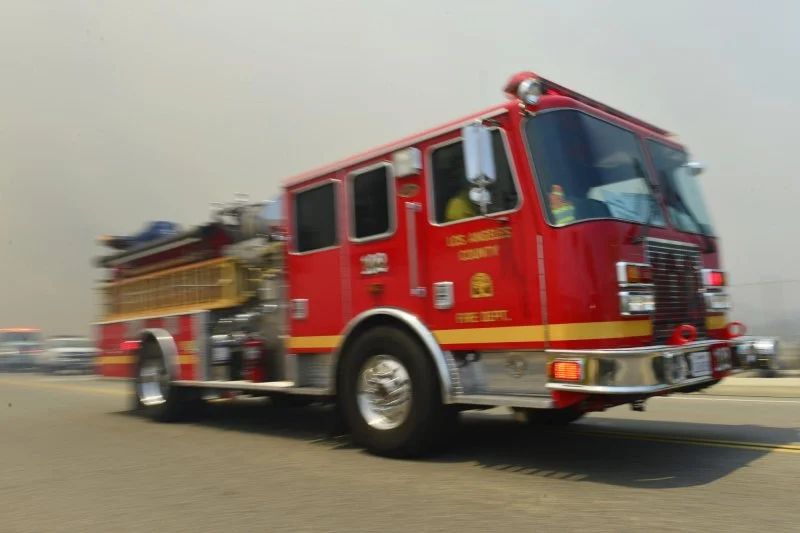
Emergency Declaration Amid Biohazard Concerns
Los Angeles Mayor Karen Bass has declared a state of emergency in response to a massive warehouse fire in the Boyle Heights neighborhood, a blaze that has been burning since Wednesday and now threatens to create a public health crisis due to the decay of 85 million pounds of frozen food. The mayor’s declaration, issued on Saturday, June 20, 2026, came just hours before California Governor Gavin Newsom announced a parallel state of emergency, unlocking state resources to aid the city’s beleaguered firefighting and cleanup efforts.
The fire, which began at a cold-storage facility operated by Lineage, has produced towering plumes of dark smoke that have repeatedly triggered shelter-in-place orders for nearby residents. The Los Angeles Fire Department (LAFD) has managed to contain the hazardous materials component—notably removing ammonia and other dangerous chemicals—but now faces a new, more complex challenge. LAFD Chief Jaime Moore confirmed that the facility’s massive stockpile of frozen food is rapidly decomposing, raising the specter of a biohazard. “There’s zero visibility inside,” Moore said. “Our firefighters are not able to just go in there and start moving pallets.”
The emergency declaration allows Los Angeles to seek recovery assistance under the California Disaster Assistance Act. Governor Newsom’s office has pledged to coordinate with local agencies, providing 5.5 million N95 masks, commercial-grade air purifiers, bottled water, and enhanced air-quality monitoring.
Escalating Crisis and Community Impact
The Boyle Heights fire has become a multi-day ordeal for residents, who have faced intermittent shelter-in-place orders since Wednesday. The initial threat was hazardous air from burning chemicals, but as the fire persists, the primary risk has shifted to the biological hazard posed by decaying food. Mayor Bass emphasized the need for prevention. “So this is about protecting your public health,” she said in a Saturday interview with NBC Los Angeles. “We’re very concerned about the health of the community.”
The city has opened relief centers for families seeking respite from the smoke, and the LAFD is working around the clock to contain the blaze. However, the sheer volume of food—over 85 million pounds—and the building’s layout have made progress slow. Chief Moore noted that firefighters are stretched thin, having to respond to this incident alongside other community emergencies.
The incident has also drawn attention to the mayor’s role in managing large-scale disasters. The Boyle Heights fire is not the only crisis on Bass’s desk. Just days earlier, news broke that “Hills” star Spencer Pratt had teamed up with the mayor’s brother to sue her over the Palisades Fire, a separate wildfire that caused significant destruction. The lawsuit adds a personal and political dimension to Bass’s tenure, as she faces challenges from all sides.
A Mayor Under Pressure: Limited Power and Political Storms
The emergency declaration comes at a politically delicate moment for Mayor Bass. As the November 2026 mayoral election approaches, her leadership is being tested by both natural disasters and institutional constraints. A recent Vox analysis highlighted that the Los Angeles mayor’s office is structurally weak compared to other big-city mayors, due to a city charter designed over a century ago to prevent the concentration of power. This decentralized governance model, according to the piece, has historically made it difficult for any mayor—progressive or moderate—to enact swift change.
Councilmember Nithya Raman, a democratic socialist who has secured her candidacy against Bass, is focusing on housing and affordability, issues that resonate deeply with Angelenos. Meanwhile, the Boyle Heights fire underscores the urgent need for effective disaster management, a task that requires coordination across multiple city, county, and state agencies.
The dual emergencies—the warehouse fire and the Palisades Fire lawsuit—amplify the stakes for a mayor often criticized for lacking authority. Bass has defended her approach, stating that joint state and city efforts are essential. “We clearly need resources from the state to allow us to take the steps that are needed to make sure that this area is safe,” she said.
Broader Implications: Governance, Health, and Preparedness
The Boyle Heights fire raises critical questions about urban disaster preparedness and the limits of municipal power. The presence of a massive cold-storage facility in a densely populated neighborhood highlights regulatory gaps in locating industrial hazards near residential areas. The biohazard risk from decaying food is relatively rare, but experts warn that climate change could increase the frequency of such intertwined environmental and public health crises.
Moreover, the incident fits into a larger national conversation about the role of big-city mayors in an era of overlapping emergencies—wildfires, pandemics, and infrastructure failures. As candidates like Raman advocate for more local control, the Vox analysis suggests that even the most ambitious mayor would struggle against decades of bureaucratic red tape. Yet, the Boyle Heights fire also demonstrates the importance of executive action: Bass’s emergency declaration and coordination with the state have mobilized resources that might otherwise have been slow to arrive.
In a time of global uncertainty—including ongoing geopolitical tensions that have reshaped travel, as seen in the strict U.S. curbs on Iranian citizens at the World Cup—the capacity of local governments to protect public health remains a pressing concern.
Conclusion: A Test of Leadership
As the Boyle Heights fire continues to smolder, Mayor Karen Bass faces a test not only of her crisis management skills but of her ability to navigate a fragmented political landscape. The emergency declaration marks a necessary step, but the long-term challenges—decontamination, air quality monitoring, and community recovery—will demand sustained cooperation across all levels of government. For Los Angeles, a city accustomed to dramatic fires and political drama, the coming weeks will reveal whether its mayor can turn a moment of crisis into a foundation for stronger, more resilient governance.
Comments