
Dorset Police Step Up Enforcement and Public Appeals
Dorset Police have had a busy start to August, with officers making arrests in a modern slavery investigation, appealing for witnesses to a suspicious fire, and asking for help in tracing a missing person. The force has also issued a fresh appeal over a public decency incident in Bournemouth, underscoring the wide range of challenges facing the county's law enforcement.
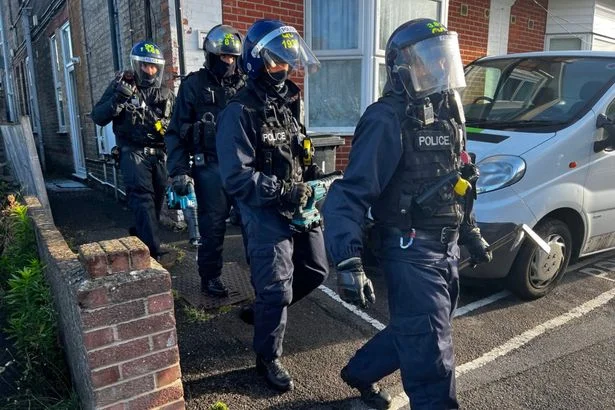
The most significant development came on 1 August when two men were arrested on suspicion of modern day slavery and money laundering offences. Dorset Police said the suspects, a 20-year-old from Sussex and a 22-year-old from Buckinghamshire, were taken into custody following a raid on a business premises in Gillingham. The operation, which followed community intelligence, also led to three further men being arrested for immigration offences. A force spokesperson said a number of individuals were safeguarded during the "day of action."
In a separate incident, detectives have launched an appeal following a suspicious fire at the Imerys clay extraction site off Bere Road, near Wareham. The fire, reported at 5.14am on Sunday 2 August, damaged several plant machinery vehicles. Police believe it may have been started deliberately. Detective Inspector Rich Barnett urged motorists with dashcam footage to come forward, asking anyone who was in the area between 3am and 5.15am to check their recordings.
Meanwhile, the force confirmed on 4 August that a man reported missing for 23 days had been found. The 31-year-old, named Christopher, was last seen in Portsmouth on 11 July and was believed to have travelled to Bournemouth and then London. Dorset Police thanked the public for sharing their appeal.
A Multi-Pronged Approach to Community Safety
These incidents highlight the varied nature of policing in Dorset, from large-scale operations against organised crime to the more routine task of locating vulnerable individuals. The modern slavery investigation is particularly notable, as it suggests that such exploitation is not confined to major cities but can occur in smaller towns like Gillingham. PC Bradley Gibbs, from North Dorset police, said the force would "continue to work with our partners to safeguard vulnerable individuals and take positive action against those involved in this type of reported criminality."
The public's role in these efforts has been repeatedly emphasised. Whether it is sharing a missing person appeal or providing dashcam footage, officers say community cooperation is vital. The appeal over the Bournemouth public decency incident on 24 July is a further example, with police asking anyone with information to contact them quoting occurrence 55260113269.
These cases are not isolated. Across the country, police forces are increasingly relying on public intelligence to tackle crimes that often go unreported. Dorset Police's appeal for information on the suspicious fire is part of this broader trend, with detectives hoping that a passing driver might have captured something that advances the investigation.
The Broader Implications for Law Enforcement and the Community
The recent activity by Dorset Police sends a clear message about proactive policing, but it also raises questions about resources and the effectiveness of public appeals. Modern slavery is a hidden crime, and cases like the one in Gillingham often come to light only after months of investigation and community tip-offs. The fact that several individuals were safeguarded shows that these operations can have a tangible impact, but it also highlights the difficulties in identifying and supporting victims who may be reluctant or unable to come forward.
The suspicious fire at the Imerys site, if confirmed as arson, could have serious consequences for the business and the local economy. Plant machinery is expensive to repair or replace, and such incidents can disrupt operations for weeks. For a force already stretched, investigating deliberate damage adds to the workload, but detectives appear determined to identify those responsible.
Looking ahead, the success of these enquiries may depend on the public's willingness to engage. As PC Gibbs noted, the force is "indebted to members of the public for providing information." In an age where dashcams and social media are ubiquitous, there are more opportunities than ever for witnesses to contribute. However, this also puts pressure on police to manage the flow of information effectively and to act on the leads they receive.
The recent cases in Dorset serve as a reminder that crime and anti-social behaviour can happen anywhere, and that the police cannot tackle them alone. The response to the missing man appeal was successful, and now officers hope that similar public cooperation will help solve the other incidents.
For residents across Bournemouth, Poole, and the wider county, the flurry of appeals and arrests may be reassuring, but it is also a call to remain vigilant. Whether it is reporting suspicious activity or simply checking dashcam footage, the community has a part to play in keeping Dorset safe.
As these investigations develop, Dorset Police will likely provide further updates. In the meantime, the force's actions show that they are actively pursuing a range of cases, from the most serious crimes to public order offences. The coming weeks will determine whether the public's assistance yields the breakthroughs officers are hoping for.
For now, the focus remains on gathering information and supporting victims. As one resident noted, "it's good to see the police taking these matters seriously, especially the modern slavery case. It makes you think about what's happening behind closed doors."
With the summer season in full swing and the influx of visitors, Dorset Police are also likely to face additional pressures on the coast and in tourist hotspots. The appeal for information on the Bournemouth incident is a timely reminder that public decency laws are being enforced, and that the force is keen to maintain the county's reputation as a safe place to live and visit.
As always, members of the public can contact Dorset Police online or by calling 101, with independent charity Crimestoppers also available for those who wish to remain anonymous.
In a broader context, the recent actions by Dorset Police reflect a national trend of forces using targeted operations and community engagement to address complex issues such as modern slavery. The success of these operations often hinges on the willingness of residents to act as the eyes and ears of the law. In Dorset, that relationship appears to be holding strong.
With the summer drawing to a close, the force will be hoping that the current appeals yield results and that the county can enjoy a peaceful end to the season. But as the news cycle shows, the work of Dorset Police is never truly done.
Comments