
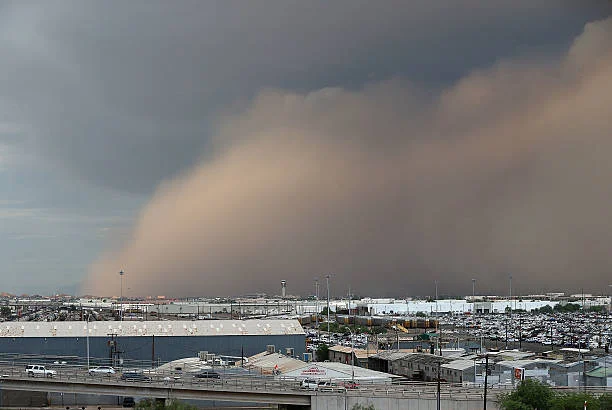
Phoenix Reels from Rare Category 5 Dust Storm
The Phoenix metro area is grappling with hazardous air quality after a rare Category 5 dust storm—the strongest classification on Arizona State University's Phoenix Dust Storm Scale—swept through the region late Monday night. The storm, which occurred on Aug. 3, brought widespread blowing dust and high winds that lingered into Tuesday, obscuring the downtown skyline and triggering a High Pollution Advisory from the Arizona Department of Environmental Quality.
Residents described the conditions as "muggy and disgusting," with hazy skies that made the Loop 202 look "like garbage." The dust storm, only the fifth Category 5 on record in the past 16 years, was rated so highly due to the thickness of the dust and its long duration. The National Weather Service issued an Air Quality Alert, warning of elevated levels of coarse particulate matter (PM-10) that pose a health risk, especially for sensitive groups.
Health Risks and Immediate Impact
Doctors and health officials are urging vulnerable populations to stay indoors as much as possible. Dr. Frank LoVecchio, an emergency room physician and ASU professor, noted that while the dust is not a major concern for healthy individuals, it is a significant threat for those with lung disease, heart disease, the very young, the very old, and the immunosuppressed. "For the average person, it's not going to be a big deal, but it is a big deal for many people," he said.
The dust can trigger asthma, strain the heart, and increase emergency room visits. JoAnna Strother of the American Lung Association emphasized that dust particles often carry allergens like mold spores and pollutants, and can even carry fungal spores that cause Valley Fever. The Arizona Department of Environmental Quality expects dust levels to exceed federal health standards, with the Phoenix area currently having the worst air quality in the country.
Who Should Take Precautions?
- People with asthma, COPD, or other respiratory conditions
- Older adults and children
- Individuals with heart disease
- Those who are immunosuppressed
Experts recommend that sensitive groups stay inside, and if they must go out, wear an N-95 mask. For others, limiting outdoor exertion and monitoring air quality alerts is advised. The dust storm also underscored the broader issue of air quality in the Southwest, as climate change and extreme heat events are expected to increase the frequency and intensity of such storms.
Lingering Dust and Heat Wave
Even as the strongest winds have eased, the dust remains trapped in the Valley due to cloud cover and a lack of rain. "We didn't have any rain, so no rain followed the dust, and that's why we have a lot more dust," said Michael Graves, an air quality meteorologist with the Arizona Department of Environmental Quality. Heavy cloud cover has kept the dust from dispersing, leading to hazy conditions that persisted through Tuesday.
The region is also under an Extreme Heat Warning through Friday, with highs expected to reach 111 degrees and remain between 108 and 112 degrees all week. Increasing humidity will make it feel even warmer. Meteorologists warn that more dust storms could occur as outflow winds from thunderstorms in southeast Arizona push dust into the Valley each afternoon. This combination of extreme heat and poor air quality creates a dangerous situation for residents, especially those without access to air conditioning or who work outdoors.
Broader Implications and Trends
The Category 5 dust storm in Phoenix is a stark reminder of the escalating environmental challenges facing the American Southwest. As climate change intensifies, the region is experiencing more frequent and severe dust storms, along with prolonged heat waves and drought conditions. This event also highlights the interconnected nature of extreme weather: thunderstorms trigger dust storms, which then exacerbate air quality issues, which in turn strain public health systems.
For residents, this means adapting to a new normal where "monsoon season" carries not just the risk of flash flooding but also of hazardous air. The Phoenix Dust Storm Scale, developed by Arizona State University, ranks storms from 1 to 5 based on factors like PM-10 concentration, wind speed, duration, and geographic extent—a tool that helps officials and the public gauge the severity of each event.
While this week's dust storm was exceptional, experts warn that such events could become more common. For now, the focus remains on protecting public health: staying indoors, wearing masks when necessary, and heeding air quality alerts. The situation also underscores the need for long-term strategies to mitigate dust emissions, such as land management practices and urban planning that reduce exposed soil.
As the heat wave continues and more dust may be on the horizon, Phoenix residents are bracing for what could be a prolonged period of poor air quality and extreme temperatures. The city's resilience is being tested, but with clear guidance from health officials, communities can navigate these challenging conditions.
Comments