
Cost of living dominates as Makerfield by-election heats up
With just two weeks to go before the Makerfield by-election on 18 June, new polling reveals that voters in the Greater Manchester constituency prioritise the cost of living, declining high streets, and public services above party allegiance. The contest, triggered by the resignation of Labour MP Josh Simons to allow Greater Manchester Mayor Andy Burnham to return to Westminster, has become a high-stakes test for the main parties.
A focus group commissioned by 38 Degrees and carried out by JL Partners, shared exclusively with the Guardian, found that more than a third of 112 residents spontaneously mentioned the cost of living when asked what changes would improve their lives. Respondents frequently cited household bills, food and fuel costs, council tax, and the need for affordable housing. One voter said they wanted costs to come down “so that we can afford to actually have a life”.
The poll also showed that three in 10 residents want their new MP to focus on fixing the local environment and public services, including high streets, roads, potholes, and NHS access. Immigration was raised by about one in eight, particularly among Reform UK supporters.
The candidates: Burnham versus Kenyon versus Winstanley
Andy Burnham: the favourite with a national profile
Andy Burnham, the Labour candidate and current Greater Manchester Mayor, is hoping to secure a return to Parliament. He has been canvassing in the constituency, including in Hindley Green, and is seen as the frontrunner. However, the by-election is not a foregone conclusion, with Reform UK’s Robert Kenyon mounting a strong challenge.
Burnham’s campaign has focused on local issues such as high street regeneration and public services, aligning with the priorities identified in the poll. His resignation as MP for Leigh in 2017 to become mayor gives him a long-standing connection to the area.
Robert Kenyon: Reform UK’s local challenger under scrutiny
Reform UK candidate Robert Kenyon, a plumber and local councillor, has admitted making “crass” comments online in the past after scrutiny of his posts on a defunct rugby league forum. In an interview with the BBC, Kenyon said the comments – which covered Brexit, abortion, and Ukraine – were made before he entered politics. He described himself as “not a polished professional” and said people would “feel listened to” if he became MP.
Kenyon has positioned himself as an anti-career politician candidate, saying voters want a “local lad” who knows the area. His campaign has focused on immigration and local representation, appealing to voters disillusioned with the main parties.
Michael Winstanley: the Tory promising not to use the seat as a stepping stone
Conservative candidate Michael Winstanley, a former mayor of Wigan, has promised to dedicate his time to the constituency and not treat the by-election as a “stepping stone”. Speaking on BBC Radio Manchester, Winstanley said many residents feel like “political pawns” over the by-election, which he called “unfair”. He highlighted high street regeneration, cutting business rates and red tape, road funding to reduce congestion, and a crackdown on crime after a recent spike.
Winstanley was described by Tory leader Kemi Badenoch as “an excellent champion of the area”. He is one of fourteen candidates in the race.
The trigger: Why the by-election is happening
Josh Simons steps down for Burnham’s return
The by-election was called after Labour MP Josh Simons resigned, a move he said he made to allow Andy Burnham to run for Parliament and potentially mount a leadership bid. Simons’ resignation has been controversial locally, with some voters expressing resentment at being used as “political pawns” in internal party manoeuvring.
A snapshot of national political sentiment
Makerfield, a former Labour stronghold, saw significant swings to Reform UK at the last general election. In the poll, 31.2% of respondents had voted Labour in 2024 and 30.4% Reform UK, with 10.7% Green, 10.7% Conservative, and 3.6% Liberal Democrat. This makes the by-election a key indicator of voter mood ahead of a potential general election.
Voter priorities beyond the headlines
High streets in decline
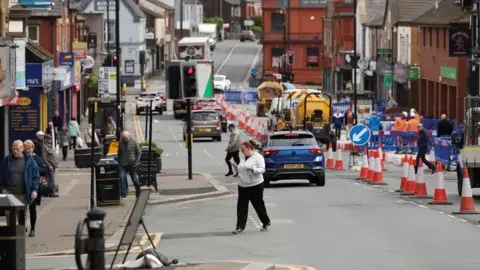
High street decline is a visible issue in places like Ashton-in-Makerfield and Hindley. One Reform UK voter in the 55-plus age group said she wanted “a better local high street which can thrive and support local farmers and businesses instead of barbers, vape shops and mini markets”. Winstanley has specifically pledged to cut business rates and red tape to help businesses flourish and increase footfall.
Immigration and honesty
Immigration policy is a key issue for Reform UK voters, with about one in eight mentioning it as a priority for the new MP. There is also a strong desire for honesty and boldness from politicians, with one respondent saying “what we are doing isn’t working”. The focus group suggests voters are tired of what they see as careerism and empty promises.
The cost of living squeeze
The cost of living remains the dominant theme, affecting household budgets and small businesses alike. Respondents mentioned lowering council tax, affordable housing, and cheaper fuel. Burnham’s mayoral record on transport and housing could resonate, but Kenyon and Winstanley are also tailoring their messages to these concerns.
The stakes: What this by-election means for the parties
Labour: Protecting a stronghold
For Labour, losing Makerfield would be a major blow, especially given Burnham’s high profile. The party is fighting to retain a seat it has held for decades, albeit with a reduced majority. A strong Reform UK challenge could signal deeper inroads into Labour’s traditional base in the North-West.
Reform UK: Proving staying power
For Reform UK, a strong second-place finish or even a victory would cement its position as a serious electoral force. Kenyon’s local roots and anti-establishment messaging appeal to voters who feel left behind by mainstream parties. The party has faced criticism over Kenyon’s past comments, but it has backed him, saying it has no plans to investigate.
Conservatives: A long shot with local roots
The Conservatives are fielding a candidate with deep local ties, but the party’s national standing is poor. Winstanley’s focus on high streets and roads may appeal to some, but the party is unlikely to win. A strong showing could, however, provide a morale boost.
Broader implications: A window into 2026 politics
The Makerfield by-election is more than a local contest. It offers a glimpse into voter priorities ahead of a possible general election. The dominance of cost of living and high street decline over traditional party loyalty suggests that the next election will be fought on kitchen-table issues. The rise of Reform UK and the disillusionment with career politicians point to a volatile political landscape.
Meanwhile, the weather may also be on voters’ minds. After a record-breaking spring, the UK Summer Weather Forecast: Second Heatwave Predicted After Record Spring could affect turnout on polling day. But for now, the candidates are focused on doorsteps and debates, hoping to convince Makerfield’s voters that they are the ones who can deliver change.
The by-election on 18 June will be a key test of whether Labour can hold onto its heartlands, whether Reform UK can convert frustration into seats, and whether the Conservatives can regain relevance in the North-West. For voters, the message in the polling is clear: they want someone who will fix their high streets, cut their bills, and actually listen.
Comments