
Astronauts Ordered to Shelter, Then Return, After Escalating ISS Air Leak
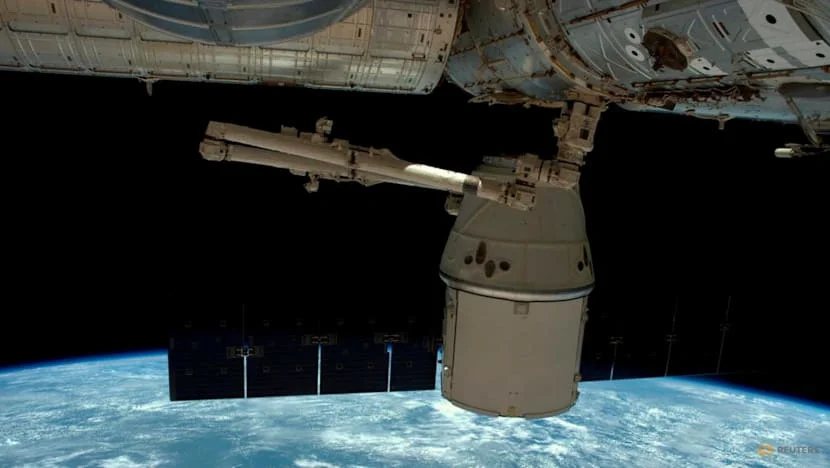
In a dramatic turn of events aboard the International Space Station (ISS), five astronauts were ordered into emergency safe haven on Friday as a worsening air leak in the Russian segment sparked fears of a potential evacuation. NASA mission control initially directed the crew to board the SpaceX Crew Dragon "Freedom" spacecraft and prepare for a possible emergency departure, marking one of the most serious safety alerts in the orbital laboratory's 27-year history.
However, roughly two hours later, at 11:04 a.m. ET, NASA reversed the order. The agency instructed the astronauts to exit the Dragon capsule and resume normal operations after Russian space agency Roscosmos paused its repair efforts on the leaking Zvezda service module to assess new data.
The four Crew-12 astronauts — NASA's Jessica Meir and Jack Hathaway, European Space Agency astronaut Sophie Adenot, and Roscosmos cosmonaut Andrey Fedyaev — along with U.S. astronaut Christopher Williams, had been told to don their pressure suits and seal themselves inside the SpaceX vehicle as a precaution. Two Russian cosmonauts, Sergey Kud-Sverchkov and Sergei Mikayev, remained in the Russian segment to attempt repairs on the PrK transfer tunnel, a small structure connecting a docking port to the Zvezda module.
"Out of an abundance of caution, NASA has instructed the crew members inside the Dragon spacecraft to end the safe haven procedures and return to planned operations," NASA spokesperson Bethany Stevens confirmed in a statement. She added that Roscosmos had paused structural repairs "as more measurements and data are assessed."
The Escalating Leak: From a Pound to Two Pounds Per Day
The incident began when NASA and Roscosmos detected a sudden acceleration in the rate of air loss from the ISS. For months, the station had been leaking approximately one pound (0.45 kilograms) of air per day through microscopic cracks in the walls of the Zvezda module's transfer tunnel, known as the PrK. On Friday, that rate doubled to two pounds (0.9 kilograms) per day, a development that triggered the highest level of concern among mission controllers.
"The air leaks have been relatively minor in recent months," a senior NASA official told Reuters. "But on Friday, the rate doubled. That heightened the urgency."
Roscosmos reported that its engineers had detected two separate leaks aboard the ISS. The first was quickly sealed, and preparations were underway to address the second when the decision was made to pause operations. The Russian agency stated that there was "no immediate threat to the crew or the spacecraft's systems," but NASA chose to take no chances, ordering the astronauts to seek shelter in the docked Crew Dragon as a fail-safe.
Context: A Seven-Year-Old Problem Never Fully Solved
The Zvezda module's air leak is not a new phenomenon. First reported by Roscosmos in September 2019, the problem has become one of the most persistent and troubling technical issues in the station's history. Engineers have spent years trying to identify and seal the microscopic cracks, but the leaks have proven stubbornly resilient. At one point, the leak rate climbed to nearly one kilogram of air per day — a level that prompted NASA to classify it as the station's highest-level safety risk.
Earlier this year, progress seemed possible. After multiple inspections and applications of sealant, NASA reported in January that pressure readings suggested the cracks might finally be contained. But the improvement proved temporary. The structural weaknesses in the PrK tunnel, caused by a combination of material fatigue, thermal cycling, and perhaps micrometeoroid impacts, have defied all repair attempts.
The Disagreement Over Repair Strategy
The safe-haven order also highlighted a growing friction between NASA and Roscosmos over how to handle the problem. Sources indicate the two agencies have debated for months over the root cause of the cracks and the best approach to fixing them. NASA has pushed for a more methodical, data-driven investigation, while Roscosmos favored a direct repair operation involving cutting into the module to access the leak site.
"NASA and Roscosmos have been working to determine the root cause of the cracks," Stevens said in a post on X. "Roscosmos manages the issue through operational mitigation measures and periodic partial-repair efforts. Following new leaks, Roscosmos has elected to proceed with a more extensive repair operation."
That extensive operation — which involved cosmonauts Kud-Sverchkov and Mikayev using a saw to reach the area they believed contained the leaks — was paused just as the astronauts were being told to evacuate the Dragon. The decision to halt repairs came after engineers decided they needed more data to assess whether the repair itself could cause further damage.
Perspective: The Highest Alert in ISS History
Friday's events represent the closest the International Space Station has ever come to a real emergency evacuation. In 27 years of continuous habitation, no astronaut has ever had to abandon the station in a spacecraft. While drills and simulations are routine, an actual order to shelter in a docked vehicle is extraordinarily rare.
The safe-haven protocol is designed for worst-case scenarios, such as a depressurization event, fire, or toxic ammonia leak. In this case, the decision to activate the protocol was driven by two factors: the doubling of the leak rate and the risk that the ongoing repair work could inadvertently worsen the situation.
A Geopolitical Dimension
The incident also underscores the complex geopolitical dynamics of the ISS partnership. With NASA and Roscosmos as the station's primary operators, coordination is essential, but not always seamless. The U.S. has expressed frustration with Russia's approach to the Zvezda leaks, while Russia has defended its engineering judgment.
Despite these tensions, the two agencies remain interdependent. NASA relies on Russian propulsion for station reboosts and orientation control, while Roscosmos needs American cargo and crew vehicles. The safe-haven order and its reversal ultimately demonstrated that — at least in moments of crisis — operational pragmatism can overcome bureaucratic differences.
What This Means for the Future of the ISS
The Zvezda module is the oldest Russian segment of the ISS, launched in 2000. Its gradual structural degradation raises questions about the long-term viability of the station, which is currently approved to operate through 2030. While the leaks do not pose an immediate catastrophic risk, their persistence and escalation suggest that more serious failures could be on the horizon.
NASA has been preparing for the eventual end of the ISS by supporting the development of commercial space stations, such as those proposed by Axiom Space, Blue Origin, and others. Friday's scare provides a tangible reminder of why those efforts matter. As components age, the risk of unexpected failures increases — and the margin for error in a pressure vessel hurtling through space at 17,500 miles per hour is razor-thin.
In the short term, both agencies will continue to monitor the situation closely. Roscosmos is expected to resume its repair attempts in the coming days, this time with additional data and coordination. NASA, meanwhile, has emphasized that the crew is safe and that the station's environment remains stable.
For the astronauts themselves, life on the ISS quickly returned to normal after the two-hour scare. But the episode will likely echo through mission control rooms in Houston and Moscow for months to come.
Comments