
Two Years After Crash, Hillsborough Meteorite Holds Prebiotic Secrets
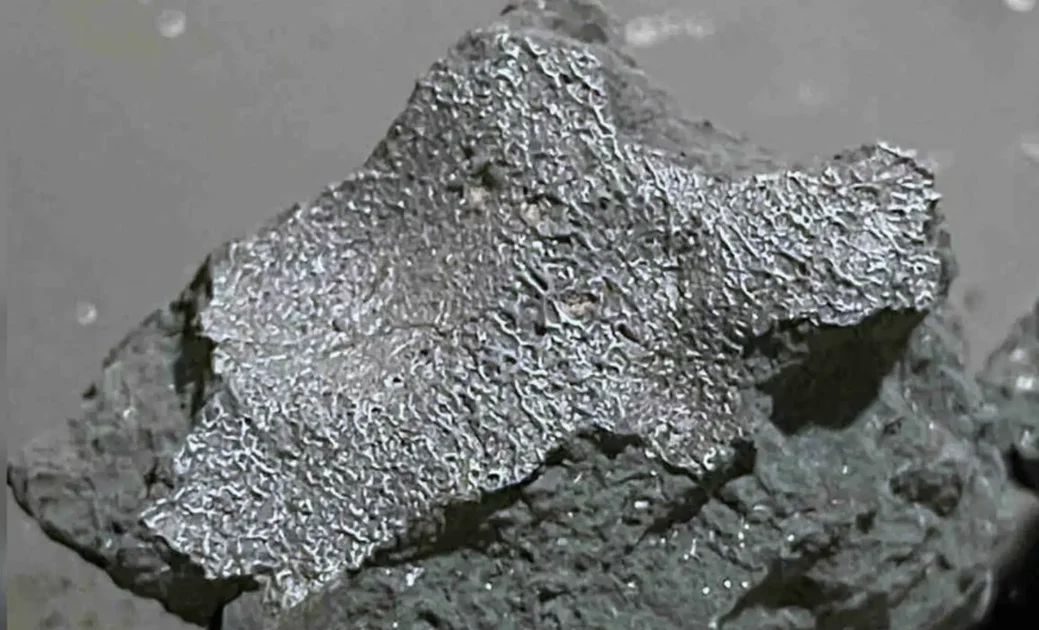
On July 15, 2026, an international team of researchers published a landmark study in Science Advances revealing that a meteorite that struck a home in Hillsborough, New Jersey, in July 2024 contains a diverse array of organic molecules—including amino acids and carbon-bearing compounds—that are fundamental to life as we know it. The rock, classified as a rare CM1/2 carbonaceous chondrite, is now considered one of the most scientifically valuable meteorites ever recovered.
The meteorite tore through the roof of a master bedroom on July 16, 2024, after producing a sonic boom heard across New York City and New Jersey. The homeowner, acting with remarkable presence of mind, used disposable gloves, aluminum foil, and glass jars to collect the fragments and dust before rain could contaminate the sample. That quick thinking preserved the meteorite in near-pristine condition, allowing scientists to detect a suite of prebiotic molecules that are rarely found in such concentration.
According to Peter Jenniskens, lead author of the study and a meteor astronomer at NASA’s Ames Research Center and the SETI Institute, the meteorite’s chemical composition offers a direct window into the early solar system. “We detected a complex suite of amino acids, the fundamental building blocks of proteins, in water extracts of the Hillsborough meteorite,” said study coauthor Dr. Danny Glavin of NASA’s Goddard Space Flight Center. “Most of the amino acids detected in Hillsborough are rare or nonexistent in life on Earth, so they are truly extraterrestrial in origin.”
Why This Meteorite Is a Scientific Treasure
The Hillsborough meteorite belongs to a class known as CM1/2 carbonaceous chondrites—primitive space rocks that have undergone minimal alteration since the solar system formed. Only one other observed fall of this type has ever been documented, making this recovery exceptionally rare. The rock’s parent asteroid likely originated in the inner asteroid belt and was once soaked in concentrated salty fluids, or brines. These brines are critical because they can drive chemical reactions that produce organic compounds, including those that may have seeded life on Earth.
Forensic analysis showed that the parent asteroid had liquid water that later evaporated, leaving behind salt-rich deposits. “The high concentration of salt in brines can create molecules crucial to life on Earth,” Jenniskens explained. Brines allow phosphate to remain suspended in solution and can spark reactions between simple organic materials, forming more complex molecules. Some of the compounds found in the meteorite include magnesium organic compounds, which are present in blood and used in photosynthesis in living organisms.
The meteorite’s preservation was key to these discoveries. The homeowner patched the roof before rain fell, preventing water from seeping into the porous rock. This level of care is almost unheard of in meteorite recovery, where most samples are contaminated by terrestrial water or handling. “Thanks to the homeowner’s quick reaction, these are the most pristine CM1/2 meteorites we know of,” said Mike Zolensky of NASA’s Johnson Space Center.
The fragments have now been studied by a global consortium of scientists, who used advanced techniques to extract and identify organic molecules without introducing Earth-based contamination. The results confirm that the meteorite contains a “diverse suite of carbon-bearing compounds, amino acids, and other prebiotic molecules,” according to the SETI Institute.
A Direct Link to Asteroid Missions
The findings mirror recent discoveries from robotic sample-return missions. NASA’s OSIRIS-REx mission returned samples from asteroid Bennu, and Japan’s Hayabusa2 brought back material from Ryugu. Both asteroids showed evidence of briny fluids and organic compounds. The Hillsborough meteorite provides a complementary—and in some ways more detailed—view of similar chemistry, because it fell to Earth and was recovered so quickly.
“When we have both a documented fireball and a quick recovery of its meteorite, we can learn not only what the rock is made of, but where it came from in the asteroid belt,” Jenniskens said. This combination of known trajectory and pristine sample is invaluable for understanding how organic matter was distributed in the early solar system.
How the Meteorite Reached Earth
The space rock that became the Hillsborough meteorite entered Earth’s atmosphere at an estimated speed of 32,000 miles per hour (14.4 kilometers per second) on July 16, 2024. It broke apart about 22 miles above the ground, producing a cloud of fragments that were detected by Newark Liberty International Airport’s Doppler weather radar. Most of the debris fell over Staten Island and into New Jersey, but only one piece—weighing a little over two pounds—was recovered because it struck a house.
Observers across New York, New Jersey, Connecticut, Rhode Island, and Pennsylvania reported seeing a daytime fireball. The sonic boom rattled buildings and startled residents, but no injuries were reported. The meteorite’s impact left a hole in the ceiling of the master bedroom, and the homeowner initially thought a structural failure had occurred. Upon discovering black fragments and a strong sulfur-like odor, the family contacted local authorities, who in turn alerted NASA and the SETI Institute.
The rock’s fragile nature meant that it was porous and prone to absorbing moisture from the air. The homeowner’s decision to store the fragments in sealed glass jars with aluminum foil was critical. “If it had rained before collection, the organic compounds might have been washed away or transformed,” Jenniskens noted.
Broader Implications for Life’s Origins
The discovery has reinvigorated the debate about how life began on Earth. One leading hypothesis is that carbonaceous chondrites—meteorites rich in carbon and water—delivered organic building blocks to the early Earth, providing the raw materials for the first living organisms. The Hillsborough meteorite strengthens this idea by showing that such rocks can carry not only simple organic molecules but also the chemical pathways—like brine-driven reactions—that turn them into complex prebiotic compounds.
“The collection of ‘alien world chemistry’ inside the meteorite suggests that CM-type carbonaceous chondrite meteorites may have brought organic materials to Earth that later resulted in organic life,” the researchers wrote in their study. This includes compounds that, under the right conditions, could form amino acids, nucleotides, and lipids—the molecules that make up proteins, DNA, and cell membranes.
Cosmochemist Queenie Chan, who was not involved in the study, noted that briny fluids are particularly interesting because they allow phosphate to stay dissolved. Phosphate is essential for ATP, the energy currency of cells, and for DNA and RNA. Without it, life as we know it could not exist. “It’s possible that other asteroids made of carbonaceous chondrite delivered organic matter to the early Earth,” she said.
The meteorite also contained magnesium organic compounds, which are similar to those found in chlorophyll, the molecule that plants use for photosynthesis. This suggests that the chemical building blocks for key biological processes were present in the early solar system, waiting to be assembled on a suitable planet.
Comparison to Other Organic-Rich Meteorites
The Hillsborough meteorite is not the first meteorite found to contain organic molecules. The Murchison meteorite, which fell in Australia in 1969, also contains amino acids and other organic compounds. However, Hillsborough is unique because it is a CM1/2 type—a grade that indicates extensive aqueous alteration on its parent asteroid. This alteration by briny water appears to have created a richer and more diverse organic inventory than in less-altered meteorites.
“We have never seen this level of brine alteration on a carbonaceous chondrite before,” Jenniskens said. The salts trapped in the meteorite are similar to those found in evaporite deposits on Earth, like salt flats, where high salinity concentrates organic compounds and drives chemical reactions.
What Happens Next
Now that the forensic study is complete, some fragments of the meteorite will be transferred to the American Museum of Natural History in New York City for public display and further scientific analysis. Museum curator Denton Ebel expressed excitement about the acquisition. “We are thrilled that nature delivered such a precious asteroid sample on our doorstep,” he said.
The research team plans to continue analyzing the meteorite for additional organic compounds, including possible nucleobases—the building blocks of RNA and DNA. There is also interest in studying the isotopic composition of the organic matter to determine whether it formed in the asteroid’s parent body or was inherited from interstellar space.
For astronomers, the Hillsborough meteorite is a reminder that even small, seemingly mundane rocks can hold profound secrets. The rock that crashed through a New Jersey roof is now a messenger from the early solar system, bearing chemical clues that could explain how life on Earth—and possibly elsewhere—began.
How to See the Meteorite
The American Museum of Natural History expects to put a fragment on public display later this year. Until then, the research community is eagerly awaiting further analyses, which may reveal even more complex organic molecules. The meteorite’s story is far from over.
A New Chapter in Meteorite Science
The Hillsborough meteorite has set a new standard for how quickly and carefully meteorites can be studied after a witnessed fall. The combination of a known trajectory, rapid recovery, and extraordinary preservation has yielded a dataset that researchers will mine for years. It also underscores the importance of public involvement in science: without the homeowner’s quick thinking, the organic molecules might have been lost forever.
“This is a case where the public played a crucial role in advancing science,” said Jenniskens. “The homeowner’s actions made this study possible.”
As scientists continue to probe the meteorite’s chemistry, they hope to answer fundamental questions about the origin of life. Is Earth unique, or are the building blocks of life common throughout the universe? The Hillsborough meteorite suggests that the latter is true—and that the seeds of life may be scattered across the cosmos, waiting for the right planet to take root.
Comments