
Iran Strikes U.S. Military Sites in Kuwait and Bahrain After American Bombing Runs
Iran’s Islamic Revolutionary Guard Corps (IRGC) on Sunday launched drone and missile attacks targeting the Ali al-Salem Air Base in Kuwait and the Fifth Fleet naval base in Bahrain, according to a statement carried by Iran’s semi-official Fars news agency. The Guards said they destroyed eight important U.S. military facilities in retaliation for American airstrikes that hit Iranian territory a day earlier.
The attacks mark a dramatic escalation just one week after the United States and Iran signed a memorandum of understanding intended to halt hostilities. The IRGC threatened a “complete halt” to negotiations if the United States continues its military operations, and warned that any further aggression would meet a “crushing response.”
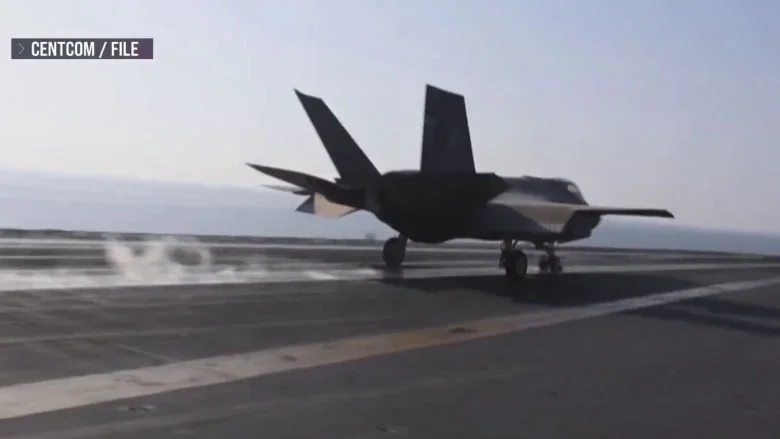
U.S. Central Command reported no American casualties and no major damage to U.S. locations, but confirmed that U.S. forces struck Iranian targets again on Sunday local time. The tit-for-tat exchanges have thrown the fragile ceasefire into question and raised fears of a wider regional war.
Trump Threatens to ‘Complete the Job’ Against Iran
President Donald Trump responded on Truth Social late Saturday, accusing Iran of violating the ceasefire “AGAIN!” and warning that if Tehran does not “learn,” the United States “will be forced to militarily complete the job that we successfully started.” He added, “The Islamic Republic of Iran will no longer exist!”
The administration had earlier defended the U.S. strikes as a “powerful response” to Iran’s drone attack on a cargo ship in the Strait of Hormuz on Thursday. Washington says Iran’s assault on the vessel — which was using an alternative route near the coast of Oman rather than the Iranian-sanctioned path — violated the truce.
The Strait of Hormuz: Flashpoint for Global Trade and Regional Security
The current crisis began on June 25, when Iran attacked a commercial vessel in the Strait of Hormuz, accusing it of using an unauthorized route. Iran had designated a single passage through its own territorial waters as the only permissible transit lane, a demand the United States and its allies reject as a violation of international law.
President Trump characterized the ship attack as a “foolish violation” of the interim deal, prompting U.S. retaliatory strikes Friday against Iranian missile and drone storage facilities and coastal radar positions. Iran then launched its own strikes Saturday against targets it linked to American forces, which included facilities in Kuwait and Bahrain — both key U.S. military hosts in the Gulf.
Bahrain’s foreign ministry condemned the Iranian drone attack as a “flagrant violation of its sovereignty and a blatant threat to the security of its citizens and residents.” The kingdom hosts the U.S. Navy’s Fifth Fleet, making it a strategic linchpin for American naval operations in the region.
Why It Matters: A Fragile Truce Fractures
The memorandum of understanding signed June 19 was meant to freeze hostilities and open a path toward a broader peace deal. However, the two sides remain far apart on fundamental issues, including control of the Strait of Hormuz and how Iran would spend unfrozen funds. The IRGC, which answers only to Supreme Leader Ayatollah Mojtaba Khamenei, has grown increasingly powerful and appears to be testing the limits of the agreement.
Both the United States and Iran accuse each other of violating the ceasefire first. The rapid cycle of retaliation — ship attack, U.S. strikes, Iranian strikes, more U.S. strikes — has erased whatever diplomatic momentum was built in the previous week.
Broader Implications: A Region on the Brink
The crisis unfolding in the Gulf has immediate consequences for global energy markets, shipping security, and the stability of the Middle East. The Strait of Hormuz is a chokepoint for roughly 20 percent of the world’s oil supply, and any sustained disruption could send prices soaring worldwide.
In a sign of how quickly tensions spread, the Iranian attacks on Bahrain and Kuwait bring the conflict directly to the borders of Gulf Arab states that have sought to stay on the sidelines. These countries now face pressure to either distance themselves from Washington’s military posture or risk becoming targets themselves.
The collapse of the ceasefire also complicates ongoing evacuation efforts: a planned removal of sailors stranded in the region was halted after the cargo ship attack. The United States says it will continue to “provide safe passage coordination and support to commercial vessels transiting the strait,” but the security environment has worsened dramatically.
For Iran, the IRGC’s willingness to escalate despite U.S. threats signals a hardline shift inside Tehran’s leadership. The Revolutionary Guard now wields even greater influence than before the deal, and its rhetoric — promising “hell” for American forces — suggests a prolonged confrontation rather than a return to diplomacy.
As the tit-for-tat exchanges continue, the question is no longer whether the ceasefire will hold, but whether either side is willing to step back before a full-scale war erupts. For now, both appear locked in a cycle of retaliation with no off-ramp in sight.
Comments